
Afenyo-Markin delivers powerful speech at ECOWAS Parliament in Abuja
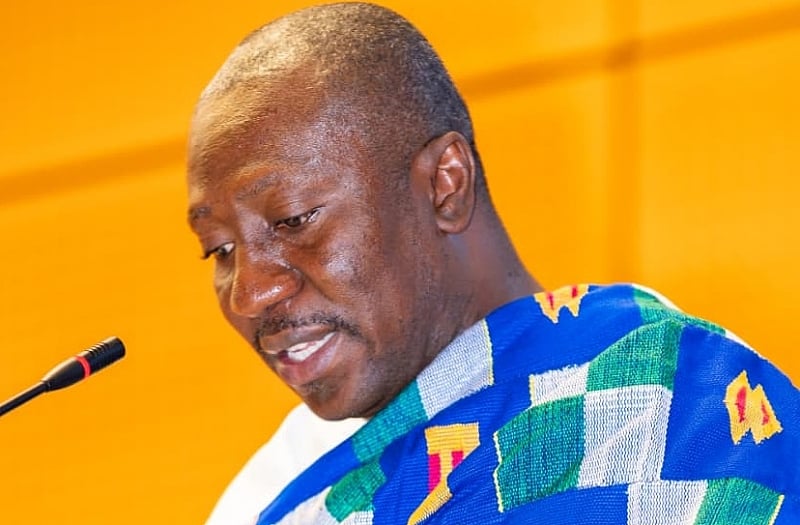
The Minority Leader in Parliament, Alexander Afenyo Markin, has delivered a strong address at the ongoing session of the ECOWAS Parliament in Abuja, Nigeria.
The meeting forms part of the 2026 First Ordinary Session of the regional bloc’s Sixth Legislature, running from May 4 to May 17, and bringing together lawmakers from across member states of the Economic Community of West African States to deliberate on key issues affecting the sub-region.
Mr Afenyo Markin is attending the session in his role as Third Deputy Speaker of the regional parliament, where discussions are centred on strengthening cooperation and addressing pressing challenges confronting West African citizens.
Among the major issues under consideration are the protection of individuals engaged in cross-border trade, the safety of West African nationals living and working abroad, and efforts to strengthen frameworks that guarantee the dignity, security and free movement of citizens within the region.
In a statement, he reaffirmed his commitment to the principles of the ECOWAS Treaty, stressing the importance of regional integration and collective action in addressing shared challenges.
He called for sustained collaboration among member states to ensure that citizens can live, work and trade freely across borders without fear, in line with the core vision of ECOWAS.
The session is expected to produce recommendations aimed at deepening regional integration, enhancing security coordination and strengthening policies that promote cross-border economic activity.
Read full speech below:
FLOOR SPEECH
Delivered by the Third Deputy Speaker
5 May 2026
WEST AFRICAN LIVES, DIGNITY, AND THE IMPERATIVE OF INTEGRATION: ACCOUNTABILITY, JUSTICE, FREE MOVEMENT, AND REGIONAL SOLIDARITY
Rt. Honourable Speaker,
Honourable Members,
PROCEDURAL BASIS: RULE 71 — PERSONAL STATEMENT OF PUBLIC INTEREST
I rise pursuant to Rule 71 of the Rules of Procedure of this Parliament, which provides for Personal Statements of Public Interest, to address this august House on matters of the gravest concern to the peoples of ECOWAS. The issues before us today — the killing of West African citizens in the Sahel; the xenophobic violence against our nationals in South Africa; the persistent barriers to free movement within our own Community; and the urgent imperative of ratifying the African Union (AU) Protocol on Free Movement of Persons — are each matters of direct and profound public interest to every Member State and every citizen this Parliament exists to serve. It is on the authority of Rule 71 that I make this Personal Statement.
Madam Speaker, I rise today not merely to make a speech, but to bear witness — on behalf of this Parliament and the peoples of West Africa — to a moment of profound moral reckoning. I shall speak plainly, because the gravity of what has happened to our citizens demands nothing less. Some of what I will say reflects failures far beyond our borders. But some of it — some of it reflects our own failures too. Let us have the courage to face both.
I. Our Citizens Killed in Burkina Faso and the Mali Crisis
Madam Speaker, on Saturday, the fourteenth of February 2026 — Valentine’s Day — a truck carrying eighteen Ghanaian tomato traders was ambushed in Titao, in northern Burkina Faso, by militants of the Al-Qaeda-affiliated group JNIM, Jama’at Nasr al-Islam wal Muslimin. The attackers separated the men from the women, shot the men dead, and set the vehicle ablaze with the driver still locked inside. Eleven men were killed on sight. In total, at least seven or eight of our fellow West Africans lost their lives. Their bodies were burned beyond recognition and buried in Burkina Faso — with the surviving female traders as the only witnesses — because Ghanaian officials could not safely reach the site.
These were not statistics. They were breadwinners, fathers, and sons — the quiet engines of a regional supply chain that feeds our markets. The Techiman Central Market fell silent in mourning. Their deaths exposed a dangerous structural truth: Ghana’s food supply chain runs directly through one of the most lethal conflict zones on earth. The Liptako-Gourma tri-border region accounted for more than half of all terrorism-related deaths worldwide in 2025, according to the Global Terrorism Index. The Sahel is not a distant abstraction. It is our neighbourhood.
Less than ten weeks after Titao, Madam Speaker, the twenty-fifth of April 2026 brought the largest coordinated offensive in the Mali War since 2012. JNIM and the Azawad Liberation Front struck simultaneously across Bamako, Kati, Kidal, Gao, and Mopti. Mali’s Defence Minister, General Sadio Camara, was killed by a car bomb. Ghanaian traders on the Mali route were immediately ordered to suspend all movements. Ghana’s Foreign Ministry stated plainly that it could no longer guarantee the safety of its nationals on those roads. The Ghana-Mali trade corridor has been effectively severed.
I convey on behalf of this Parliament our deepest condolences to the bereaved families. But condolences are not enough. We must demand accountability — and press for an ECOWAS Civilian Protection Framework covering our traders and workers in conflict zones. A regional community that cannot protect its own citizens in transit has not yet earned its name.
II. Xenophobic Violence in South Africa: From Speeches to Arrests
Madam Speaker, I now turn to the xenophobic violence engulfing South Africa. Across KwaZulu-Natal, Gauteng, Cape Town, and Pretoria, Ghanaians, Nigerians, Zimbabweans, Ethiopians, and other African nationals have been attacked, looted, displaced, and killed. The Nigerian Consulate in Johannesburg has confirmed the deaths of two citizens — Amaramiro Emmanuel and Ekpenyong Andrew. An Ethiopian national was shot dead at a busy intersection, the killing captured on CCTV. Ghanaian shops have been shuttered under threat. Vigilante groups have stopped people outside hospitals and schools to demand documents. Footage of foreign nationals being beaten and subjected to verbal assault has circulated on every screen across this continent.
Ghana’s Foreign Minister, the Honourable Samuel Okudzeto Ablakwa, summoned South Africa’s Acting High Commissioner in Accra over a Ghanaian legal resident who was confronted and told — I quote the perpetrators, not myself — to leave and ‘fix his country.’ Nigeria similarly summoned South Africa’s envoy in Abuja. The Nigerians in Diaspora Commission declared on the twenty-ninth of April that the situation is deteriorating. The African Commission on Human and Peoples’ Rights has formally deplored the attacks. And on the first of May, Economic Freedom Fighters (EFF) leader Julius Malema asked his own compatriots: after beating Nigerians and Ghanaians, how many jobs have you created?
Now, Madam Speaker, I want to address directly the intervention of President Cyril Ramaphosa in his keynote address at the 2026 Freedom Day National Celebrations in Bloemfontein on the twenty-seventh of April. This Parliament acknowledges that President Ramaphosa spoke. He said — and I quote the official record of the Presidency — ‘We must not allow these concerns to give rise to xenophobia, directed towards people from other African countries or any other parts of the world. Instead, we must insist that the law be upheld and enforced.’ He declared further: ‘We will not allow people to take the law into their own hands.’ And he affirmed: ‘It cannot be, and it must never be, that we trample into the dust the African fellowship that made our freedom possible.’
Madam Speaker, those are the right words. We take President Ramaphosa at his word. But it is precisely because we take him at his word that I say, through this forum and for the record: words delivered from a ceremonial platform do not arrest a single perpetrator. Condemnations, however eloquent, do not bring a single attacker before a magistrate. Calls to uphold the law ring hollow when the perpetrators of mob violence, arson, looting, assault, and murder walk free — their faces visible in videos that every African has seen.
I also note, Madam Speaker, that in the same Freedom Day speech, President Ramaphosa described African nationals as guests whose welcome is conditional on respect for South African laws. That framing — however unintentionally — provides militant groups with a grammar of conditional hospitality that they have readily translated into a licence for violence. A government cannot simultaneously condemn mob justice and deploy the language that mobs use to justify their actions.
My personal statement to this House, Madam Speaker, is this: South Africa must move from speeches to action. The South African Police Service, the National Prosecuting Authority, and the Independent Police Investigative Directorate must investigate every documented incident. The perpetrators — many of whose faces are already known from social media — must be identified, arrested, charged, and prosecuted to conviction, without fear or favour and without impunity. Not some of them. All of them.
South Africa was liberated by African solidarity. Frontline States bore enormous costs — economic, political, and military — to bring apartheid to its knees. West African nations stood with the liberation movement for decades. To repay that solidarity with mob violence is a betrayal — not only of the victims, but of every African who sacrificed so that South Africa could be free.
III. Our Own House: Free Movement Within ECOWAS and the AU Protocol
Madam Speaker, having spoken about failures beyond our borders, I must now speak about failures within our own house. The tragedies I have described are exacerbated by our own chronic under-delivery. ECOWAS has not fully kept faith with the 1979 Protocol on the Free Movement of Persons. Nearly half a century after we signed it, that promise remains deeply incomplete.
Formally, the architecture exists — 90-day visa-free movement, the ECOWAS Travel Certificate. But the daily reality of our citizens contradicts it at every turn. Border officials extort and harass our people at checkpoints across the region. National laws contradict Community obligations. The ECOWAS Commission’s own President, Dr Omar Alieu Touray, visited the Nigeria-Benin border at Lagos-Seme in May 2025 and found the infrastructure dilapidated and the Protocol poorly observed. Nigeria had established a Presidential Task Force simply to dismantle illegal checkpoints on a single corridor. That this should be necessary, forty-six years after the Protocol was signed, tells its own story.
The Ghanaian traders who travelled to Titao, Madam Speaker, were making precisely the intra-regional commercial journey our protocols were designed to protect. They moved through compounding layers of insecurity — physical, institutional, and legal — with inadequate protection. We cannot only mourn them. We must ask ourselves what we have failed to build that might have kept them safer. The illegal checkpoints and border harassment that persist across our region impose massive costs on small traders and market women every day — a de facto tax on poverty, levied by our own officials against our own citizens. This Parliament must end it.
At the continental level, Madam Speaker, the African Union adopted the Protocol on the Free Movement of Persons in January 2018. Eight years on, only four of fifty-five Member States have ratified it — far below the fifteen required for it to enter into force. The African Continental Free Trade Area (AfCFTA), adopted the same year, has been ratified by forty-nine countries. The political will to move goods has not been matched by equal urgency to move people. That contradiction is not merely inconsistent — it is incoherent. We cannot build a true African Continental Free Trade Area if people cannot move with their goods.
I wish to speak, Madam Speaker, with particular directness about Ghana. Ghana ranks among the top ten countries on the African Visa Openness Index, hosts AU coordination meetings on free movement, and has been commended by the AU Commission as a practical model of the Protocol. And Ghana does more than host meetings: Accra is the seat of the AfCFTA Secretariat itself — the headquarters of the very institution charged with building Africa’s single market. Ghana is, in the most literal sense, the home of African economic integration. And yet — and this is the contradiction that must be confronted — Ghana has not ratified the AU Free Movement Protocol. A continent cannot build its largest-ever free trade area from a city that has not yet ratified the right of Africans to move freely across that continent. A national dialogue in Accra in 2025 set December 2027 as a target for ratification. I say to Ghana — and to every ECOWAS Member State that has yet to act — that December 2027 must be a ceiling, not a comfort. The instrument must be ratified and deposited at the AU without further delay.
IV. What I Am Asking This House to Do
Madam Speaker, I am not here to add to declarations that have been made and forgotten. I am asking this House — as representatives of the peoples of West Africa — to act on five specific matters.
I am asking this House to establish a Special Select Committee on the Safety and Protection of ECOWAS Citizens Abroad, with a standing mandate to monitor incidents in the Sahel and Southern Africa and report to the full Parliament every quarter.
I am asking this House to pass a Resolution on the Urgency of AU Free Movement Protocol Ratification, naming the Member States that have not yet acted, calling upon them to complete the necessary legislative processes without delay, and requiring the ECOWAS Commission to report progress at every session until every instrument has been deposited at the AU in Addis Ababa.
I am asking this House to develop a West African Parliamentary Action Plan on Free Movement and Border Governance — with binding timelines for the elimination of illegal checkpoints and border harassment, mandatory accountability for border officials, and the establishment of an ECOWAS Border Governance Ombudsman empowered to receive and investigate citizen complaints.
I am asking this House to transmit a formal Statement of Deep Concern to the South African Parliament, the South African Government, the AU Commission, and the African Commission on Human and Peoples’ Rights, demanding arrests, prosecutions, and convictions, and making clear that this Parliament will not accept the routine violation of the dignity and safety of West African nationals anywhere on this continent.
And I am asking this House to commission a Regional Agricultural Resilience Strategy — a serious plan to reduce the structural dependence of our coastal Member States on supply chains that run through active conflict zones, so that no community of traders should ever again be as exposed as the people of Techiman were on the fourteenth of February.
V. A Personal Word in Closing
Madam Speaker, let me close with something personal. The vision of ECOWAS moves me not as a bureaucratic construct but as a human one — the conviction that a market woman from Accra trading in Ouagadougou, a teacher from Dakar working in Lagos, a trader from Conakry driving a corridor into Abidjan — all are expressions of a civilisation that has always moved, always traded, always built across the lines that colonialism drew through our ancestral territories.
The men who died in Titao on Valentine’s Day 2026 were living that vision. They deserved the protection of this Community. The Ghanaian resident in KwaZulu-Natal who was told to ‘fix his country’ deserves a continent where his dignity is guaranteed by law and political will — not merely by ceremonial speeches. And the women who survived Titao — who buried their colleagues in foreign soil and returned home to bear witness — they deserve a Community that takes its obligations seriously enough to act.
Madam Speaker, free movement is the lifeblood of this Community and the daily lived expression of our solidarity. When we fail to protect it — when we allow checkpoints to extort our citizens, when we leave protocols unratified, when we accept speeches in place of arrests — we are not merely failing a policy test. We are failing our people.
Let this Parliament rise to that test — with the urgency these crises demand, the unity our peoples deserve, and the resolve that the memory of those killed, displaced, and humiliated requires of us.
The safety of our people must never be a matter open to negotiation.
I thank you.
Third Deputy Speaker
Parliament of the Economic Community of West African States
Abuja | 5 May 2026