
Not just ICE: Do we need DHS?
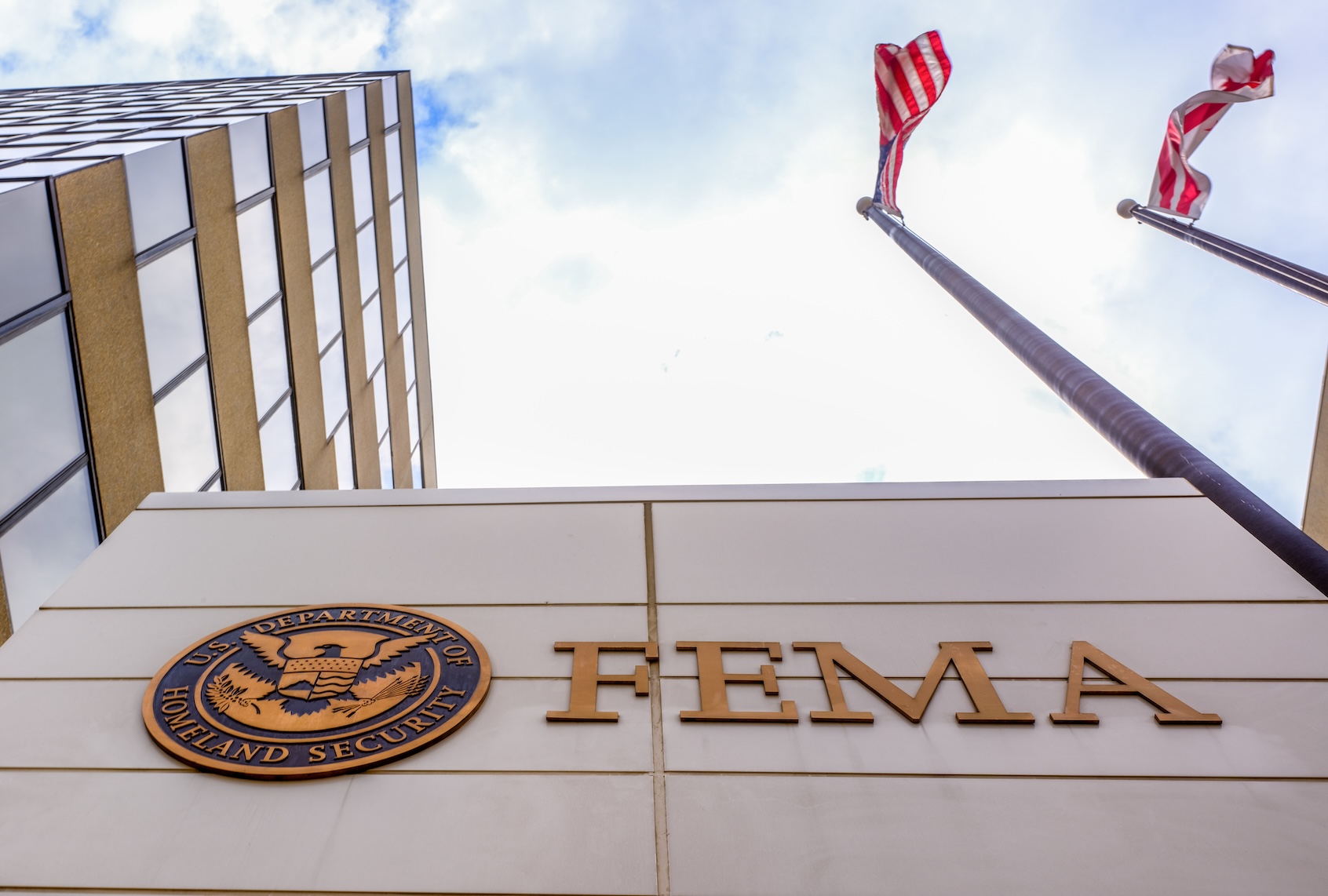
The shutdown at the Department of Homeland Security is stretching into its second month with no end in sight, raising the ire of critics on both the left and right, with some asking whether the department’s duties would be better handled by other government agencies.
DHS has been partially shut down since Feb. 14, but with Congress on recess until mid April, the lack of funding is poised to go on for at least a couple more weeks. The record-breaking shutdown has produced chaotic, long lines at airports, owing to the Transportation Security Administration, a division of DHS, not being paid for most of the shutdown. This has been the most public pain point, affecting the greatest number of Americans.
Considering the fact that DHS is the fourth-largest federal department and the largest department not related to the military, critics are pointing out that the shutdown seems to have had little impact on most American’s lives. President Donald Trump even felt comfortable attacking Iran alongside Israel, despite the fact that DHS — a department founded on the notion that it could protect Americans from terrorism — was not operating beyond its essential capacity.
That changed on Wednesday, when House and Senate Republicans announced a bipartisan plan to reopen most of DHS, though the deal does not include the any restrictions on ICE or CBP, which Democrats had been demanding.
David Perry, a University of Minnesota historian who has previously advocated for entirely dismantling the department, told Salon in an interview that he thinks this shutdown should serve as an opportunity to rethink whether the country even needs DHS.
“We have to start pressuring people right now,” Perry said. “Put bureaucracy with bureaucracy, put enforcement with enforcement, separate the [Federal Emergency Management Agency] and give it independence again. That’s three bullet points. I would like to see those three bullet points in the party platform. I think we can do it.”
Perry said that he’s been heartened by widespread calls to abolish Immigration and Customs Enforcement and Customs and Border Protection, two of the most high-profile and controversial DHS agencies, but he believes Democrats should consider a total overhaul of the department, which in his view, means dismantling DHS.
“There was in this sort of panic moment, just a willingness to take everything and put it under this one umbrella in ways that I think have made us less safe.”
DHS was founded in 2002 in response to the 9/11 attacks, with lawmakers hoping that the agency would prevent the sort of failures of cooperation described in the 9/11 Commission report. Perry says, however, that it’s time for people to ask whether the department has really served to make Americans safer in the last 24 years.
“There was in this sort of panic moment, just a willingness to take everything and put it under this one umbrella in ways that I think have made us less safe, certainly have made us less free, and that there’s really no evidence that it’s the best way to organize anything,” Perry said. “It’s a very good way to create a surveillance state, an unaccountable secret police and government surveillance that serves authoritarianism really well.”
In Perry’s view, the question for the next Democratic administration should be how to break up the department so that agencies that perform a necessary function, like TSA, the Coast Guard and FEMA, can function most efficiently and with better oversight. He also said that the immigration enforcement agencies could be replaced by a system modeled on the pre-9/11 Immigration and Naturalization Services agency, which was disbanded in 2003 to make way for ICE, and that in replacing ICE, Democrats would have the opportunity to create a more humane immigration enforcement system.
Importantly, even if DHS was disbanded, the Director of National Intelligence office, which was also created in reaction to 9/11 to increase coordination between America’s myriad intelligence agencies, would still be around to do so. Though it does appear that the current administration has largely sidelined its own DNI, Tulsi Gabbard, at least in the context of the current Iran war.
Faiza Patel, the senior director of the Brennan Center’s Liberty and National Security Program, told Salon in an interview that she believed there was a danger in focusing too much on the structure of what’s happening at DHS and not enough on the rules that bind its agencies, in particular, its counterterrorism programs, such as the office of Counterterrorism and Homeland Threats. She described DHS as a sprawling agency with multiple missions under one banner.
“Many of those missions are kind of broad and ill-defined, if you will. And what it doesn’t have is a lot of very clear-cut rules and safeguards to prevent abuse,” Patel said. “It actually does have a lot of oversight mechanisms built in, but they haven’t functioned particularly well, and they haven’t been able to meaningfully constrain law enforcement abuses over the course of the department’s history, but particularly so now, and the administration has pretty easily discarded them.”
Patel said that over the past 24 years, since DHS’s founding, its counterterrorism mission has been eclipsed by immigration enforcement and emergency response duties, in large part due to a lack of real terror threats against the United States. There are also valid questions, Patel said, about what the department’s countererror offices are even accomplishing.
“When you look at DHS counterterrorism functions, particularly, they are quite limited. You have an Office of Intelligence and Analysis, which collects primarily publicly available information. That has always been a problematic office, because it has very often spent its time looking at domestic political movements as part of the counterterrorism mission. And you saw this back in 2020, when Portland happened, because it, along with other parts of DHS, was involved in, like, creating these dossiers and protesters and the like,” Patel said, referencing an infamous incident from 2020 when the office was caught spying on Oregon protesters.
“There’s definitely been a huge flood of unverified, not high quality information coming into DHS. … Whether or not that system actually provides any counterterrorism benefit, I think, is really, really questionable.”
The second fundamental problem with DHS’s counterterror functions is that its information has often been unreliable, according to Patel. She pointed to an example, again from 2020, involving DHS fusion centers, which are a network of 80 offices that collect and distribute information from and to law enforcement, first responders and some private sector entities. The incident Patel referenced had to do with false claims that protesters were piling up bricks to prepare for an attack or damage property during protests. The department circulated some of these claims through fusion centers, despite the lack of evidence. Patel said that this sort of information coming out of DHS only feeds into the problems the country has with police brutality and police response to protests.
“They’ll put out these bulletins that are based on some random social media posts, and then create this kind of very threatening environment, which obviously would have consequences for how law enforcement on the ground would respond and from the fusion center side as well. There’s definitely been a huge flood of unverified, not high quality information coming into DHS,” Patel said. “Whether or not that system actually provides any counterterrorism benefit, I think, is really, really questionable.”
Start your day with essential news from Salon.
Sign up for our free morning newsletter, Crash Course.
Criticism of the department, however, isn’t only coming from the left. There is a significant contingent on the right as well, who have been skeptical of the country’s need for the sprawling DHS bureaucracy.
Chris Edwards, the Kilts Family Chair in Fiscal Studies at the libertarian Cato Institute, told Salon that he’s been arguing against the need for DHS since the Obama administration. Edwards is even more skeptical about the need for certain agencies like TSA and FEMA, saying that in his view, TSA’s duties would be done by private companies like at San Francisco International Airport.
“The model is the Canadian system, which is run by a nonprofit private organization,” Edwards said. “In most European airports and Canada. The screening is done by private companies that you know are hired, and they compete against each other for contracts, and they’re rated on their performance and that sort of thing.”
In terms of FEMA’s duties, which are focused on distributing disaster relief funds to states, Edwards says they could be accomplished at the state level. Trump’s administration has notably politicized the agency, denying the vast majority of emergency relief requests from Democrat led states.
So far, Democrats have focused their criticisms around ICE and CBP, owing to their deadly and high-profile operation in Minnesota earlier this year. Perry believes, however, that now is the time for potential 2028 candidates to begin discussing what their plan for DHS is.
Read more
about this topic