
Trump’s “unpredictable” war in Iran has no end in sight
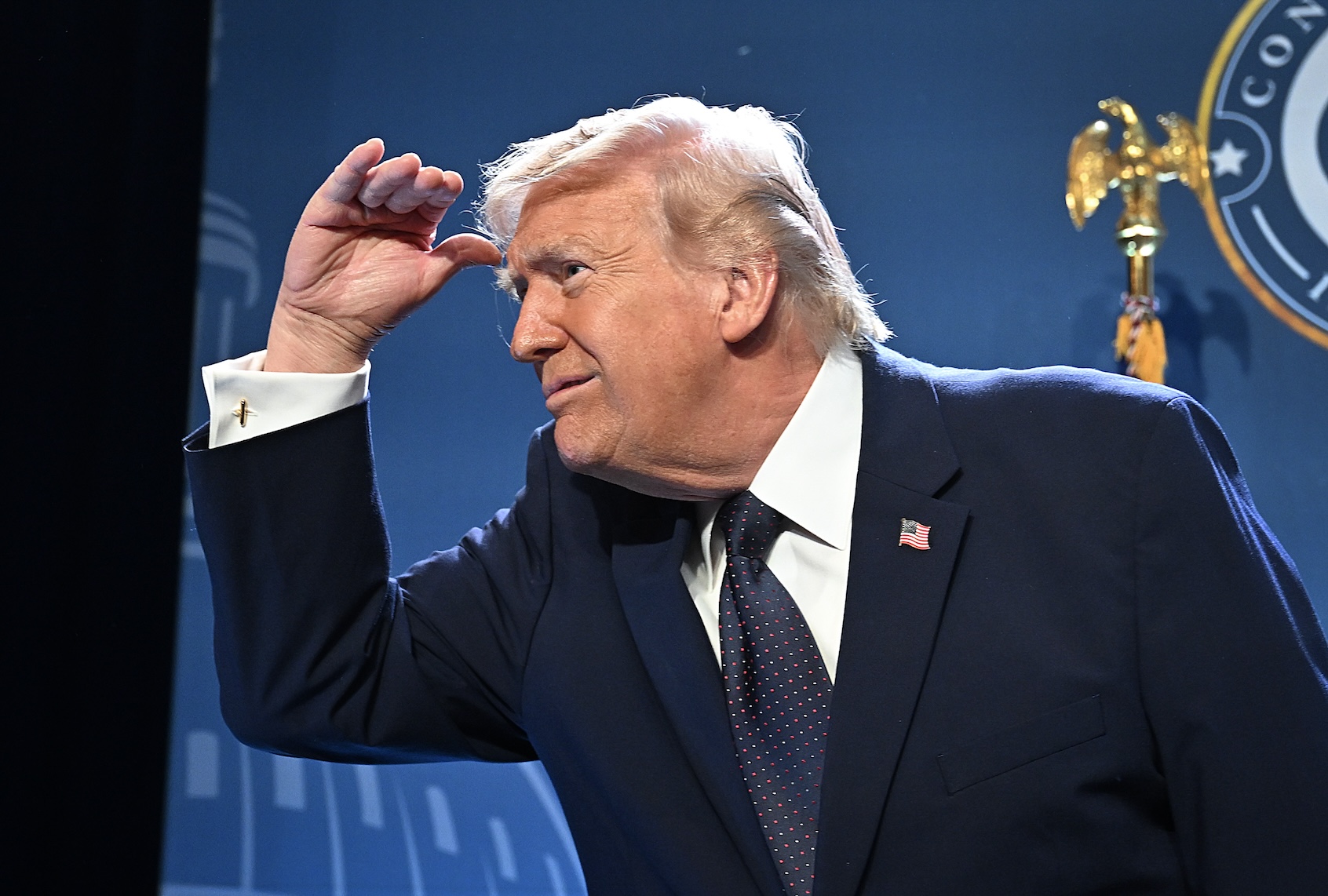
As the war with Iran enters its second week, questions of how long the conflict will last and what a resolution might look like remain unanswered and unresolved. Secretary of Defense Pete Hegseth refused to provide a timeline for operations last week, denying that the conflict would turn into an Iraq or Afghanistan-style “forever war.” President Donald Trump gave a more clear, though open-ended answer: “I always thought it would be four weeks,” Trump told CNN on Monday, “And we’re a little ahead of schedule.”
On March 6, Press Secretary Karoline Leavitt likewise suggested a timeline of six weeks, while Israeli Prime Minister Benjamin Netanyahu promised at the start that the joint U.S.-Israeli operation “will continue as long as necessary.”
Death tolls are rising for the three combatant nations, along with other soldiers and civilians killed across the Middle East. Besides the cost in many hundreds of human lives, there is the global price surge of crude oil following Iran’s closure of the Strait of Hormuz, and an increasing volatility throughout western Asia.
The uncertainty of the situation has led to questions of how long this war will last, as well as the motivations behind it.
“It certainly looks for now that it is continuing to expand,” William C. Banks, a professor emeritus at Syracuse University’s Public Administration and International Affairs Department, told Salon on Monday.
Banks said that Trump’s handling of the conflict has been “entirely unpredictable” and said he advised against “putting faith” in the timelines previously suggested by the Trump administration, referring to Hegseth as “inexperienced.”
“Nobody knew anything. Nobody experienced the conflict yet,” Banks said. “So, I don’t think there is a timeline.”
“It certainly looks for now that it is continuing to expand.”
Banks pointed to multiple signs of escalation in the conflict, including Ukrainian drone experts being sent to the region to advise with drone warfare against Iran, along with Iran’s leadership appointing Mojtaba Khamenei as new Supreme Leader, following the death of his father, Ayatollah Ali Khamenei.
“The Iranians seem to be stiffening,” Banks said, arguing that Iran’s long-held theocratic government “won’t be replaced overnight.”
Iran is certainly signaling that it won’t back down soon. Kamal Kharazi, foreign policy adviser to the new Khamenei, told CNN on Monday that he doesn’t “see any room for diplomacy.”
“Donald Trump had been deceiving others and not keeping with his promises, and we experienced this in two times of negotiations – that while we were engaged in negotiation, they struck us,” Kharazi said, vowing to use “economic pressure” to coerce other nations into facilitating an armistice.
However, cybersecurity analyst and software architect Ryan McBeth says that the U.S.’s massive military capabilities could allow the operation to continue “indefinitely,” even without relying on the most advanced, pinpoint weapons systems. McBeth noted that many of the initial strikes on Iran’s leadership and missile emplacements were done with “smart weapons.”
Start your day with essential news from Salon.
Sign up for our free morning newsletter, Crash Course.
“We have plenty of gravity bombs,” McBeth said, referring to unguided munitions. “We’re at the phase where we’re using dumb bombs,” he said, pointing to an attritional air campaign against Iran, while believing that a timeline for the conflict could be four to six weeks. However, McBeth notes that continued operations would continue to degrade Iran’s command and control structure.
“Every single day, we learn more and more about the Iranian command control structure,” he said. “If Iran still has weapons available, they won’t be able to shoot them because their command and control system will be so degraded.”
“Iran’s missile program is finished,” McBeth said. “At least for the next ten years. Iran’s nuclear missile program is done.”
Indeed, it was this exact objective that was at the center of the U.S.-Israeli strikes on Feb. 28, with Trump following Netanyahu into the conflict. However, it is hotly debated whether Iran posed an imminent threat.
Secretary of State Marco Rubio called the possibility of an Iranian short-range missile attack on Israel and U.S. forces in the Middle East “an unacceptable risk,” while Trump laid out a four-point plan for destroying Iranian missile and nuclear development capabilities.
Banks called Trump’s crippling of Iran’s military threat to Israel “a template he can brag about.”
“That’s huge for Trump to be able to say that Iran is not going to be able to harm the state of Israel anymore. Israel is very important to Trump. It’s very important to many Americans,” he said.
Still, the Trump administration has been notably less clear about its long-term plans. Banks said that while escalation is possible, the U.S. sending ground forces into Iran would be “highly unlikely.”
“We’re not going to do that. We’re not going to risk the lives that would be lost, ours, particularly,” Banks said. For him, the war will likely end in a negotiated settlement. “Sooner or later, Iran is going to say we’ve lost this, but yet we still have our government intact, and a theocratic regime is in place with a new set of leaders. Let’s cut a deal and heal ourselves.”
McBeth disagrees the path is so straightforward, saying that a moderate leader could agree to a negotiation, while a hardline leader could abandon negotiations and possibly continue the conflict, calling the loss of U.S. civilians or large numbers of military personnel a “nightmare scenario.”
He doesn’t rule out the possibility of a popular, ethnic, or military-led uprising. “You’re gonna get a hell of a lot of people killed when that happens,” McBeth said. “That’s going to be a massacre, that’s going to be bad.”
Read more
about the Iran war