
“Harold and Maude” taught me to not fear dying
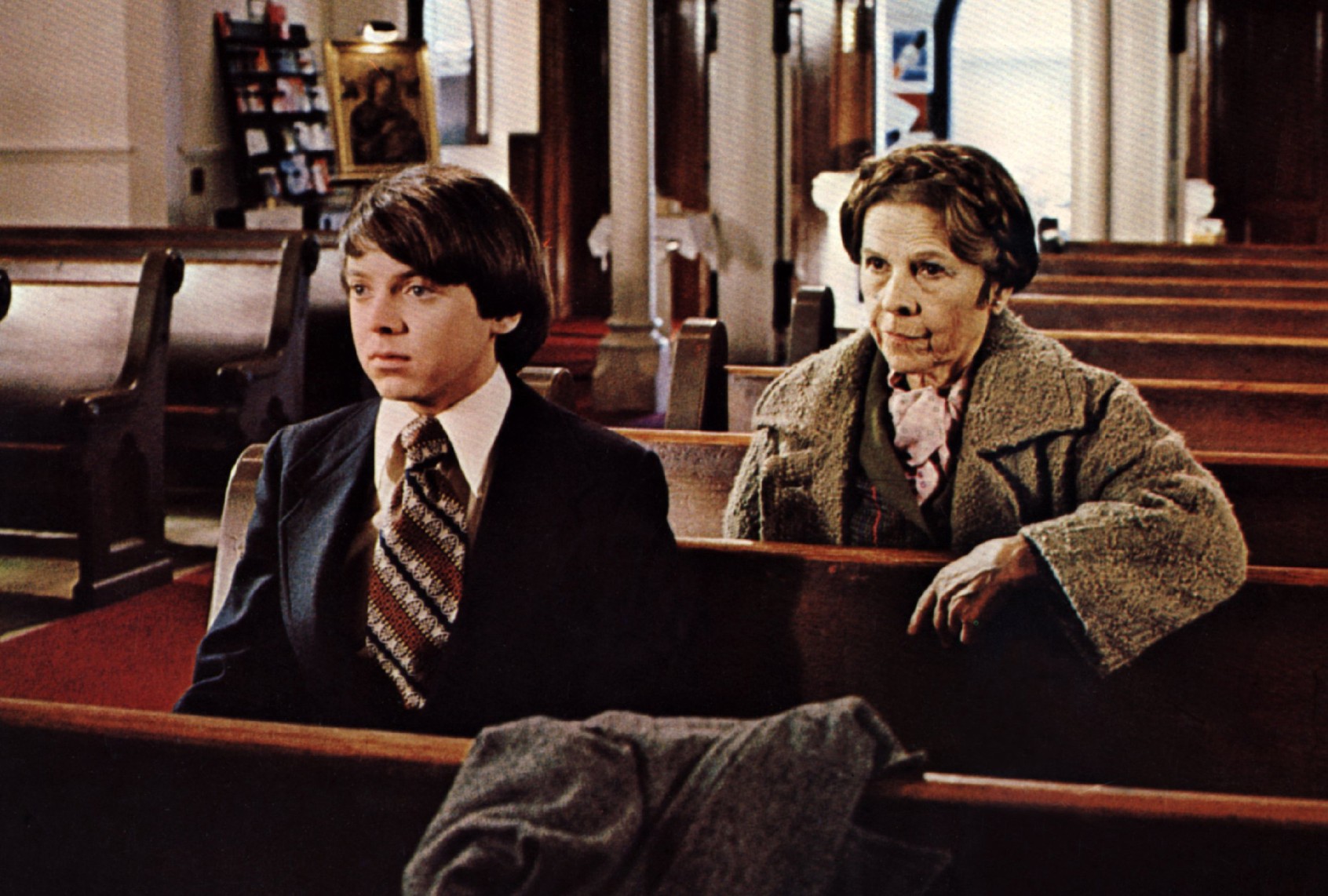
“She was a terrible child.”
This is how my dad described me to my wife at the time, sitting across from us at a Monical’s Pizza during what would be our last meal together. In between that and bites of food that was our favorite — hardly able to enjoy it amidst the tension — he pulled something else from his memory bank to share about me, neither of us knowing that it would be one of our final moments face to face before he died of a heart attack, alone on his bathroom floor, just a few months later.
“She was always off doing something weird, like writing poetry in a cemetery.”
An unfair appraisal. What he didn’t understand, nor tried to understand, is that I didn’t frequent cemeteries looking for death. I went to them to look for the pretty weeds and wildflowers that grew in between the rows of people who lived lives long and short before me. And, most times, I was writing poems about the sun that shone down in brave defiance of the inevitable. I also went there to sneak cigarettes.
What “Harold and Maude” taught me most is that it’s perfectly OK to be fascinated with death, so long as it helps you to appreciate everything that comes before it, because they go hand in hand, and a life lived fully makes death nothing to fear at all.
I thought of this on the day the news broke that Bud Cort died, remembrances for whom barely cut the stream of outpourings of grief for one-time teen heartthrob, James Van Der Beek, who died on the same day.
Cort had a lengthy career in his 77 years that included roles in films like “Brewster McCloud,” “But I’m a Cheerleader,” “Dogma” and “The Life Aquatic with Steve Zissou,” but it was his role as the death-obsessed Harold Chasen in Hal Ashby’s 1971 cult classic, “Harold and Maude,” that cemented him in my life, and the lives of many others, as a hearthrob and/or idol for those who didn’t quite find what they were looking for in shows like “Dawson’s Creek,” but were yearning to identify with pop culture and have their thoughts and passions reflected back at them none the less.
Those who flocked to Dawson Leery were the sort who spent their spare time at after-school club events and hamburger stands. Harold’s people, like me, well they could be found daydreaming in cemeteries or sipping coffee on the stoops of abandoned houses. Both sorts looking for life in the lives being lived, all the same. And what “Harold and Maude” taught me most is that it’s perfectly OK to be fascinated with death, so long as it helps you to appreciate everything that comes before it, because they go hand in hand, and a life lived fully makes death nothing to fear at all.
I can’t remember when it was or where it was that I first watched “Harold and Maude.” I feel like it was always there, like a foot. Just doing what it’s supposed to do. Putting together a rough guess, since the film came out in 1971 and I was born in 1977, I’d imagine I saw it for the first time pretty early on, especially considering the fact that one of the first films my parents took me to see in the theater was “Scarface,” which came out in 1983, so it’s not like, you know, content restrictions were paid any mind.
What I do know for certain is that I’ve related more closely to the character of Harold than I have many others and, like writer Ava Pauline Emilione recently wrote for Salon regarding her affections for the characters in “Heated Rivalry,” despite being a known lesbian since I was 14, I often couldn’t decide if I wanted to smooch Harold, or be like him. If the latter, I wouldn’t have had to try very hard.
Want more from culture than just the latest trend? The Swell highlights art made to last.
Sign up here
Our introduction to Harold in Ashby’s film shows him faking his own suicide for his mother’s attention.
“Dinner at 8, Harold. And do try to be a little more vivacious,” she says in passing as he hangs in the background, his display only the slightest of distractions in her plans for the evening.
“Of course, you know, Harold’s father had a similar sense for the absurd,” she later says to her dinner guests, using Harold as the launching point for an anecdote to entertain amid the clatter of forks and knives on fancily set plates. “I remember once in Paris, he just stepped out for cigarettes, and the next thing I knew, he was arrested by the police for floating nude down the Seine.”
“I have a sore throat,” is the first line of dialogue we hear Harold say, after being chided for playing with his food at the table. Faking illness when faking death didn’t seem to work.
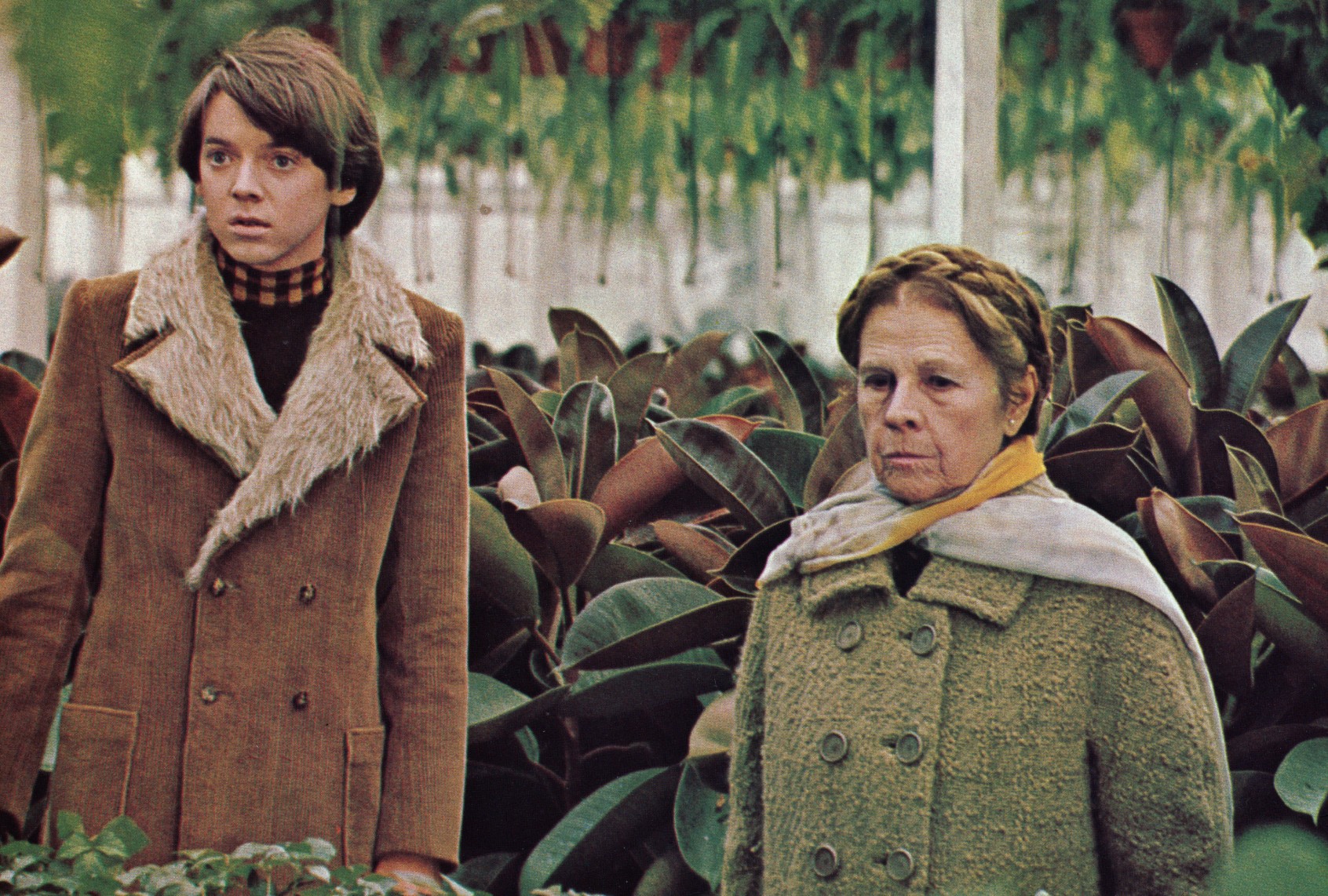
(FilmPublicityArchive/United Archives via Getty Images) Bud Cort and Ruth Gordon in “Harold and Maude”
Same as Harold, my unspoken and maybe even unknown goal was life, but a better one.
Harold’s pre-dinner faux hanging is the first of many stunts of this kind: A staged wrist-slashing in his mother’s bathtub. A mock drowning in the pool, floating face down in the water as his mother does a butterfly stroke back and forth right next to him. When Harold’s mom decides that the only way to divert him from his morose lifestyle is to sign him up for a dating service so he can find a wife, he pretends to shoot himself in the head while she’s reading off a questionnaire from the service, which screens out the “fat and the ugly.” Elsewhere in the film, he scares off dates by staging self-immolation and hara-kiri.
As Harold later explains to his therapist, these were not for what he’d call his mom’s . . . benefit. But they were for her attention. And mine, though far less elaborate, were too. In my pre-teens, I ruined one Halloween by taking handfuls of random pills from my mom’s medicine cabinet, so many that it caused some sort of nerve damage that made my tongue swell up and my neck bend back. Forced to cut trick-or-treating short as I could no longer speak and was drooling out of the slit in my Jason Voorhees mask, I returned home and was coolly appraised by my mother (a nurse) and then instructed to gargle with mouthwash and go to bed. As I was gargling in the bathroom, she appeared at the doorway to snidely say, “Don’t drink it.” The implication being that I was going to use that opportunity to get drunk on Scope. Then there was the time in my teens when, in a screaming fit over who knows what, I made a feeble slash at my wrist with a steak knife. “Bob, she’s cutting herself,” she called to my father in the next room, one hand on her waist and the other holding a cigarette in the air. As I stood there crying, waiting for whatever would come next, she came closer and took hold of my arm. “You didn’t even do it right,” was the last that was said of the matter. Not the outcome I was hoping for, but neither was death. In moments like those, same as Harold, my unspoken and maybe even unknown goal was life, but a better one.
In therapy, which Harold attends often, and I have also been in and out of for most of my life, he’s asked what he does for fun, what gives him that “special satisfaction.”
“I go to funerals,” he says after a long pause for effect.
At one such funeral, Harold meets Maude (Ruth Gordon), an eccentric woman one week away from her 80th birthday, having a picnic lunch at the base of a tree while mourners cry, drawing Harold’s attention and, soon, giving him a new kind of “special satisfaction.” Their first conversation is during a different funeral, where she offers him a rope of black licorice.
Before taking off in a light blue Volkswagen bug we soon find she stole from the priest overseeing the funeral they just attended, she asks Harold, “Do you dance?” Which he responds to as most anyone would in that situation: “What?”
“Do you sing and dance?” She probes further.
“No,” he answers
“No. I thought not,” Maude says, laughing with glee as the priest, Bible in hand, chases after her. Like death itself chasing after a soul holding onto as many final moments of life as it can.
At a visit to Maude’s house, she shows Harold her painting titled “Rainbow With Egg Underneath and an Elephant” and then wins him over further with her odorifics machine that allows users to breathe in the scent of roast beef, old books, mown grass and full scentscape scenarios like snowfall on 42nd street.
Growing fonder and fonder of Maude, Harold shares with her that when he isn’t attending funerals for fun, he likes to go to demolition sites and scrap yards.
“But is it enough?” Maude asks him.
On another day, Maude asks Harold what kind of flower he’d like to be, and he says one of the many daisies they’re walking amongst, because they’re all alike.
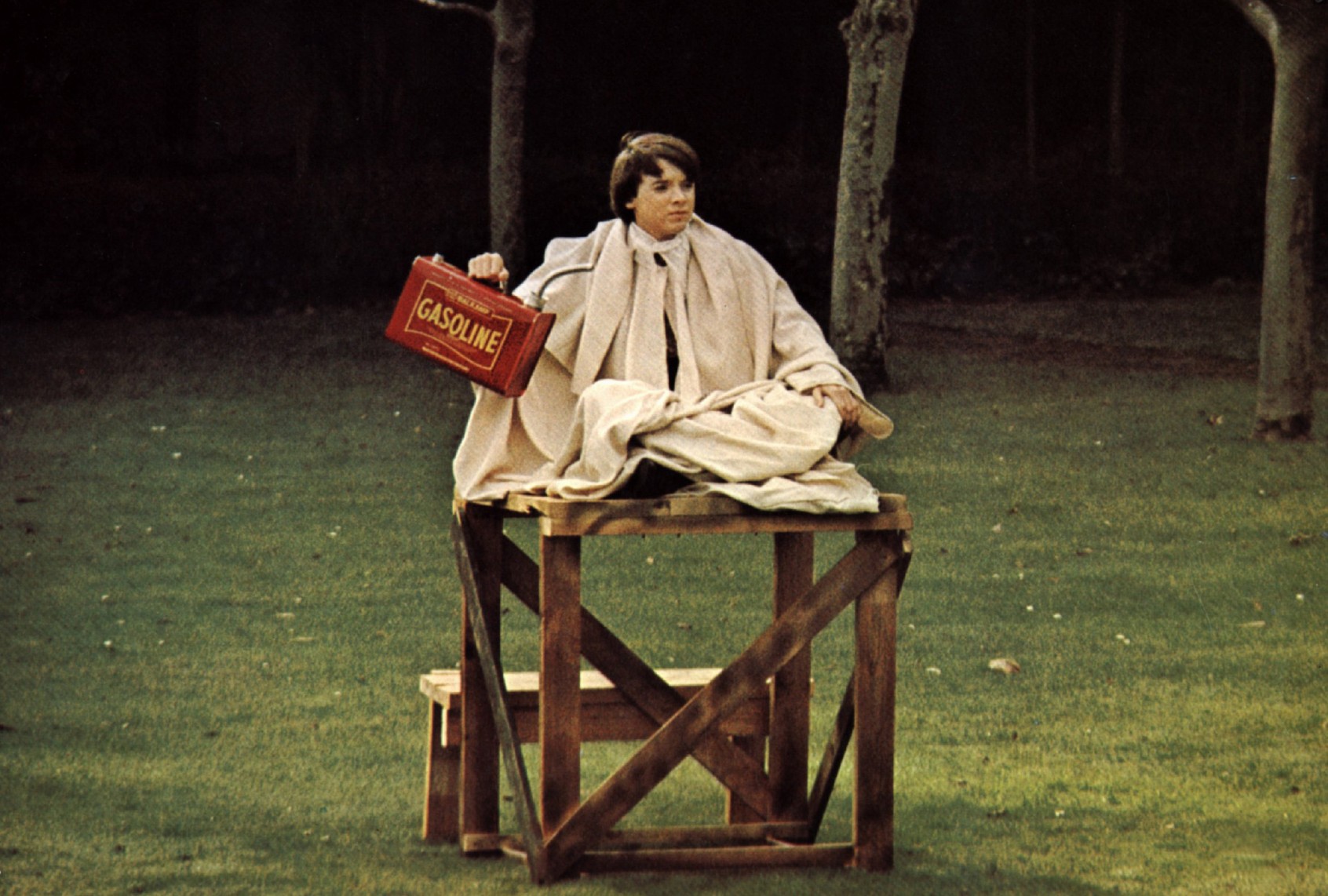
(FilmPublicityArchive/United Archives via Getty Images) Bud Cort in “Harold and Maude”
While Cort himself has said in interviews that he felt “an instant, profound connection” to Harold’s gloominess and need for connection, he’s also quoted as saying that the role was, in hindsight, both a blessing and a curse as it typecast him as a morbid weirdo. If he were still with us, and I was able, I’d thank him for that weirdo.
“Oh, but they’re not,” she says. “Some are smaller, some are fatter. Some grow to the left, some to the right. Some have even lost some petals. All kinds of observable differences. I feel like much of the world’s sorrow comes from people who are this (points at daisy she’s holding) yet allow themselves to be treated as that.” At this, the camera pans out to row upon row of white grave stones, seemingly all alike. In moments like these in the film, Harold is finding what he’s been looking for. And those who relate to him are too.
The only time we see Maude seem anything other than bursting with joy is when she talks about her deceased husband and the battles she used to fight for justice, using an umbrella as her defense against police, which he used to chide her for.
“He was so serious . . . But that was all before.” She lets herself sit with this for a minute, and then we see her perk right back up. “Well, should we have a song?” Moving to her piano to bang out “If You Want to Sing Out, Sing Out” by Cat Stevens, wearing a daisy in her hair that she picked in the cemetery earlier. Towards the end of the film, while she and Harold are holding hands after a day of adventures together, the camera hovers on her just long enough to get a glimpse of the tattoo on her arm, a historically weighted sequence of numbers.
After stealing a tree from town to transplant in the forest, Harold and Maude smoke hookah in her living room, dressed in kimonos.
“I sure am picking up on vices,” Harold says
“Vice, virtue, it’s best not to be too moral,” Maude replies. “You cheat yourself out of too much life.”
“I haven’t lived,” Harold says. And here, we learn the origin story of his fake suicide attempts.
Harold tells Maude of a botched science experiment at school that led to an explosion and the police informing his mother that he had died, not knowing that he had simply snuck back home to hide upstairs, where he witnessed her dramatic response to the news, as though giving a grand performance in a play.
“I decided there and then that I enjoyed being dead.”
On Maude’s birthday, just as she’d hinted several times in the film, she takes tablets to end her life at the stroke of midnight, ensuring that her 80th birthday will be her last. In tears, in the ambulance, Harold holds on to her and tells her he loves her over and over.
“Oh, Harold, that’s wonderful,” she says. “Go and love some more.”
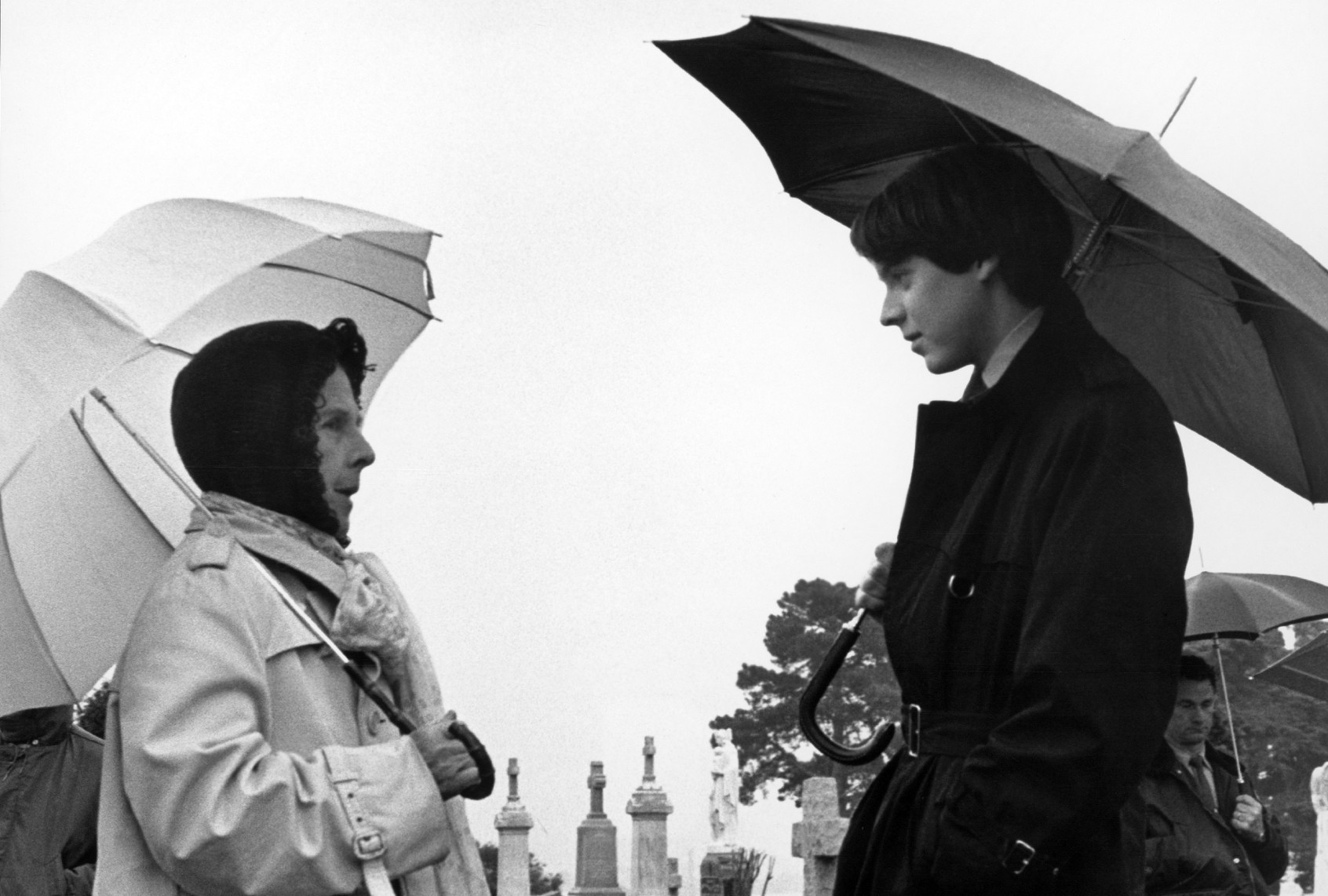
(Michael Ochs Archives/Getty Images) Ruth Gordon and Bud Cort in “Harold and Maude”
After it’s confirmed in the hospital that she’s gone, we see Harold racing along a twisty turny road in his car, a Jaguar with a hearse top welded onto it. When we’re shown the car careening off a cliff in slow motion, anyone seeing the film for the first time may assume that this was his final suicide theatric, but for real this time. But then we see him at the top of the cliff, strumming the banjo that Maude gave him, choosing to live, although he’d just lost what led him to come to the conclusion.
Rated only one and a half stars by Roger Ebert in 1972 and referred to in his review as “a movie of attitudes,” writing, “Harold is death, Maude life, and they manage to make the two seem so similar that life’s hardly worth the extra bother,” it’s clear that many missed the point here, but those who got it, got it.
While Cort himself has said in interviews that he felt “an instant, profound connection” to Harold’s gloominess and need for connection, he’s also quoted as saying that the role was, in hindsight, both a blessing and a curse as it typecast him as a morbid weirdo. If he were still with us, and I was able, I’d thank him for that weirdo.
Pushing 50, I’m almost closer to Maude’s age than I am to Harold’s and while I’m still fascinated with death, it’s taken an optimistic turn, in no small credit to the examples their characters set. Where I once may have viewed death as some sort of dramatic ploy for attention or, at my darkest points, a chance to finally put my heart and mind to rest, I now see it as something to earn. Something inevitable that there’s no point rushing towards but, If I live to the best of my ability, like Ram Dass says, will be like taking off a tight shoe.
Lately, rather than focusing on the deaths and thoughts of death that have punctuated my life thus far, I’ve been fixated on NASA’s Voyager 1 “Pale Blue Dot” photo that’s found a new life on TikTok. Taken on Feb. 14, 1990, the photo shows Earth at a distance of 3.7 billion miles (6 billion kilometers) from the Sun. Just a speck in the sky. Looked at from this angle, you can see how little good it does to worry about death, or anything at all for that matter. Floating like a flower petal in the spring breeze. The lesser character of a mysterious grand design.
Read more
about death and dying