
Super Bowl bursts popular right-wing media myth
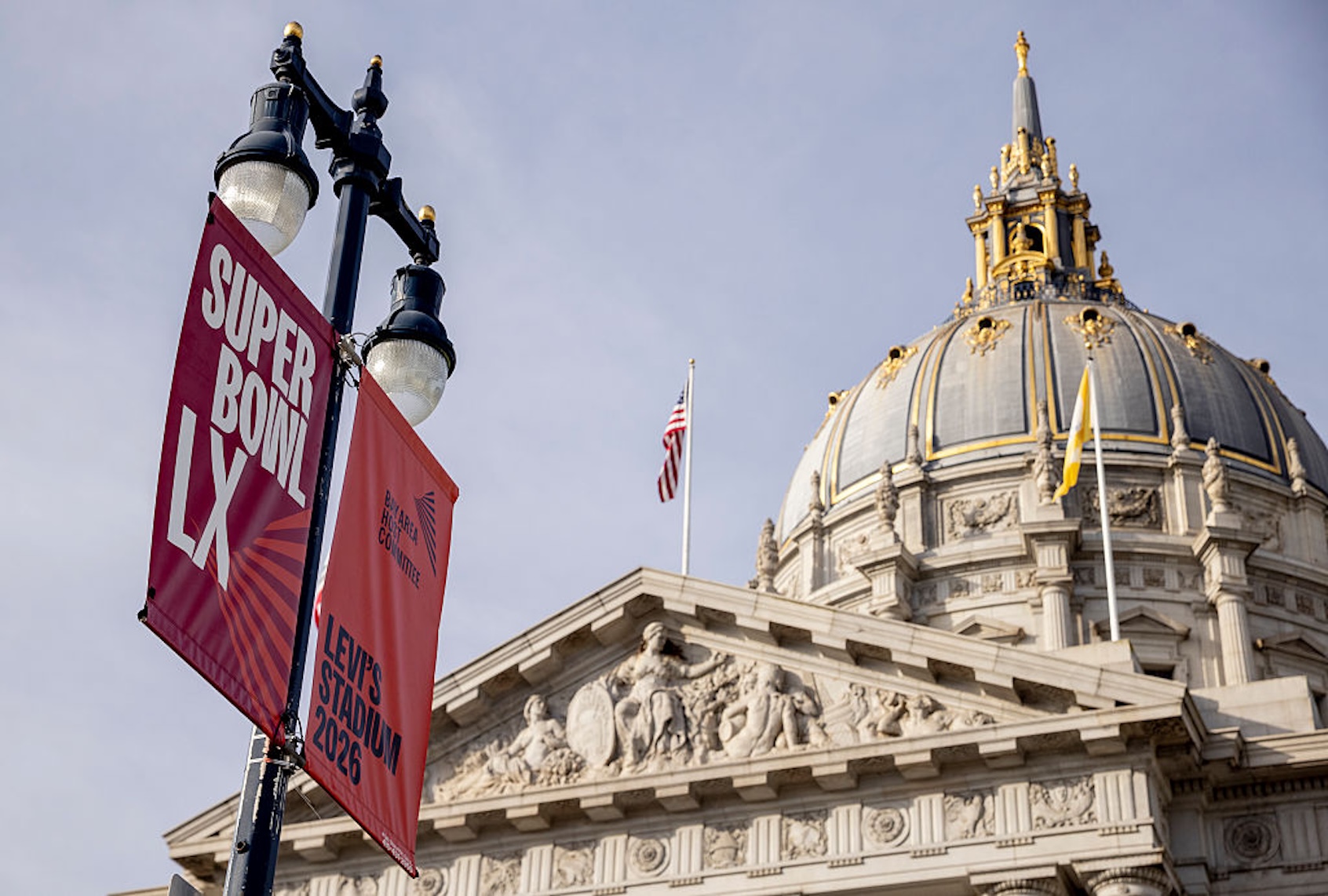
I always thought the idea of San Francisco as a dystopian nightmare was some kind of bit. An exaggeration made meme, something people said with a wink to signal their politics more than their understanding of reality. I didn’t realize just how many Americans actually believe it so deeply that they could travel across the country, step off a plane and walk through one of the most visually stunning cities on the continent — only to be shocked that they were lied to.
Super Bowl visitors who discovered the truth over the weekend got a glimpse behind the curtain of right-wing media manipulation. While the game between the Seattle Seahawks and the New England Patriots was played about 40 miles south of San Francisco, much of the NFL’s activities and media opportunities were staged in the city that’s served as conservative media’s favorite punching bag for decades. What right-wing media does exceptionally well is curate reality by looping the same context-free footage. With former Speaker of the House — and San Francisco resident — Nancy Pelosi serving as a convenient caricature of liberal elites, Fox News, MAGA talk radio and right-wing social media influencers have relentlessly portrayed the city as a dystopian hellscape of human feces, discarded needles, rampant crime and zombie-like drug addicts stumbling through streets abandoned by anyone with sense or resources.
Eventually, mainstream outlets — afraid of being accused of bias — often start to treat such right-wing narrative as a legitimate debate. If we’re lucky, the actual truth one day emerges, but by then the false portrayal has already done its damage, shaping policy debates and even electoral outcomes.
The collective cognitive dissonance on display in San Francisco during Super Bowl LX exposed how warped many American’s perceptions of our greatest cities are.
The collective cognitive dissonance on display in San Francisco during Super Bowl LX exposed how warped many American’s perceptions of our greatest cities are.
There’s no denying that San Francisco faces serious challenges. Anyone who actually lives there — or has lived there, as I have — knows that. Wealth inequality is glaring. Housing costs are obscene. The fentanyl crisis is real. The pandemic greatly exacerbated existing fractures and hollowed out downtown retail.
But here’s the part that the propaganda machine depends on people not understanding: None of these problems are unique to San Francisco, and none of them tell the whole story of the place.
If the city were truly the apocalyptic hellscape it’s been portrayed as by conservative media over the last decade, why would the NFL — one of the most brand-conscious, risk-averse organizations on earth — stage its biggest week of the year there?
Scroll through social media and you’ll find NFL reporters and podcast bros posting video after video of themselves walking through San Francisco in disbelief.
Barstool Sports founder Dave Portnoy, who has spent years cultivating an audience that overlaps heavily with conservative media consumers, took his followers on a pizza tour of the city and surrounding areas, ultimately crowning a spot in Oakland as the best. Jake Malasek, the company’s content creator who was visiting from Florida, tweeted his surprise: “I may have been too harsh on San Francisco in terms of its beauty. This is pretty sweet.” Senior Barstool producer TJ Hitchings was effusive about the city’s iconic Tonga Room, calling it “the best bar I’ve ever been to in my life.”
Perhaps most striking was the conversion of Pat McAfee, the ESPN host whose show caters to a young, predominantly male audience. During his first national broadcast from San Francisco, McAfee was candid about his expectations: “What we thought we were walking into here was, uh, a dump. It’s not at all. It was a beautiful walk this morning.” He elaborated during an interview with San Francisco 49ers legend Joe Montana. “We were so surprised by what we had been told and expected versus when we walk through the streets and got here,” McAfee said. “The buildings are beautiful. There are so many hills, there were people running, it was a very active city. It felt like, I’d not known this about San Francisco.”
California Gov. Gavin Newsom tweeted the ESPN host’s comments approvingly, recognizing the rare opportunity for actual reality to puncture the bubble of manufactured perception.
Want more sharp takes on politics? Sign up for our free newsletter, Standing Room Only, written by Amanda Marcotte, now also a weekly show on YouTube or wherever you get your podcasts.
But not everyone got the memo. Boston radio hosts Michael Felger and Tony Massarotti still described San Francisco as a “zombie apocalypse,” likening it to the “Mad Max” films. When confronted with reality, some people update their beliefs. Others double down because the myth is more useful to them than the truth. Felger and Massarotti’s resistance to reality, even in the face of direct contradictory evidence, speaks to how deeply these narratives have been internalized on a broader scale.
Cities across America, regardless of their political orientation, are grappling with similar crises as those experienced by San Francisco. The opioid epidemic continues to ravage red and blue states alike. From Los Angeles to Phoenix to Austin to Atlanta, homelessness has become a national emergency. But San Francisco is arguably the most liberal major city in the United States — and that is precisely why it’s been turned into a boogeyman.
Right-wing commentators need liberal governance to fail spectacularly in the public imagination; their entire political project depends on convincing people that collective solutions don’t work. If San Francisco can be reduced to a cautionary tale, then universal healthcare, housing investment, addiction treatment and worker protections can also be dismissed with a sneer: “Do you want your town to become like that?”
The narrative gives them permission to feel that their communities, despite confronting their own struggles with economic decline, opioid addiction and lack of opportunity, are morally and practically supreme to degenerate liberal cities.
This mythology serves another purpose for Donald Trump‘s MAGA coalition: It allows them to maintain a sense of superiority among conservatives in small-town and rural America. The narrative gives them permission to feel that their communities, despite confronting their own struggles with economic decline, opioid addiction and lack of opportunity, are morally and practically supreme to degenerate liberal cities. Never mind that many small towns now have higher per-capita crime rates than San Francisco. Never mind that the romanticized vision of Mayberry hasn’t existed for decades, if it ever did. The comparison isn’t based on facts; it’s based on the comfort of believing that one’s own political tribe has the answers while the other side’s policies inevitably lead to ruin.
What’s wild is how fragile the myth turns out to be. Super Bowl LX forced a confrontation between a false narrative and reality in a way that political discourse rarely allows. Sports media figures and podcast bros couldn’t simply dismiss San Francisco sight unseen because they had to be there for their jobs. And once there, the gap between what they’d been told and what they actually experienced was too large to ignore. You can’t Fox News your way past a beautiful morning walk. Some, to their credit, publicly acknowledged their surprise.
I’m a Californian by birth. I’ve spent years of my life in the Bay Area. I know its flaws intimately. I also know why people all over the world want to live there, why it’s expensive and why it inspires such fierce loyalty. The reasons are not despite the city’s progressiveness; they are intertwined with it. San Francisco’s openness, creativity and diversity, and its dogged insistence on trying to build a society that takes care of more than just the winners, are its very strengths.
Members of the right-wing media aren’t dumb — they understand the power of cities, which is why they spend so much time trying to destroy them symbolically. Cities are where diversity is unavoidable and where art is cultivated. Where people see, up close, that difference isn’t dangerous. That’s why they must be caricatured. That’s why California, in particular, must be turned into a national warning label.
This won’t be the last time. The World Cup is coming this year. The Olympics will be held in Los Angeles in 2028. On Monday, the NFL announced that L.A. will also host next year’s Super Bowl.
Millions of visitors are going to experience American cities that they’ve been told are unlivable wastelands. They’re going to see that Seattle didn’t burn to the ground. That Portland still exists. That antifa did not, in fact, take over the charred remains of the West Coast. They’re going to see vibrant, complicated, imperfect places that are nonetheless worth loving and defending.
Read more
about right-wing media