
Eating the same thing isn’t failing
I present to you a familiar domestic tableau: a refrigerator door swinging open to reveal a crowd of condiments purchased for a single recipe. And then never touched again. They clink together as you reach past them — past the chili crisp you swore you’d use more often, the artisanal vinaigrette with a sell-by date approaching — to retrieve the same jar you always do. A family-favorite pasta sauce, perhaps. A reliable marinade. Something you’ve reached for many, many times before. Once already this week, in fact.
You pause, briefly, taking stock of the remaining contents of the fridge. The clamshell of greens that didn’t quite make it. The half-used block of cheese. A subtle wave of shame rises — small but persistent — cresting as you imagine your child saying, or your partner thinking, “We’re having this again?”
But of course, that doesn’t actually happen.
Your third-grader happily plows through a plate of rigatoni with meat sauce, one of the few meals he will eat without protest, blissfully unaware that extra vegetables have been blended in for structural support. He chatters about field day. When your partner gets home late — after a long run, a bad day, or both — they spot the leftovers in the fridge and visibly relax. They mouth thank you as they spear a noodle one-handed, already fielding another call from the office.
Importantly, you enjoy it, too. It’s the kind of meal you could eat three nights a week — not forever, but for now, while winter still feels long. It’s warm and hearty and immediately satisfying, the thing you want the moment you shrug off your coat and kick your boots into a corner. That it comes together in a single pot feels less like a compromise than a weeknight gift.
If the shame feels oddly familiar, that’s because it didn’t come from nowhere. Somewhere along the way, dinner became a quiet referendum on effort, creativity, even care. To cook the same thing repeatedly — to rely on a short list of meals that work — can begin to feel like a failure of imagination, or worse, a failure of love. We are surrounded by the suggestion, rarely stated outright but hard to miss, that dinnertime should be an ongoing exercise in novelty.
Want more great food writing and recipes? Sign up for Salon’s free food newsletter, The Bite.
Food culture, after all, is built on the promise of the new: new recipes, new flavors, new condiments, new versions of ourselves. This is not, for the most part, a sinister enterprise. Many of the recipe developers, writers and cooks driving this cycle are motivated by genuine enthusiasm and a sincere desire to help people feed themselves better (I know I am); their care is real, and often deeply felt. But the pace is ultimately set by food corporations and consumer brands, whose business depends on persuading us that what we already eat is due for an upgrade. It is, after all, difficult to sell people new things if they are content with what they already make for dinner.
And so we learn, almost accidentally, to confuse repetition with stagnation, when in fact, for many of us, it is repetition that makes eating feel possible at all.
What the churn obscures is that appetite — for food, for novelty, for decision-making itself — is not constant. It moves in seasons. There are stretches of life that invite experimentation, when the kitchen feels like a place to play: new recipes, unfamiliar flavors, the pleasant friction of learning something from scratch. And then there are seasons for holding steady.
Repetition often arrives quietly during periods of grief, or intense work, or winter or caretaking — times when energy is being spent elsewhere, often invisibly. It shows up during anxiety, when too many choices feel like noise, and during creative periods, when the day’s decisions have already been spoken for. These are the meals you might later look back on and realize were doing more than feeding you. These were the meals that asked very little of you, so that you could give more of yourself somewhere else.
The first step is recognizing — and really believing — that repetition is often what allows people to stay nourished when energy, money, time or curiosity are in short supply. This is not laziness. It’s a form of practical intelligence, the kind that prioritizes getting fed over performing effort.
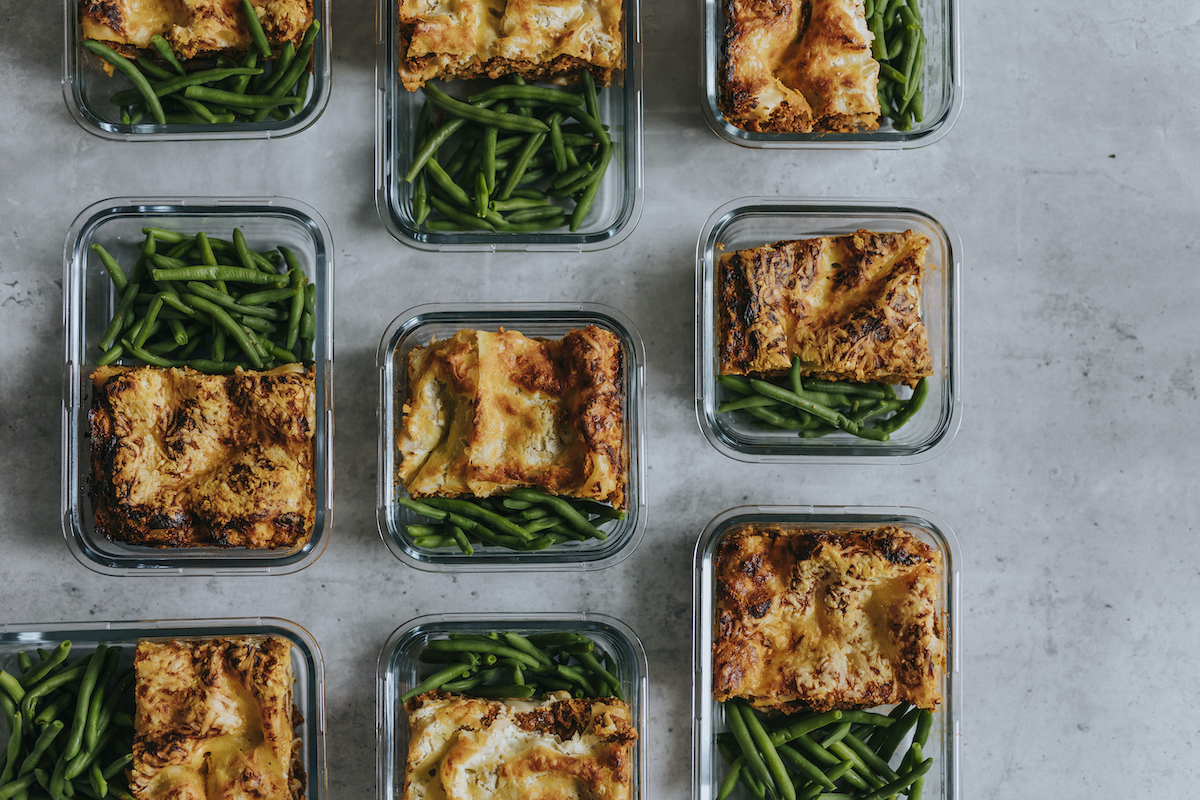
The next step is naming the season you’re in. Or admitting that you’re already deep in it. Based on external demands or internal cravings, you might decide that this is a stretch where you’re going to lean on repetition, on purpose. What that looks like will vary from kitchen to kitchen. You’re allowed to eat the same breakfast for months (or, in the case of my grandfather, for years: peanut butter toast, a banana and a cup of coffee). You’re allowed to make one pot of soup and ride it all week. You can cook two large things on the weekend — a pan of baked ziti, a pot of curry — and alternate between them until takeout night rolls around on Friday.
Naming the season does a few useful things. It helps you be more intentional about what you buy and what you cook: which meals are worth extending your energy on, and which ones just need to be reliably good. It also helps set expectations with the people you eat with most often, opening the door for feedback rather than resentment — this is what we’re doing right now, and here’s why.
The first step is recognizing — and really believing — that repetition is often what allows people to stay nourished when energy, money, time or curiosity are in short supply
One way to think about this is as the food equivalent of a capsule wardrobe. You don’t wear the exact same thing every day, but you take comfort in knowing there’s a small rotation of combinations that work. A capsule wardrobe doesn’t have to be beige or boring; it can include sequins and feathers if that’s your thing. You just get to decide whether those belong in your daily rotation, or are saved for special occasions.
The same can be true of how you eat.
And when the people in your household have different appetites for novelty, modular meals can help bridge the gap. Anything with toppings is a quiet triumph: baked potatoes, tacos, rice bowls, chili. The base stays the same; the sense of choice remains intact. Everyone gets fed, and no one has to reinvent dinner from scratch.
And when your appetite for novelty returns—as it tends to, eventually—you won’t have to force it. It will announce itself plainly: a recipe you bookmark without effort, a flavor you can’t stop thinking about, a night when cooking feels like curiosity instead of obligation. You’ll reach for something new because you want to, not because you think you should. That, too, is a kind of knowing.
So the next time you reach past the clinking crowd of condiments for the same familiar jar, you might try not to flinch. You might even feel a small sense of relief. This is not a failure of imagination, or care, or ambition. It is evidence that you have learned something about yourself and the people you feed. You know what works. You know what you need right now. And for tonight, at least, that is enough.
Read more
about this topic