
I yearn for my mother’s perfect rice pudding. You will, too
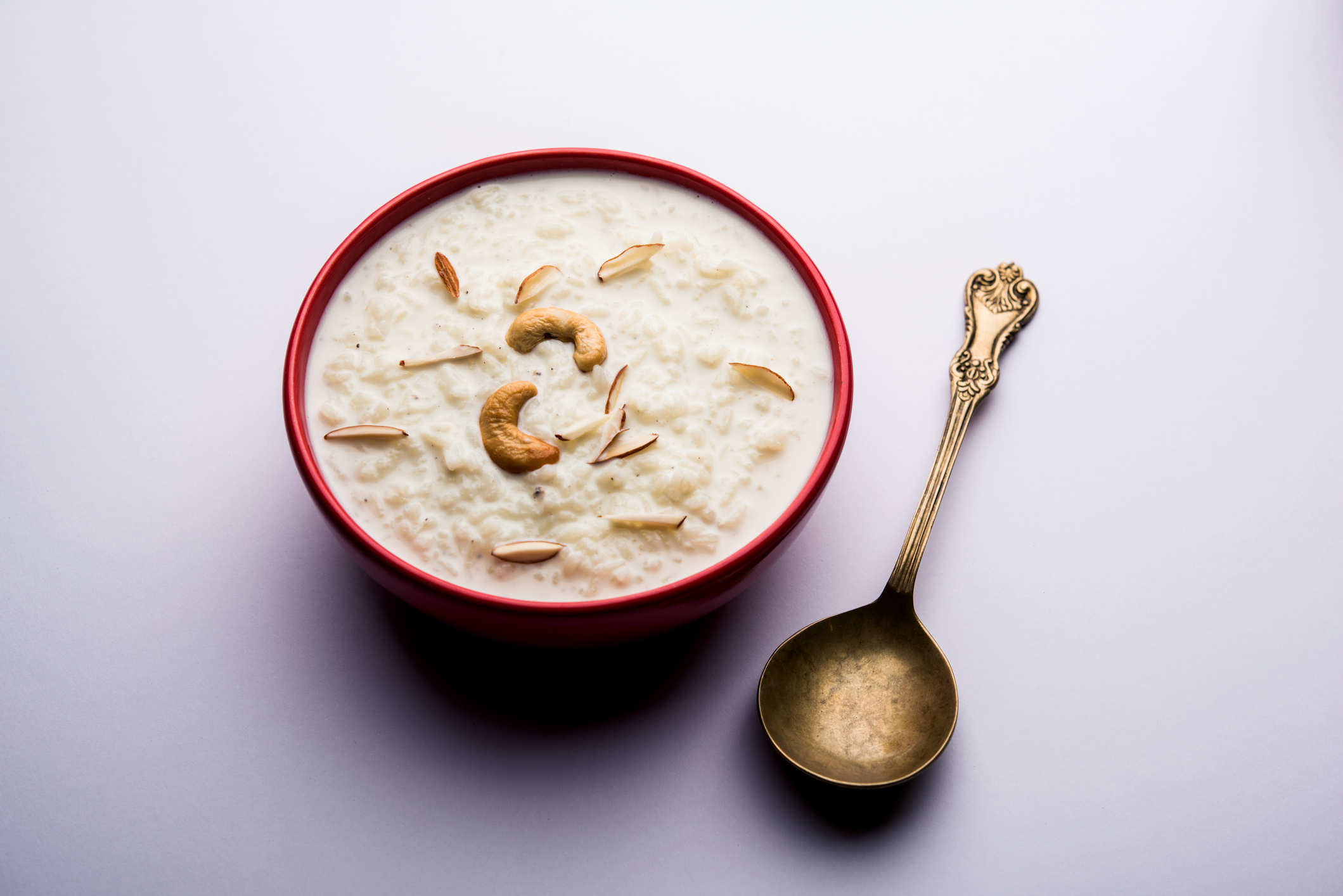
January happens to be an especially celebratory month for my family and me. My younger brother’s birthday falls on the first day of the year. My parents’ anniversary arrives just a few weeks later. And my birthday beautifully closes out the entire month.
For us, January is a month of indulgences, namely the sweet kind. It’s when we enjoy slices of birthday cake to our hearts’ content, savoring every single crumb and licking our plates clean of any frosting. It’s when we make it a point to request a complimentary dessert when we go out to eat, regardless of how full our bellies may be. But most importantly, it’s when we savor bowls upon bowls of my mother’s homemade rice pudding.
In our Bengali household, traditional rice pudding is called Payesh. But to others within the Desi diaspora, it’s Kheer, Khiri, Phirni, Payasam, Paal Payasam and Gil-e-Firdaus. Many of these terms are rooted in Sanskrit: Kheer originates from the Sanskrit term kshira, which means milk or a dish made from milk; Payesh and Payasam originate from the Sanskrit term pāyasa, which means the same.
With the dessert’s many names come many historical recollections of its origin. “The widespread nature of Kheer and other rice puddings have brought to light several disputes about the origins of the beloved dessert, but it is evident that Kheer has been a feature in South Asian diets dating back centuries, owing to its mention in Ayurveda,” wrote Riyadh-based pastry chef and food journalist Nashwa Ansari. Payesh is believed to have originated nearly 2,000 years ago, as an offering to the Hindu gods in the Lord Jagannath Temple in Orissa, the former name of the eastern Indian state of Odisha. Today, Payesh has become more than just a dessert — it’s a symbol of both prosperity and good fortune. Payesh is commonly enjoyed during several auspicious occasions: birthdays, weddings, religious festivals and baby showers. Perhaps it wouldn’t be so far-fetched to say that us Bengalis have an ingrained adoration for Payesh. It’s in our blood. After all, many of us have savored it before we’ve even come out of the womb.
I’ve always loved Payesh growing up, but recently, I’ve come to appreciate its quiet beauty. Payesh isn’t ostentatious, it doesn’t demand to be seen. Nor is it complicated to master. It’s simple and humble yet deliciously rich.
There’s an art to making Payesh, too. I still have vivid memories of birthdays past, watching my mother open her large rice drum to scoop out cups of short-grained rice, then wash it under running water, making sure no grain escaped into the dark abyss that is the sink drain. There’s the bubbling hum of rice boiling on the stove, the intoxicating aroma of warm milk infused with jaggery and fresh pods of cardamom filling the house with a scent no candle could compete with. Within minutes, fresh Payesh was served, beckoning everyone to the dining table with an unspoken yet unifying urge. We’re all hungry. But most importantly, we’re all looking forward to reveling in the sheer comfort that a pot of warm Payesh can evoke.
Want more great food writing and recipes? Sign up for Salon’s free food newsletter, The Bite.
A few weeks ago, when I was back home in Maryland for the holidays, I was telling my mother about my months-long craving for rice pudding. It all started when I’d found myself inside a rice pudding establishment in Lower Manhattan while running errands. There I was, standing in front of a counter full of various flavors — caramel, cheese cake, carrot cake, rum & raisin. Although my stomach growled with anticipation, my heart and mind remained unsettled. This rice pudding wasn’t my mother’s. Deep down, I yearned for her’s.
I’ve come to the realization that my mother’s Payesh has become a delicacy for me now that I’ve moved away from home. I know it will be there to welcome me back, like a deep hug, when I do return to celebrate those special moments with my loved ones. But until then, there’s only one way to satisfy those cravings: learn to make my mother’s Payesh myself.
I’ll be honest, I was pretty intimidated to attempt this recipe. I was afraid it wouldn’t taste the same as the pudding I’d grown up loving. But I was pleasantly surprised, with both the pudding and my ability to make it.
If you’re craving rice pudding this season, be sure to give this recipe a try. It’s inspired by my mother’s homemade Payesh and includes a non-dairy option for my fellow lactose intolerant warriors.
My mother’s Payesh (Rice pudding)
Yields
2 to 4 servings
Cook Time
50 minutes
Ingredients
For the rice pudding:
1/4 cup Gobindobhog rice or fine quality Basmati rice
2 1/2 cups whole milk (or non-dairy coconut milk)
1/2 cup sugar
2 cardamom pods, slightly crushed for flavor
For the garnish:
7 to 8 blanched, chopped almonds
Directions
-
Wash the rice under water and soak it in ½ cup of cold water for 20 minutes.
-
Drain the water. With your hands, gently crush the rice and add another ½ cup of water. Crushing the rice will thicken the milk when it’s cooked and give the Payesh a creamy, pudding-like consistency.
-
In a medium-sized pot, heat the milk and fresh cardamom pods over medium-high heat and bring to a boil. If you’re using coconut milk, simply bring to a simmer.
-
Lower the heat and add the crushed rice grains and water. Make sure to stir the rice and milk so that the rice doesn’t clump up. Stir over medium heat for 10 minutes. Reduce the time to 5 minutes if you’re using coconut milk.
-
Add the sugar and closely monitor your pot. Don’t leave the pot unattended as the milk can over boil. Additionally, don’t be afraid if a sticky film, known as milk skin, forms on top of the milk. It’s edible, nutritious and delicious!
-
Cook for another 10 minutes, or until the sugar has dissolved completely and the rice is cooked. Keep the pot at room temperature to cool.
-
Remove the cardamom pods before serving. Serve Payesh at room temperature. If you’d like to enjoy it cold, divide the pudding into individual ramekins and place it in the refrigerator for an hour before serving.
-
Garnish the rice pudding with chopped almonds for a slight crunch.
Read more
about rice: