
The rock critic who inspired “Saturday Night Fever” always preferred pop
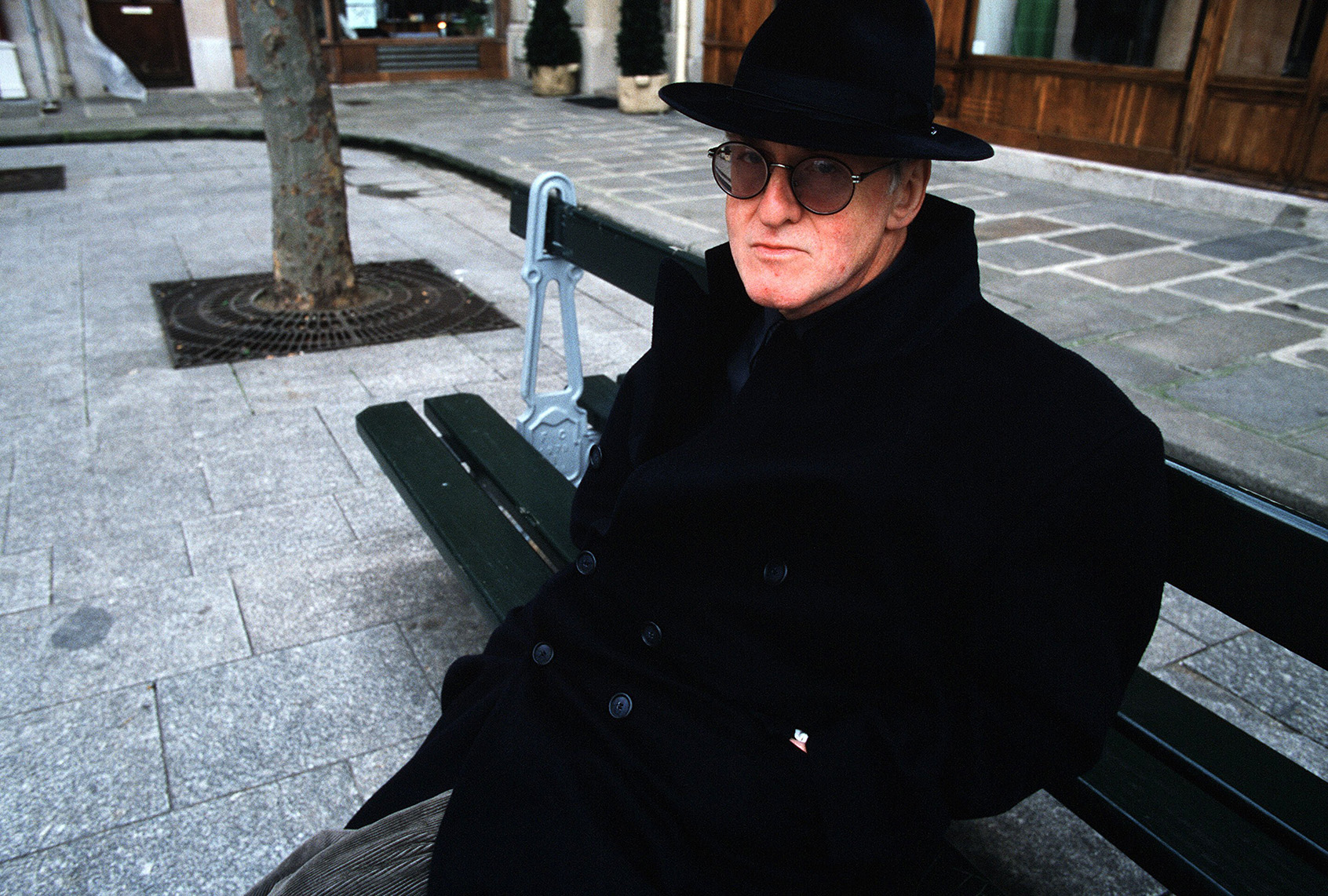
Nik Cohn’s “Corner Boy: Loiterings New and Old” is alive with mystery, intrigue and revelation. An exquisite anthology of Cohn’s writing from his early days through the present, “Corner Boy” bristles with the electric, contrarian voice of a working cultural critic.
But as Cohn pointed out to me during a recent interview, the notion of being considered a critic has never felt comfortable to him. “I never thought of myself as a critic, really. And certainly not at that time. I saw myself as a pop writer.”
While his work associated with The Beatles, The Who and The Rolling Stones would see him branded as one of the premier rock critics of his day, he vastly preferred pop’s egalitarian “ethos,” admitting, “I didn’t really identify with rock very much. I liked rock ‘n’ roll, in the ’50s.”
But as rock grew and changed as a genre, it became “torturing” to Cohn’s ears, with bands competing in terms of their comparative loudness and audacity. And besides, he says, “I liked singles. I didn’t like albums.” For Cohn, pop, unlike rock, offered “a quick hit,” in contrast to album-oriented fare. When a new single comes out, says Cohn, “you’re walking down the street, you’re driving, and you hear something coming out of a window, out of a basement, and it knocks you out. And it’s over, and for three months, you can’t listen to anything else.”
Conversely, with an album, you take it home, “keep it for 20 years and contemplate its tracks,” says Cohn. “What I wanted was the physical buzz, the immediacy, and that’s a single, that’s a jukebox. It’s this kind of moment of immediacy that exists in a certain space and time. If you go to the jukebox and you play the song, while it’s the recording that we may all know and love, it’s happening to you in that very instant.”
Want more from culture than just the latest trend? The Swell highlights art made to last.
Sign up here
When Pete Townshend debuted “Tommy” for Cohn in the late ’60s, the rock opera lacked that same sense of immediacy. “Pete starts writing,” Cohn recalls, “and he comes up with his whole concept. He worked in the studio for months, and finally, he wanted to play something to me. And it was very, very serious.” Not mincing words, Cohn told him that “there’s some interesting things here, but there’s no excitement.” And that’s when the idea for “Pinball Wizard” came to the songwriter, who used to play pinball at the local arcade with Cohn and The Who’s producer Kit Lambert. “So he wrote ‘Pinball Wizard,’ which he knew I’d be a sucker for.”
Cohn is perhaps most famously known as the writer behind “Saturday Night Fever,” the film that captured the disco era for a generation. The movie was based on Cohn’s New York Magazine article on the “Tribal Rights of the New Saturday Night.” Back in those days, Cohn recalls, “New York was crumbling, was in terrible shape. And that’s when disco came out as a trickle in Black gay clubs in Harlem, and from there, it came downtown, and then spread to the boroughs.”
Smelling a story, Cohn took a taxi out to Brooklyn’s 2001 Odyssey club. “It was the dead of winter, and there was this 18-year-old, I would say, standing in the doorway, hunched over against the cold.” For Cohn, “something echoed there” in the image of the young man, who reminded him of the young, wayward Englishmen of the 1950s. The next evening, Cohn made the long slog back out to 2001 Odyssey, but the young man had disappeared. “I didn’t find him again. I didn’t find anybody there. So, what to do?” Desperate to capture the feeling he had experienced the night before, “I made it up, really. It was a work of fiction.”
As with his mother, who wrote tall tales during his Northern Irish youth, Cohn resorted to literary imagination and exaggeration to bring the story to life. “It’s just a little magazine story, and not my best work,” says Cohn. “I mean, I knew even then, it wasn’t my best story. It was something that I immediately wanted to take back and do over again.” But in short order, Cohn’s New York Magazine article was adapted into “Saturday Night Fever,” a blockbuster film and one of the bestselling albums of all time.
For Cohn, the entire experience was transfixing. “It was completely discombobulating. It seemed to be unreal for me. It was as if it was happening to somebody else. It was great to have that amount of attention. But at the same time, it wasn’t what I signed up to do when I became a writer, and I kind of lost contact with myself with disastrous consequences.” Those disastrous consequences included a drug bust in the 1980s at the hands of the FBI. Although the charges were later dropped, the whole experience forced Cohn to reconsider his place in the world. “It made me put my foot on the brakes and think, ‘What are you doing with your life here?’” He stopped using and quite literally met his future wife at the jailhouse door.
But as “Corner Boy” so presciently reminds, Cohn has never given up his contrarian voice and his yen for anti-complacency and ferreting out new experiences.
Read more
about this topic