
Bar Misconduct: Supreme Court judgment puts LPDC in the dock
By Ikechukwu Nnochiri
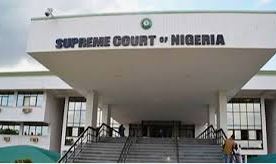
The Supreme Court, on June 26, delivered a landmark judgment that appears to have placed in the dock decisions of the Legal Practitioners Disciplinary Committee (LPDC) on allegations of misconduct by lawyers.
In a five-to-two decision, a seven-member panel of the court declared section 12(7) of the Legal Practitioners Act (as amended) (LPA) unconstitutional, with the result that the court will no longer hear appeals from the LPDC.
The LPDC is the statutory body that disciplines legal practitioners in Nigeria.
It hears petitions and exercises quasi-judicial powers that allow it to impose sanctions as serious as striking a lawyer’s name off the Roll or suspending a lawyer from practice for a fixed period.
The Body of Benchers appoints the members of the LPDC on the nomination of the Nigerian Bar Association (NBA), and the Attorney-General of the Federation is its statutory chairman.
Before the June 26 judgment, appeals against rulings and directives of the LPDC were lodged directly with the Supreme Court.
This time, the appellant was a Warri-based lawyer whom the NBA had brought before the LPDC for allegedly obtaining money by false pretence as the purchase price for land that did not belong to him.
At the conclusion of the hearing, the LPDC found the lawyer culpable and directed the Chief Registrar of the Supreme Court to strike his name off the Roll of Legal Practitioners.
It also ordered the disbarred lawyer to refund the sum of N1.6 million to the nominal complainant, Mr. Tosan Olukpe, through the NBA within 30 days.
The ruling led to appeal number SC/481/2018, Ben Mene-Ejegi v. NBA & LPDC, which the Supreme Court has relied upon to divest itself of jurisdiction to entertain direct appeals from the LPDC.
When the case was called up, the apex court had suo motu raised a question for the parties to address on whether an appeal lies directly from a direction of the LPDC to the Supreme Court, in view of its decision in Osuji v LPDC (2025) 17 NWLR (Pt 2014) 317.
In their separate submissions, the parties agreed that appeals against LPDC directives lie to the Supreme Court.
Specifically, the NBA relied on sections 11 and 12(7) of the LPA to contend that, following the decision in LPDC v Fawehinmi (1985) 2 NWLR (Pt 7), the amendments leading to Decree No. 21 of 1994 restored the right of direct appeal.
It argued that the apex court had, in a plethora of decided cases, consistently exercised its jurisdiction in appeals from the LPDC.
The parties further drew the court’s attention to its decision in Okike v LPDC (2005) 3-4 SC 49, which they said affirmed that section 233(1) of the 1999 Constitution did not expressly or impliedly oust its jurisdiction to hear such appeals.
In the majority judgment, however, five Justices on the panel, after dismissing the parties’ submissions, held that section 12(7) of the LPA, to the extent that it purports to confer a direct right of appeal from the LPDC to the Supreme Court, is null and void by virtue of section 1(3) of the 1999 Constitution (as amended).
Referring to section 233 of the Constitution, which confers on the Supreme Court jurisdiction to hear appeals from the Court of Appeal, the panel noted that section 240 empowers the Court of Appeal to entertain appeals from a range of courts and tribunals.
Invoking the Latin maxim expressio unius est exclusio alterius, the majority stressed that although the National Assembly may expand the appellate jurisdiction of the Court of Appeal by statute, such as the LPA, it has no corresponding power to confer additional appellate jurisdiction on the Supreme Court.
The Court held that no Act of the National Assembly can enlarge the appellate jurisdiction of the apex court beyond the limits expressly prescribed by the Constitution.
The Supreme Court held that an appeal can reach it only from the Court of Appeal.
Therefore, the lawyer’s appeal against the LPDC was dismissed by the Supreme Court for want of jurisdiction.
Meanwhile, the judgment appears to have exposed a gap that could undermine the LPDC’s decisions, particularly since aggrieved lawyers have no legally viable channel of appeal.
Already, on September 28, the Federal High Court in Abuja halted the enforcement of a ruling by the LPDC that imposed a three-year suspension on a Senior Advocate of Nigeria (SAN), Chief Joe Kyari Gadzama.
The senior lawyer was accused of poaching a colleague’s brief, which led to a complaint of professional misconduct against him.
Despite his claim of innocence, the LPDC, after considering affidavit evidence from both parties, issued a Direction on July 29 imposing sanctions on Gadzama, including a three-year ban from practising law.
Dissatisfied with the decision, Gadzama, SAN, whose initial plan was to take the matter before the Supreme Court, on August 19 relied on the decision in Ben Mene-Ejegi v. NBA & LPDC to take a novel route of approaching the high court for leave to apply for judicial review and to seek an order of certiorari quashing the sanction against him.
After securing the court’s permission, he urged it to determine whether the LPDC’s Direction is liable to judicial review and liable to be quashed by an order of certiorari in the circumstances of the case.
The Applicant based his decision to bring the case before the high court on the absence of an appellate mechanism through which he could challenge the LPDC’s Direction, the Appeal Committee of the Body of Benchers having ceased to have appellate jurisdiction and the basis for a direct appeal to the Supreme Court having been held unavailable.
Gadzama told the court that, in his bid to eliminate any iota of doubt regarding the status of appeals against the LPDC’s Direction, he had written a letter to the Body of Benchers, requesting the constitution or operationalization of its Appeal Committee to enable him to challenge his suspension.
He said that by a letter dated August 13, the legal body informed him that under the present statutory framework, there is no statutory provision establishing an Appeal Committee, saying it would be unable to set up one with appellate jurisdiction, in view of the Supreme Court decision in Ben Mene-Ejegi’s case.
He prayed for the intervention of the court, lamenting that the sanction against him would become operative and enforceable notwithstanding the absence of an effective appellate remedy.
Expectedly, both the Body of Benchers and the LPDC, listed as respondents in the matter, urged the court to dismiss Gadzama’s application, which they said constituted a gross abuse of the judicial process.
It was the respondents’ contention that the high court was bereft of the jurisdiction to exercise supervisory power over the LPDC, its proceedings or Direction.
They contended that matters bordering on professional misconduct by or against legal practitioners are not listed under section 251 of the Constitution, which governs the jurisdiction of the Federal High Court.
Insisting that the discipline of legal practitioners is not connected to the jurisdiction of the court, the respondents argued that, contrary to the depositions of the Applicant, judicial review is not the appropriate procedure to challenge the LPA on any alleged contravention of section 36(2) of the Constitution, in the light of the recent Supreme Court verdict that struck down section 12(7) of the Act.
More so, they argued that Gadzama had no reason to apply for judicial review of the proceedings of the LPDC that led to the sanction against him, since he admitted that he fully participated in the proceedings.
They further argued that an application for judicial review is only available where an administrative or quasi-judicial body exceeds its jurisdiction, breaches the rules of natural justice, or fails to follow mandatory rules.
Delivering his judgment in the matter, Justice Obiora Egwuatu found merit in Gadzama’s case and issued an order halting the enforcement of the decision of the LPDC.
Justice Egwuatu held that it would be unjust to allow the implementation of the decision of the Committee, which is not the final arbiter, in the absence of an opportunity for an appeal to a higher judicial body.
“The law has always been that where there is a right, there is a remedy. This doctrine is expressed in the Latin maxim ubi jus, ibi remedium.
“This maxim is one of the oldest principles of law and the fulcrum of justice that states that where there is a right, there is a remedy. See BabaYusuf v. Stanbic IBTC Bank Plc (2025) LPELR-80393(CA).
“The Applicant’s right of appeal cannot be expropriated from him or denied him in circumstances not created by him and which could have been avoided by the 1st and 2nd Respondents had they taken a cue from the decision of the Supreme Court in Ben Mene-Ejegi’s case, delivered on the 26th of June, 2026, before the 2nd Respondent sat and issued her direction on the 29th of July, 2026.
“Taking the Applicant’s right of appeal from him and proceeding to implement the 2nd Respondent’s direction even before the Applicant exercises his constitutional right of appeal will be akin to beating a child and asking him not to cry. That will not be justice.
“It is on the basis of the above that I find some merit in this application, ” Justice Egwuatu held.
Among others, he barred the publication of the LPDC’s Direction as a final disciplinary determination against the Applicant until such a time that he is provided an avenue to exercise his constitutional right of appeal guaranteed by the Constitution and within the time allowed for such an appeal.
As it stands, the judgments of the Supreme Court and the High Court pose a major challenge to a key disciplinary mechanism in the judiciary, raising concerns about the entrenchment of necessary safeguards for the constitutionally guaranteed rights of access to justice, fair hearing, and appeal for lawyers accused of professional misconduct.