Dolly Parton, American hero and icon of inclusion, dies at 80
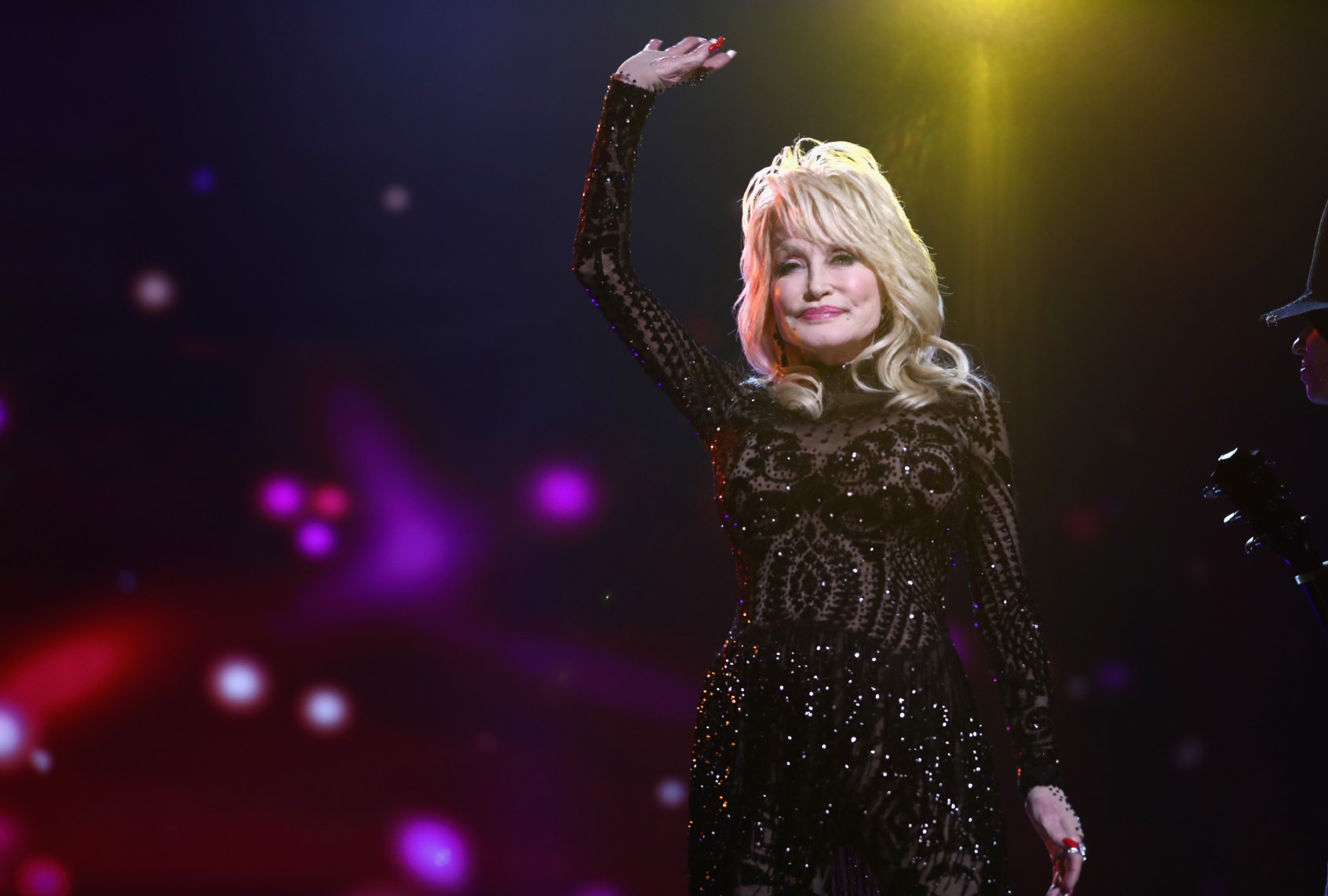
American icon Dolly Parton, whose career as a country singer, songwriter, actor, entrepreneur and philanthropist spanned six decades, has died at age 80.
The news was first announced on Parton’s Instagram account by her nephew Brian Seaver. He did not reveal any specifics about her death but wrote, “This video announcement is something Dolly asked of me years ago, before I fully absorbed it as a future reality. As her head of security for more than two decades, a role my father Larry held before me, I have imagined the heaviness of this moment but haven’t truly felt it til now.
“Dolly has lived in the light and is in the arms of Jesus,” Seaver continued, adding that she was now with her husband of 58 years, Carl Dean, who died in March 2025, as well as her parents and other departed family members.
Parton had canceled a planned Las Vegas engagement in May 2026, revealing that she was being treated for kidney stones as well as other undisclosed digestive and immune ailments. In that statement, she said she hoped to “be up to snuff again soon.”
A consummate entertainer, Parton began her career as a teenager and ended it as the most honored female singer-songwriter of all time, with at least 66 albums, 11 Grammy awards and 25 No. 1 hits on the U.S. country chart (the most by any female artist). She won one Primetime Emmy and was nominated for two Oscars, six Golden Globe awards and a Tony award. She was named the Country Music Association’s Entertainer of the Year in 1978, received the National Medal of Arts in 2004, and was honored with the Kennedy Center Awards in 2006. She was inducted into the Country Music Hall of Fame in 1999, the Rock and Roll Hall of Fame in 2022, the Gospel Country Hall of Fame in 2010 and the Songwriters Hall of Fame in 2001.
Parton was a multi-instrumentalist who recorded songs with country icons (including Kenny Rogers, Willie Nelson, Loretta Lynn and Kris Kristofferson), rock and pop legends (among them Joan Jett, Rod Stewart and her goddaughter, Miley Cyrus) and soul and R&B artists such as James Ingram, Solomon Burke). Her two albums with Emmylou Harris and Linda Ronstadt, “Trio” in 1987 and the follow-up “Trio II” in 1999, are regarded as modern classics. On television, she charmed everyone from Carol Burnett to The Muppets to the “Designing Women.” Quite simply, there was no one like Dolly.
Tributes to Parton have begun rolling in from all over the world of culture, celebrity and public life. Social media began lighting up with broken hearts and collective commiseration within moments of Seaver’s Instagram post.
Quite simply, there was no one like Dolly.
Born in 1946 in Tennessee’s Smoky Mountains, Parton grew up with her mother, father and 11 siblings in a two-room cabin. She began performing as a child to help support her family, and began writing songs — often with her uncle, country singer Bill Owens — as a teenager. Her first album, “Hello, I’m Dolly,” was released in 1967. That same year, country star Porter Wagoner invited her to join his syndicated weekly variety show and tour with him throughout the country. The two wrote several top-10 country hits, including “The Last Thing on My Mind” and “Daddy Was an Old Time Preacher Man,” and Wagoner became Parton’s de facto manager. Parton always planned to have a solo career and penned her first Top 10 singles — among them “Joshua,” “Jolene” and “Coat of Many Colors” — during her tenure with Wagoner.
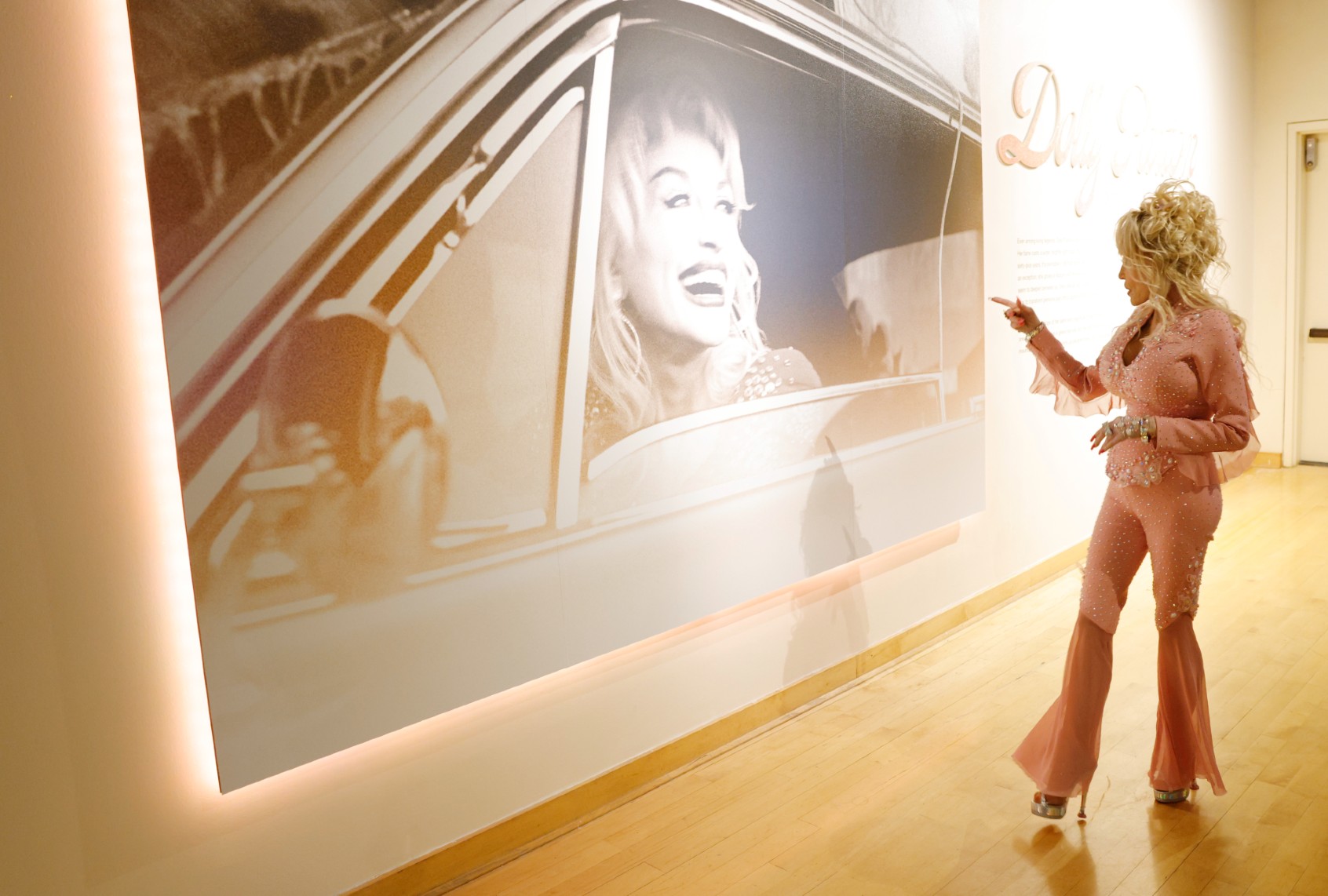
(Jason Kempin/Getty Images) Dolly Parton attends the opening of Country Music Hall of Fame and Museum’s new exhibit “Dolly Parton: Journey of a Seeker” on May 19, 2025 in Nashville.
Parton’s relationship with Wagoner was often contentious — “I never really figured out if we were so much alike we couldn’t get along, or that [it was because] we were so different,” she said — and in 1974, when she decided to leave the show to devote herself fully to her solo work, Wagoner was reluctant to let her go. “He [wouldn’t] listen to me,” Parton recalled in a 2015 interview with the Tennessean. “So I went home and I thought, Well, what do you do best? You write songs.” Her farewell to Wagoner, “I Will Always Love You,” became a No. 1 country hit on its release in 1975 and again in 1982, when Parton re-recorded it for the soundtrack to “The Best Little Whorehouse in Texas.” Ten years later, Whitney Houston’s blockbuster take on the song, recorded for the soundtrack of “The Bodyguard,” became a multiple Grammy winner and the all-time best-selling single by a female artist.
As a solo artist, Parton embraced a wider scope of songwriting, exploring pop and R&B. The title track of her 1977 album “Here You Come Again,” written by Brill Building hitmakers Barry Mann and Cynthia Weil, was her first crossover success; it won a Grammy for Best Female Country Vocal Performance, and from then on, she was a presence on both country and pop charts. By 1980, three consecutive No. 1 country singles cemented her cross-genre appeal, with one, “9 to 5,” simultaneously topping the pop charts.
Want more from culture than just the latest trend? The Swell highlights art made to last.
Sign up here
The 1980s proved to be Parton’s breakout decade. Along with pop and country hits (“Islands in the Stream,” “Why’d You Come In Here Lookin’ Like That”) Parton made an indelible big-screen debut alongside Lily Tomlin and Jane Fonda in 1980’s “9 to 5,” a bitingly funny caper that spotlighted women’s fight for respect and recognition in the corporate workplace. As Doralee Rhodes, a secretary beset by what at the time was not yet called sexual harassment from her odious boss, Parton’s effervesence and crack comic timing helped make the movie the highest-grossing comedy of the year.
Parton became famous at the dawn of tabloid culture, when sexism and objectification of women were still the norm, and a startling number of otherwise intelligent journalists and talk-show hosts simply couldn’t understand that the musician possessed brains and bodaciousness.
She went on to star alongside Burt Reynolds in “The Best Little Whorehouse in Texas” (1982) and Sylvester Stallone in the legendary clunker “Rhinestone” (1984). She had memorable cameos on TV shows like “Designing Women.” In 1989, Parton returned to the big screen in Herbert Ross’ “Steel Magnolias,” in which her straight-talking small-town salon owner, Truvy Jones, was the firm-hold hairspray uniting an unforgettable array of Southern belles. (“If I hadn’t been a star, I would have been a beautician or a missionary,” Parton told Vanity Fair’s Kevin Sessums in 1991.)
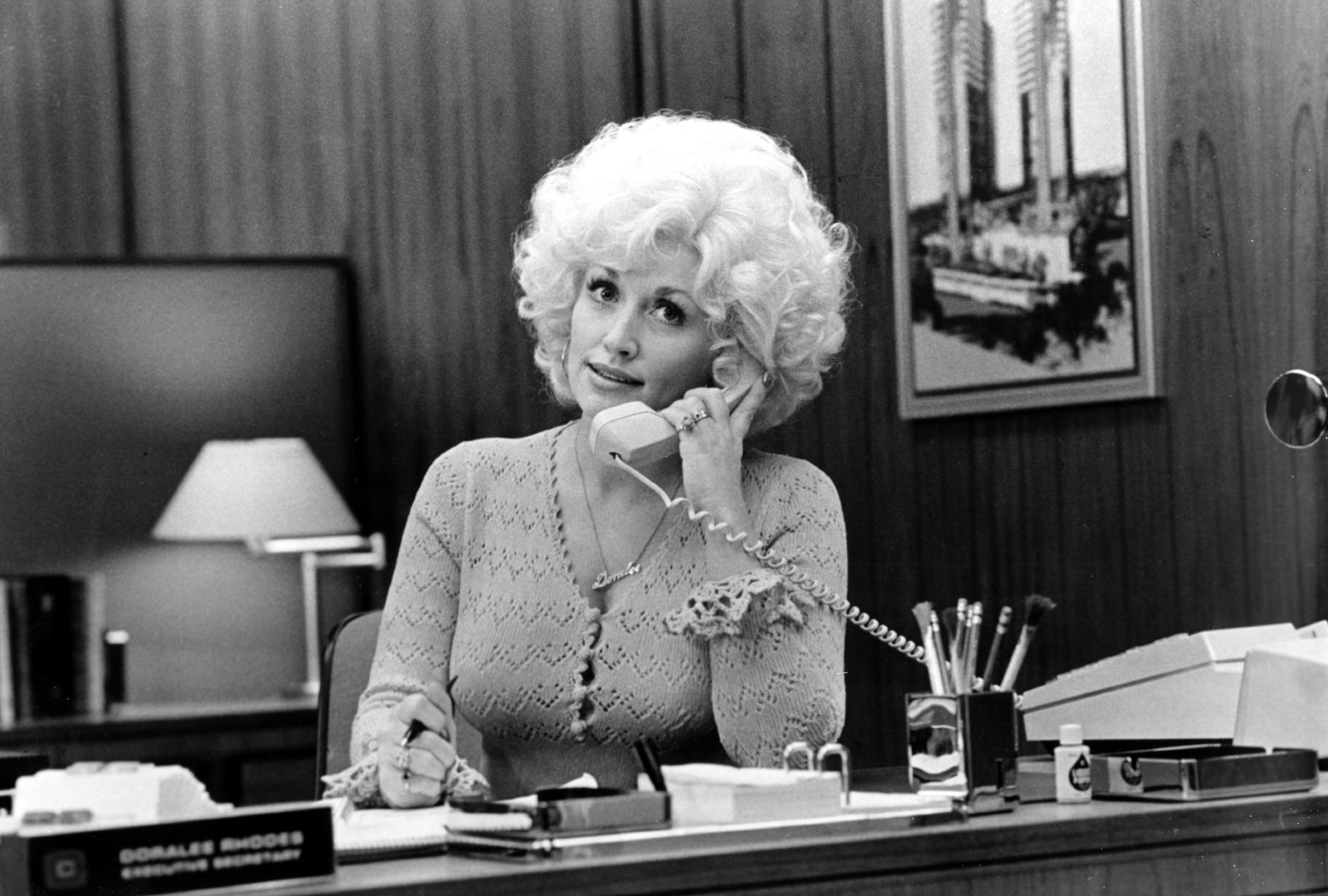
(Michael Ochs Archives/Getty Images) Dolly Parton in a scene from the movie “9 to 5”
Parton became famous at the dawn of tabloid culture, when sexism and objectification of women were still the norm, and a startling number of otherwise intelligent journalists and talk-show hosts simply couldn’t understand that she was a talented musician who possessed both brains and bodaciousness. Her humor was famously both self-deprecating (“I was the first woman to burn my bra — it took the fire department four days to put it out.”) and unbothered (“I’m not offended by all of the dumb-blonde jokes because I know I’m not dumb . . . and I also know I’m not blonde.”) And she wasn’t shy about correcting others’ misperceptions of who and what she was: When Barbara Walters asked her whether, with her huge wigs and surfeit of makeup, she “ever felt like a joke,” Parton didn’t miss a beat, clapping right back: “Actually, all these years, the people have thought the joke was on me, but it’s actually been on the public. I know exactly what I’m doing, and I can change it at any time.”
Even as Parton became world-famous, her life and music remained resonant to women, particularly those of the rural white working class. Sarah Smarsh’s 2020 book, “She Come By It Natural: Dolly Parton and the Women Who Lived Her Songs,” recalled Parton’s voice as a consistent presence in a rural Kansas childhood surrounded by tough women who saw their experiences inside and outside the home reflected in country music. “Working-class women might not be fighting for a cause with words, time, and money they don’t have,” Smarsh wrote, “but they possess an unsurpassed wisdom about the way gender works in the world.” And the music of both Parton’s and Smarsh’s upbringing was “foremost a language among women. It’s how we talked to each other in a place where feelings aren’t discussed.”
An outsized affection for Parton is one of very few things that, over the years, has united Americans: Liberal or conservative, rural or urban, gay or straight, atheist or faithful — we could, if nothing else, agree that Parton’s name should always be prefaced with “national treasure.” (I once searched “Dolly Parton bad” to test my thesis that nobody anywhere has ever voiced that opinion. My internet promptly froze, as if insulted that I had the nerve to suggest such a thing.)
Parton leaves a legacy of both business success and philanthropy that reflected her advocacy for literacy (her father, despite his intelligence, never learned to read or write) and her desire to invest the fruits of her success into the Smoky Mountain region where she was raised. Dollywood, the combination amusement park, concert venue and museum of both Appalachian and personal history was born in 1986 as what Parton unfailingly called “a place for families,” and quickly became the region’s biggest employer, as well as the site of preservation and conservation projects. like the Eagle Mountain Sanctuary, which shelters the country’s largest population of bald eagles that are unable to survive in the wild.
An outsized affection for Parton is one of very few things that, over the years, has united Americans: Liberal or conservative, rural or urban, gay or straight, atheist or faithful — we could, if nothing else, agree that Parton’s name should always be prefaced with “national treasure.”
In 1995, Parton launched her Imagination Library to provide East Tennessee children 5 and under with free books; in the following years, the program expanded nationally and internationally, and now donates an estimated $2.4 million worth of books every month. Parton became famous to a new generation not as a country singer or movie star but as “The Book Lady,” a designation she cherished. Parton herself was a prolific author of memoirs, children’s books and even a crime thriller (co-written with James Patterson), as well as annotated books like “Dolly Parton’s Behind the Seams: My Life in Rhinestones” that tell the story of her career through the lens of her joyful clothing and costumes.
Parton’s philanthropy was unfailingly local: Besides the Imagination Library, efforts to fund and uplift Tennessee business and education included establishing a scholarship fund in Sevier County, research funding for infectious diseases (including a $1 million donation to Vanderbilt University in 2020 toward research and development of a COVID-19 vaccine) and fundraising for wildfire and flood relief and rebuilding. Following Whitney Houston’s death in 2012, Parton invested the royalties she earned from Houston’s cover of “I Will Always Love You” (an estimated $10 million) into an office complex in a Black neighborhood in Nashville, calling it “the house that Whitney built.”
In 2022, her foundation announced a plan to fund the education of all Dollywood employees — full- and part-time, as well as seasonal — effective from the starting date of every employee. That same year, accepting the Carnegie Medal of Philanthropy, Parton said, “I give from my heart. I never know what I’m going to do and where I’m going to do it — I see a need, and if I can fill it, I will.” She has declined to accept the Presidential Medal of Freedom three times (twice under Donald Trump, once under Joe Biden) on the grounds that it would constitute “doing politics,” but allowed, in an interview on the “Today” show, that it was “a nice compliment for people to think that I might deserve it.”
Parton never wanted to stop trying new things. At 77, she decided it was time for a rock album and knocked out “Rockstar,” an album of originals and covers recorded with a slew of guest stars like Heart’s Ann Wilson and Judas Priest’s Rob Halford. She added “baking icon” to her c.v. in 2022, when she began partnering with Duncan Hines on a line of cake, biscuit and cornbread mixes. She kept fans tantalized with rumors that a penchant for long-sleeved shirts in her later years concealed two full sleeves of tattoos.
But even with all the music, movies, words and wit she left for us, a world without Dolly Parton is hard to imagine. Parton did all she did with her fame because stardom, recognition and money never fundamentally changed who she was: an extraordinary woman who lived by her words, gave with her heart and always made the world a little brighter.
Read more
about Dolly Parton