
Ariana Grande fans need to see “Maddie’s Secret”
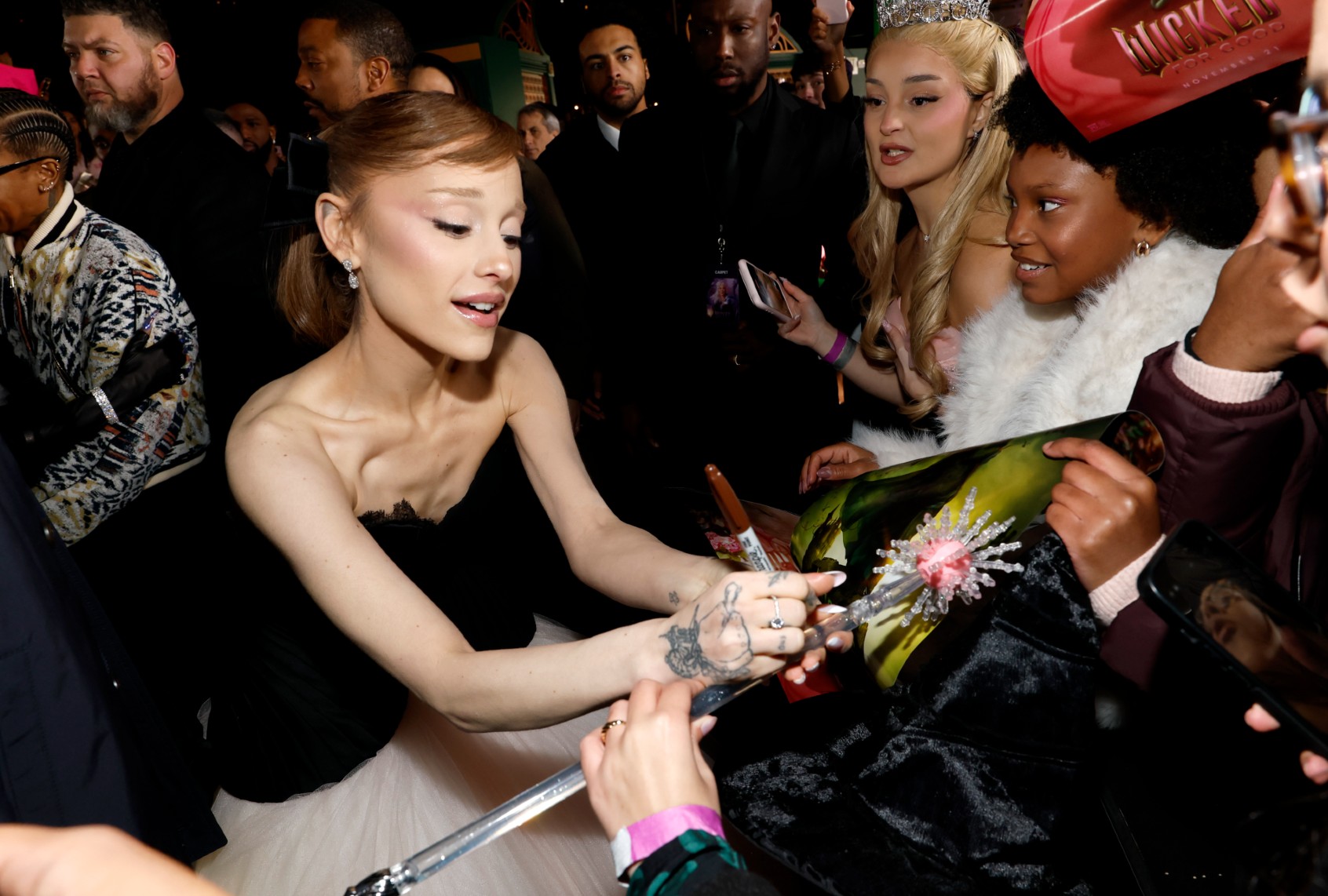
In the music video for Ariana Grande’s latest single, “Petal” — the title track off her eighth album, released last week — viewer discretion is advised. A parental advisory opens the clip, warning of the video’s explicit content and depictions of graphic violence, which culminate in Grande taking a chainsaw to the heads of four cigar-smoking, whiskey-chugging record execs. Earlier in the video, Grande’s character, Pepper, receives their written notes, including one that pointedly contains the critique, “Boring on the eyes, a little homely, couldn’t hurt to lose a few pounds.” The power tool to their throats is supposed to be a moment of personal and artistic triumph, echoed by the raucous cheers from the other women waiting to audition outside the blood-splattered boardroom.
But when Grande emerges from the audition, fake blood glistening from the visible curvature of her sternum beneath her skin, the jubilant, almost extreme response from the rest of the women feels as insidious as the criticisms from the men. They’re blindly screaming their heads off, bolstered by the person who stopped molding herself in someone else’s image, who refused to cater to how the world or the industry thought she should appear. Grande’s defiant self-control over her image is something for them to celebrate, even worship. Her restraint is the commendable trait on which the women hang their devotion. As the chorus of “Petal” puts it, “It’s such a f*cked situation.”
Want more from culture than just the latest trend? The Swell highlights art made to last.
Sign up here
Shortly after the video was released, the internet exploded with concern about Grande’s noticeably svelte appearance, and the scenes in the clip that seemed intended to exploit it. Grande’s stanbase quickly retaliated, saying that those commenting on her weight were bringing back body-shaming and tabloid-era hypercriticism. Detractors responded in turn, worrying that Grande’s ardent fans were enabling the singer’s unhealthy behavior and speculated eating disorder. The worry over Grande’s visible emaciation rendered the video itself moot. Whatever the message was — a self-aware nod to Grande’s own struggles, a defensive reply to those saying she’s too thin, a criticism of blind idol worship — it was quickly lost. A couple of days later, Grande’s team announced that she’d be taking a break from “public-facing work” following the conclusion of her Eternal Sunshine Tour in September. And while Grande later insisted the break was pre-planned and not “reactive or impulsive,” there’s no doubt the announcement was timed to dull the cacophony of both the jeers and cheers.
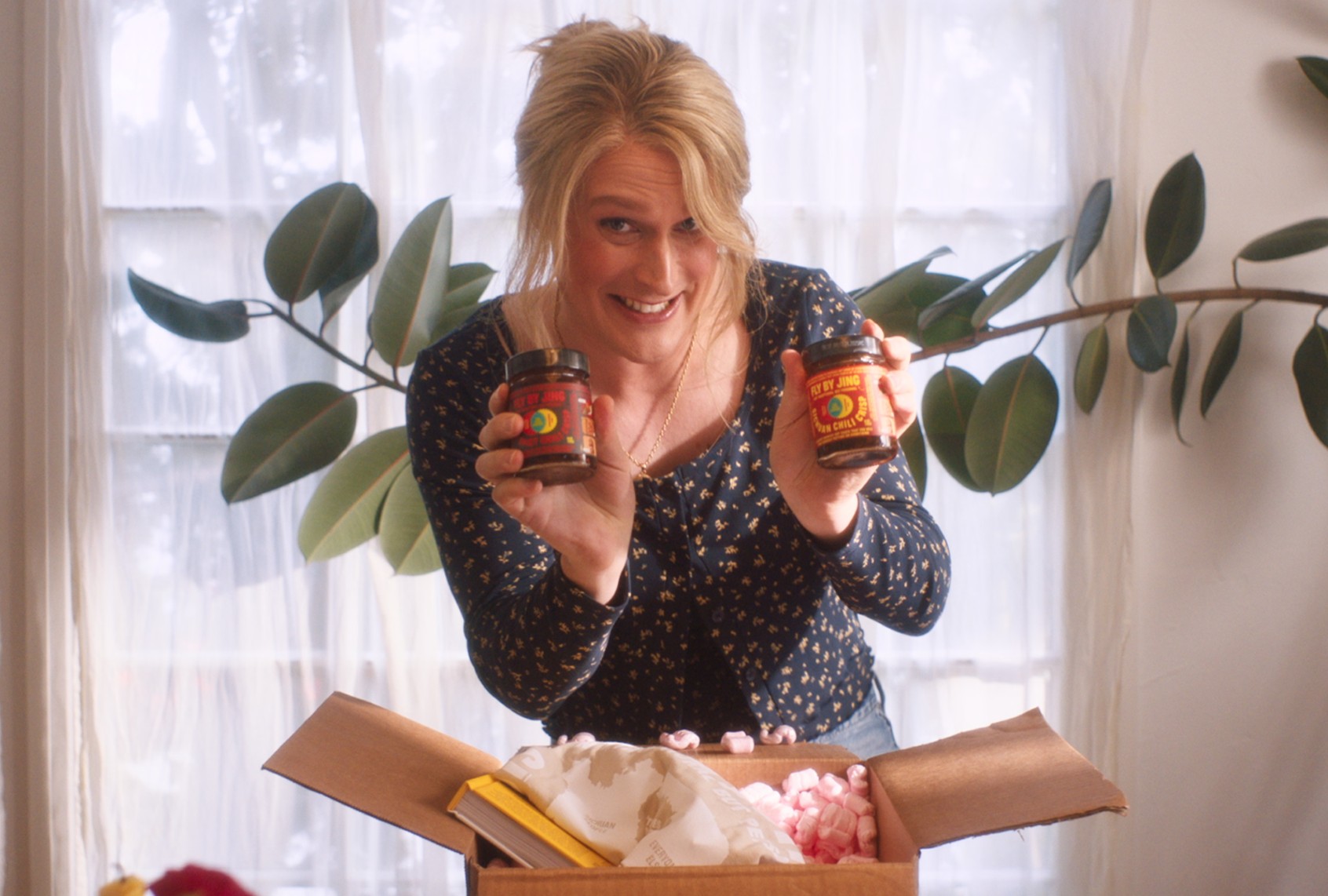
(Magnolia Pictures) John Early in “Maddie’s Secret”
In a moment when no one can quite agree on how to properly address what’s so clearly happening before our eyes with Grande, a film like “Maddie’s Secret” opens a dialogue. It’s not pretty or easy. But then again, movies tend to make the most sense out of the aspects of life that are neither pretty nor easy.
Watching the veneer slip from Grande’s grasp during a pivotal moment in her life is eerily reminiscent of the events in John Early’s wonderful film “Maddie’s Secret,” which coincidentally had its digital release the same day “Petal” hit shelves. In the film, Early plays Maddie Ralph, an aspiring test-kitchen chef at a hip food publication. With a major career milestone within her reach and increased appearances in front of the camera, the sudden pressures on Maddie trigger long-hidden patterns of disordered eating: bingeing and purging, secrets and lies.
And though Early’s film is a melodramatic comedy, it gets patently serious when it comes to the grim realities of eating disorders, taking an unrestrained and, at times, uncomfortable look at the harm enabling can do, and the tragedies it can engender. In a moment when no one can quite agree on how to properly address what’s so clearly happening before our eyes with Grande, a film like “Maddie’s Secret” opens a dialogue. It’s not pretty or easy. But then again, movies tend to make the most sense out of the aspects of life that are neither pretty nor easy.
It helps that Early’s vision of our media-steeped contemporary lives sees through the shiny, digital facade. The company Maddie works for, GourMaybe, functions somewhat like the pre-cancellation “Bon Appétit” test kitchen. It’s so intentionally inclusive and ambitious that it turns right back around to feel limiting, pigeonholing Maddie into a place where she feels in constant competition with her colleagues and herself. While waiting for two of her coworkers to leave a bathroom so she can purge, Maddie hears them discussing an app where you “input all your trauma and it links you up with a therapist, all over FaceTime.” The dance class Maddie attends with her best friend, Deena (Kate Berlant), is “radically inclusive, none of that toxic gym bro stuff.” All of the regimens surrounding Maddie and her illness are purportedly designed to be easily accessible for healthy, honest living. But they’re the same old systems in different clothes. And when Maddie’s disorder tells her she needs to stay in control, she contorts all of this trendy pastel-colored, serif-typefaced wellness to her favor, using it to fuel her harmful compulsions.
Grande moves in a similar space, but without the satire to easily delineate the difference between healthy and unhealthy behaviors. Like Maddie, she can easily cloak compulsions under the blanket of modern body positivity. When her noticeably smaller appearance began to concern people in 2023, Grande took to TikTok, urging the public to be “gentler and less comfortable commenting on people’s bodies . . . [even if you] think it’s good or well-intentioned.” She continued to say this would “keep each other safer” and that “you never know what someone is going through.” Fans have reiterated this messaging as her already thin frame became measurably smaller in the years since. But to turn the other cheek at this point, or even to chalk these changes up to healthful new habits, would be to ignore the obvious. Grande’s music would go on to parrot her sentiments, building a fan-fortified transparent wall between herself and the public — a barrier that would allow us to watch her grow thinner, while blocking every genuine concern.
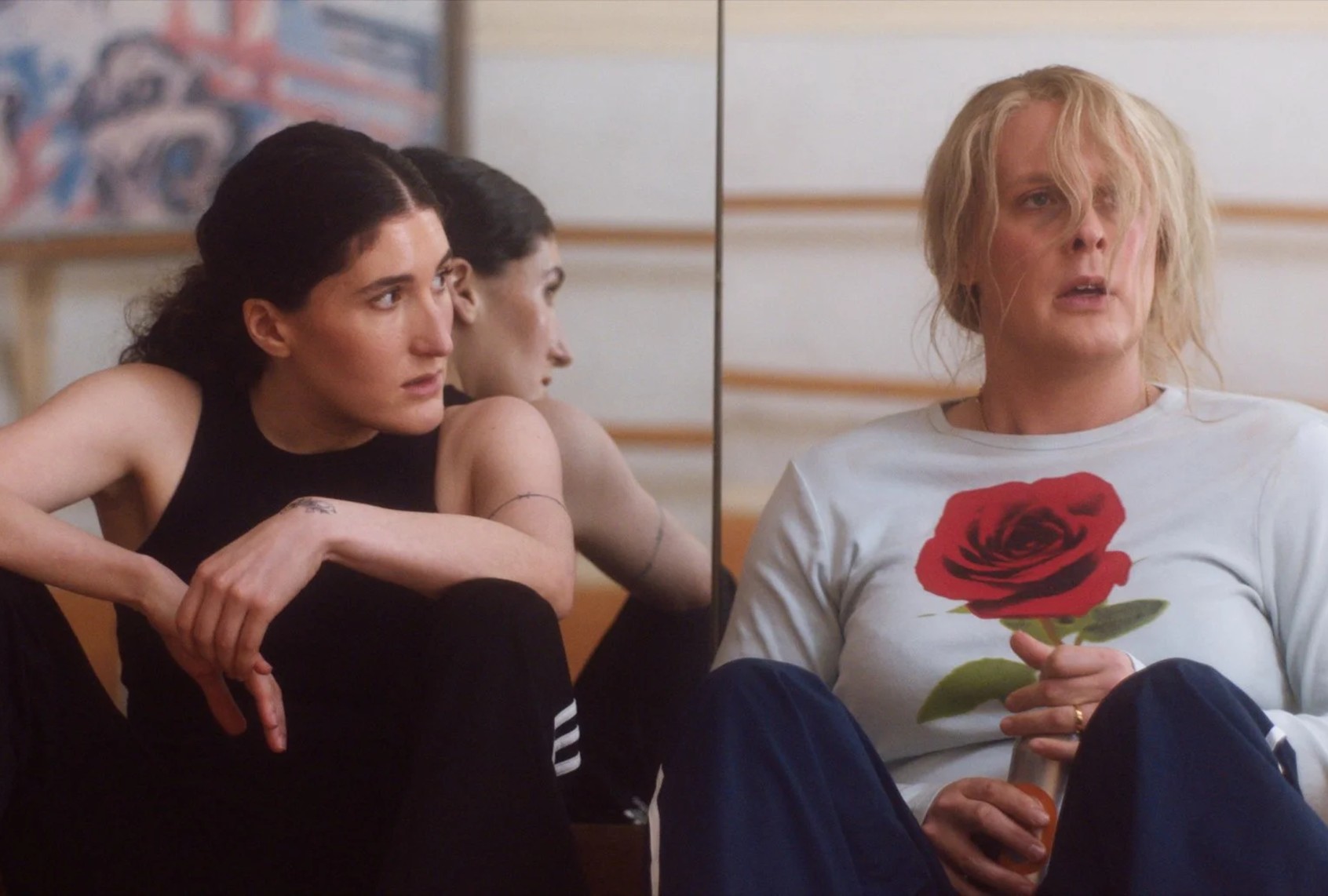
(Magnolia Pictures) Kate Berlant and John Early in “Maddie’s Secret”
“Maddie’s Secret” does an impressive job of highlighting the dangers of this kind of enabling. Deena has an almost stan-like preoccupation with Maddie. Her relationship frequently crosses boundaries, but Maddie permits it because the attention makes her feel good and motivates her disorder. When Deena finds Maddie hunched over the toilet one evening, vomit strewn across her lips, Maddie swears that she’s taking steps to get it under control, and Deena assures Maddie that her secret is safe without providing her friend with the necessary action to actually help her. Deena wants to watch Maddie soar, to see her climb the echelons into food media superstardom.
Like Grande to her adoring fans, Maddie is Deena’s idol, and Deena measures Maddie’s success by her work benchmarks and public visibility. If, God forbid, Maddie should disappear — if Grande departed public life, as she’s now planning on — there would be a hole in Deena’s life. She would have to admit that she’s being wickedly selfish. So instead, Deena keeps an eye out in bathrooms and at dumpsters while Maddie purges. She shrugs off Maddie getting faint at dance class because she threw up her lunch. And then, Maddie collapses.
The health of millions of people doesn’t fall entirely on Grande’s shoulders. There are plenty of other ways that our culture has disguised unhealthy behaviors, as “Maddie’s Secret” so cunningly stresses. But Grande does perpetuate a silence, complacency, and enabling by painting genuine concern as gossipy chatter.
This is where the film becomes its most prickly. Early is interested in the sickly vanity of eating disorders and conceptual femininity, and he explores the danger of these illnesses through a lens that is both uneasy and unique to his film. The stakes are higher and more honest here than in most of the TV movies that “Maddie’s Secret” draws from. Maddie winds up in the hospital after cardiac arrest, a condition she’s far too young for. Her gums are bleeding, her jaw is swollen and there are teeth marks on her knuckles. A hospital psychiatrist, Dr. Kronenfield (Chris Bauer), tells Maddie that she’s at immediate risk of rupturing her stomach or esophagus and dying. “I’ll get it under control,” she tells him. “I’ve done it before, and I’ll do it again.” It’s the same language Maddie sold to Deena, but a view Dr. Kronenfield won’t buy. “You relapsed before, and you’ll relapse again,” he replies, urging Maddie into inpatient treatment.
Here, “Maddie’s Secret” fully diverges from its semi-parodic path, following Maddie to treatment, which, like many people who end up in mandatory care facilities, she doesn’t take seriously, believing she knows her body best. Her flippancy is only exacerbated by Deena, who fakes a bulimic health scare to join treatment and jailbreak Maddie so she can prepare for a major interview that will dictate her future at GourMaybe. But as Dr. Kronenfield warned, impulsion begets compulsion, and the decision causes Maddie’s horrific relapse and leaves Maddie’s rehab roommate (Vanessa Bayer) alone and vulnerable to her own illness.
(Anna Webber/Getty Images for Cold Stone Creamery & Wetzel’s Pretzels) Ariana Grande and Taylen Biggs
That’s the kind of ripple effect that such wanton enabling can have, even if it’s not intentional. Perpetuating these kinds of gravely serious illnesses extends the sickness past the confines of our own bodies, and into the world around us. For someone like Ariana Grande, who has millions of eyes on her at all times, the potential for harm is astronomically magnified. Surely she understands that. But when a fair portion of those millions are telling her that she looks perfect and encouraging her to keep going, keep performing, keep working, all for their entertainment, of course it becomes harder to see that the only thing they really want is for her to keep running herself ragged.
The health of millions of people doesn’t fall entirely on Grande’s shoulders. There are plenty of other ways that our culture has disguised unhealthy behaviors, as “Maddie’s Secret” so cunningly stresses. But Grande does perpetuate a silence, complacency, and enabling by painting genuine concern as gossipy chatter.
Pro-anorexia and pro-ED content has exploded over the last decade. What was once tucked into corners of the internet is now visible just beneath the sheen of any social media algorithm. A film like “Maddie’s Secret” accurately portrays idolization and enabling with as much horror as it should. Early plays Maddie’s lowest moments with raw sincerity and expressions of utter helplessness — visible cries for help, acted out with total concern and love for the feminine. In its own special way, the film provides an accessible entry point to discussing these matters, one that crashes through the transparent walls Grande, her fans, and the well-intentioned body positivity movement have built around her. If talking about a woman’s body is so radioactive that we can’t even begin to address the issue, leave it to Early — a man channelling his love for headstrong women who get so swept up in the world’s expectations that they risk losing it all — to speak out of turn.
Read more
insights into Ariana Grande’s last few years