
How PFIPC was created — Accountant-General
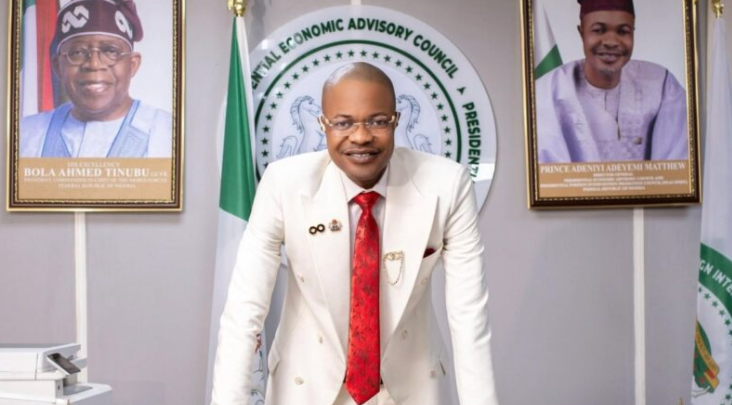
***Reps summon Adeyemi, order IGP to produce him tomorrow
By Gift Chapi Odekina
ABUJA — The House of Representatives Committee investigating the alleged operation of the Presidential Foreign Intervention Promotion Council, PFIPC, yesterday ordered the Inspector-General of Police, IGP, Olatunji Disu, to produce the alleged mastermind, Mr. Adeniyi Matthew Adeyemi, before it by noon tomorrow.
This is even as the Accountant-General of the Federation, Shamseldeen Ogunjimi, revealed that a forged letter which purportedly originated from the State House was allegedly used to secure official government recognition for the PFIPC, also known as Presidential Economic Advisory Council, PEAC.
It issued the directive after the Nigeria Police Force confirmed key aspects of its ongoing criminal investigation, including petitions from the Office of the Chief of Staff to the President who alleged that Adeyemi fraudulently presented himself as Director-General of the purported Presidential Economic Advisory Council and the Presidential Foreign Investment Promotion Council.
Consequently, chairman of the committee, Yusuf Gagdi, ruled that Adeyemi’s appearance had become necessary because of the gravity of the allegations and their implications for individuals and government institutions.
“This committee clearly needs the suspected D-G to appear before this committee. People’s names are involved. People’s integrity are involved. Institutional names are involved. Institutional integrity is involved.
“It is not an option now. We will need him here to confirm some documents to us in such a way that will not undermine our investigation to enable us submit our report on time,” Gagdi said.
The committee, thereafter, directed its clerk to formally write to the Inspector-General of Police.
“The committee hereby resolves that the Inspector-General of Police do kindly present Mr. Matthew Adeyemi on Wednesday by noon. That is the ruling of the committee,” Gagdi declared.
Earlier in his submission, an Assistant Commissioner of Police, Basir Abdullahi, who represented the Inspector General of Police informed lawmakers that while criminal investigations were still ongoing, the police had already filed an eight-count charge before the Federal High Court against the suspect.
“The Nigerian Police Force investigated part of this case late last year and filed eight-count charges before a Federal High Court. The case is ongoing,” the officer said.
He added that the suspect had been arrested and arraigned, warning that disclosing further details could prejudice ongoing investigations and judicial proceedings.
“We don’t want to say things that are under investigation. It is definitely going to prejudice the ongoing investigation and make people have opinions that may prejudge the outcome of an investigation or judicial decision,” he stated.
Despite the caution, the committee sought confirmation of documentary evidence already in its possession.
The police confirmed that on October 17, 2025, the Chief of Staff to the President petitioned security agencies over allegations against Adeyemi, leading to investigations that culminated in criminal charges bordering on conspiracy and fraud.
The police also confirmed receiving another petition alleging that Adeyemi falsely paraded himself as the Director-General of the Presidential Economic Advisory Council and the Presidential Foreign Investment Promotion Council.
According to the police, the petition further alleged that the suspect used the purported office to secure accommodation at the federal secretariat, sought approval to recruit about 300 staff, attempted to insert about $1.3 billion into the 2026 Appropriation Act for the non-existent agency and planned a World Investment Summit under the platform of the purported council.
One of the major moments during the hearing came when the committee compared signatures on documents allegedly issued by the Office of the Chief of Staff to the President with signatures on authentic correspondence obtained from the police.
Asked whether the signatures matched, the police witness responded unequivocally: “They are not the same.”
The committee chairman said the discrepancy reinforced concerns that official State House documents might have been forged.
Gagdi added: “So, it is not only a letter that was suspected to be forged. We are dealing with documents that include what is said to be a forged Act of the National Assembly in an attempt to establish a fake agency.”
He disclosed that investigators had so far identified about 29 allegedly forged documents, including purported approvals from the State House; Office of the Head of the Civil Service of the Federation; Office of the Secretary to the Government of the Federation; the Ministry of Finance ;and other government institutions.
According to him, several of the affected agencies have already appeared before the committee and disowned documents attributed to them.
The chairman, however, stressed that the committee deliberately avoided compelling the Police to disclose details capable of undermining ongoing criminal investigations.
“We are avoiding a situation where they will be pushed… to make statements that will undermine their ongoing investigation,” he said.
The committee chairman assured that the House investigation will proceed independently, adding that its final report could recommend further action by security agencies.
Forged State House letter used to create PFIPC, Acct-General reveals
Also at the hearing, the Accountant-General of the Federation, Shamseldeen Ogunjimi, told the House committee that his office acted on what appeared to be a genuine State House correspondence requesting the creation of an administrative code for the council, only for investigations to later reveal that the letter did not originate from the Presidency.
Presenting his report before the committee, Ogunjimi said the first interaction between his office and the purported council occurred in November 2024.
According to him, a letter dated November 7, 2024, bearing a State House reference number, requested creation of an administrative code for the Presidential Economic Advisory Council for budgeting, accounting and reporting purposes.
He explained that, following established procedures, the Office of the Accountant-General created the administrative code and communicated the approval back to the State House, while copying the Office of the Auditor-General.
He said the office subsequently received additional requests from the purported council, including applications for self-accounting status; staff deployment; Treasury Single Account, TSA, and domiciliary accounts; and funding approvals.
However, he stressed that despite the processing of some administrative requests, no government funds were ever released to the council.
“It is important to note that no funds were released under salaries, overhead, capital, or any form of intervention or special allocation to the council,” Ogunjimi told lawmakers.
He disclosed that although the council requested an establishment grant of N27.4 billion, the request was never approved because there was no budgetary provision to accommodate it.
He also explained that while two domiciliary accounts were opened by the Central Bank of Nigeria, CBN, for inflow purposes, they never became operational because the council failed to meet regulatory requirements.
During the hearing, lawmakers questioned how the purported agency successfully navigated government processes without raising suspicion.
Responding, Ogunjimi made a startling revelation that the original letter requesting the administrative code was not issued by the State House.
“The letter that was received by the Treasury… was respectfully addressed as coming from the State House. That letter was never issued by the State House,’’ he said.
The disclosure prompted committee members to describe the correspondence as a “hijacked” State House letter allegedly used to mislead government institutions into processing requests for a non-existent agency.
Lawmakers also sought explanations on how staff originally posted to the Office of the Chief Economic Adviser to the President eventually became attached to the purported council without the knowledge of the Treasury.
Ogunjimi explained that two officers deployed to the Office of the Chief Economic Adviser in 2010 and 2013 remained there after the office was allegedly taken over by the new council, without any formal notification to the Office of the Accountant-General.
He said: “It was never assumed or written to us that those two officers were being taken over. The staff also never reported to the office to say another council had taken over the office and the name had changed.
“As far as I was concerned, we were dealing with a new agency, not the Office of the Chief Economic Adviser.”
He further revealed that when the purported council later requested the deployment of five additional staff, the Treasury approved only three because officials considered the organisation too small to justify the number requested.
“It was when all this matter came to light that I got to know that two of our staff were actually working or being absorbed by the agency.
“We never knew. We believed, based on the records available to us, that those officers were still with the Office of the Chief Economic Adviser,” he said.
The hearing forms part of the House investigation into allegations that forged presidential approvals, State House documents and other government records were used to establish and operate the purported Presidential Economic Advisory Council.
The committee has already received evidence from the Nigeria Police Force, which confirmed that criminal charges had been filed against the prime suspect, Aderemi Martin Adeyemi, over alleged conspiracy and fraud.