
A former FBI target has the playbook to fight Rubio’s enemies list
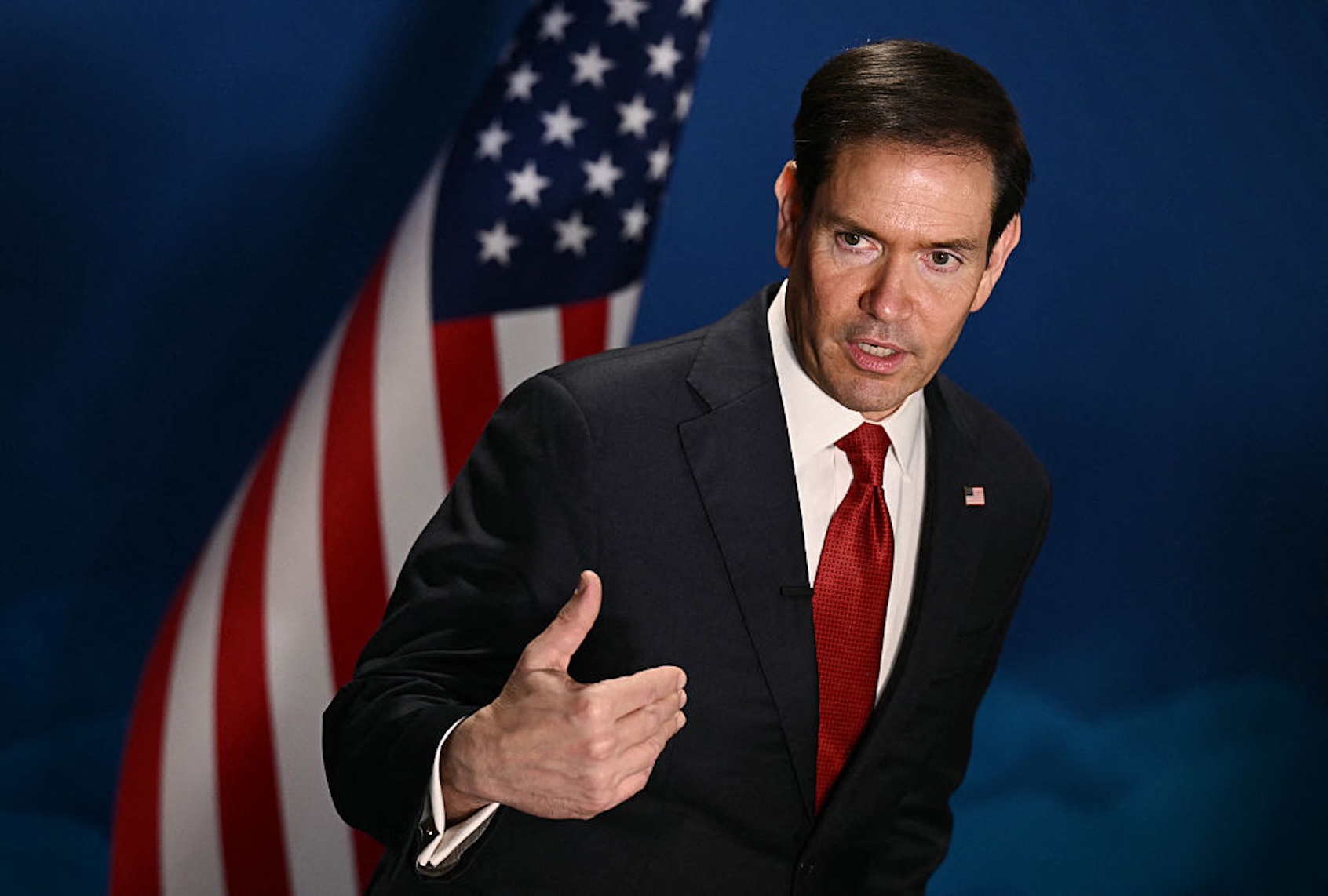
On July 16, Secretary of State Marco Rubio led a gathering of over 60 nations to discuss “political terrorism” by leftist organizations. Rubio, whom every Democratic senator voted to confirm, used dehumanizing language to describe the left, deeming them “enemies of civilization.”
This was followed, on July 20, by the State Department issuing a 100-page report on Cuba’s connection to American leftists in an alleged “campaign of subversion against the United States.” As activists, artists and politicians in the U.S. begin to face increasing charges of communism and even terrorism by the current administration, there are lessons to be gleaned from mid-20th century America, and they are not solely confined to the McCarthy era.
One set of lessons comes from the life of Lillian Smith, the white Southern civil rights activist and best-selling author of “Strange Fruit,” who was the subject of a multi-decade surveillance project conducted by the FBI beginning in the early 1940s. Accused by agents of being a communist or at least a “fellow traveler,” the FBI compiled a 134-page file on Smith — longer than its file on Ernest Hemingway, and nearly as long as the one on John Steinbeck.
Like many of the artists and activists being targeted today, Smith’s writings advocating peace and equality for all people made her a primary target of the state. From the pro-integration magazine South Today she edited in the 1930s and 1940s to her column in the Black-owned Chicago Defender to her seven books, both fiction and nonfiction, dealing with white supremacy and colonization, Smith challenged the status quo her entire life.
Putting her career and reputation on the line, and risking more surveillance, Smith chose to place the safety and well-being of others first, and often paid the price.
Smith’s response when her friends and colleagues were threatened by the government offers us a model for our own actions now. Putting her career and reputation on the line, and risking more surveillance, Smith chose to place the safety and well-being of others first, and often paid the price: In addition to book bans and professional blackballing, she lost everything to arsonists in a 1955 fire, and dealt with frequent death threats and other attempted arsons.
In 1942, when one of the leaders of the House Un-American Activities Committee baselessly accused the famous educator and civil rights activist Mary McLeod Bethune of being a communist, Smith sprang into action. She crafted a letter to Congress defending her longtime friend. Bethune believed the letter helped exonerate her from the allegations for which no charges were formally brought, and she wrote to Smith personally to thank her, generously offering to set up an in-person meeting with First Lady Eleanor Roosevelt.
The following year the FBI opened a file on Smith, keeping tabs on her travel, her friends and colleagues, and her publications. On the very first page, a memorandum addressed to FBI Director J. Edgar Hoover expressed concern over “a friend of Mrs. Franklin D. Roosevelt” who was known to be “a social uplifter in favor of the Negroes.” That was Smith.
By 1945, the bureau flagged news articles announcing that Smith had joined the Committee for Equal Justice for Recy Taylor, the Black woman whose white rapists were acquitted — twice — in Alabama. In further memos, agents seemed particularly interested in Smith’s association with the Southern Conference for Human Welfare, a group that promoted New Deal-like reforms, likely due to the unfounded allegations of SCHW serving as a communist front.
In August 1949, four years after the end of World War II, HUAC accused Paul Robeson, the artist and activist who was another of Smith’s longtime friends, of being a communist after he stated that Black Americans would not fight the Soviet Union in yet another war. Smith published one of the most empathetic pleas from any white writer of the time: “I cannot see how any white person who has a grain of sportsmanship in him can criticize any Negro, who, in confusion, has turned to communism for the answer that democracy has not yet given.” Communism may not have been the best answer, Smith continued, “but we white folks have not yet given Negroes in the South a better one. Until we do, I wish we had the grace to keep our mouths shut.”
Perhaps a testament to the persistence and power of her work, when the revised edition of Smith’s book “Killers of the Dream” was published in 1962, the FBI clipped an article from the Atlanta Journal announcing she would “be an honored guest at an autograph tea” for the book’s release. The column’s last sentence was undoubtedly the reason for its inclusion in the bureau’s files: “Mrs. MARTIN LUTHER KING, JR., was listed as one of the hostesses of the affair.”
The targeting of Smith — who herself was never a communist, and did not support the party — shows that in times of questionable politics, anyone can be put on a government list by simply advocating for basic human rights, equality and peace. The allegations rarely have anything to do with communism; the term is merely a scare tactic Republicans use when they begin to worry their power is in peril.
Start your day with essential news from Salon.
Sign up for our free morning newsletter, Crash Course.
The Trump administration isn’t being shy about naming names. Rubio’s own “enemies list,” which was included in the State Department report, targeted individuals and groups such as New York City Mayor Zohran Mamdani (for not denouncing the Democratic Socialists of America’s tribute to Assata Shakur, who was convicted of killing a police office in 1973 before escaping to Cuba), journalist Amy Goodman (for attending the wedding of CodePink co-founder Jodie Evans to Neville Roy Singham, the tech tycoon and nonprofit funder who has been accused of financing Chinese propaganda), the Amazon Labor Union, Black Lives Matter, Democratic Socialists of America and the People’s Forum, a community center located in Manhattan. (Full disclosure: I have spoken at the People’s Forum, and I’m scheduled to speak there again this fall).
As Rubio and the State Department try to dehumanize people who support human rights while ramping up programs to take legal actions against them, Americans with the most power and privilege must act by fighting on behalf of the persecuted, just like Lillian Smith did.
Smith was committed to fighting hate, in all its forms, with art. Creativity helps form and inspire social movements, and Smith believed that art serves as spiritual and psychological nourishment for activists. She also believed in fighting oppression at the local level, knowing that small actions in our own communities are not only effective and immediate, but they also shut out the despair that often arises in the face of a seemingly unconquerable task. Much like her friend Dr. Martin Luther King Jr., Smith considered love as a generative force essential to overcoming hatred, and believed that the more each of us cultivate relationships based on loving kindness, the harder it would be for hate to prevail.
Noting both the profound sadness and farcical tragedy ahead “if those who are gifted stay silent,” Lillian Smith in 1951 hoped for a better future. It “seems to me a fine time to be alive, in this age of falling walls,” she asserted. “It is an age full of risks but the stakes are high and worth the risk.”
The same holds true today.
Read more
about Marco Rubio