
“Princess Mononoke” is a warning we didn’t heed
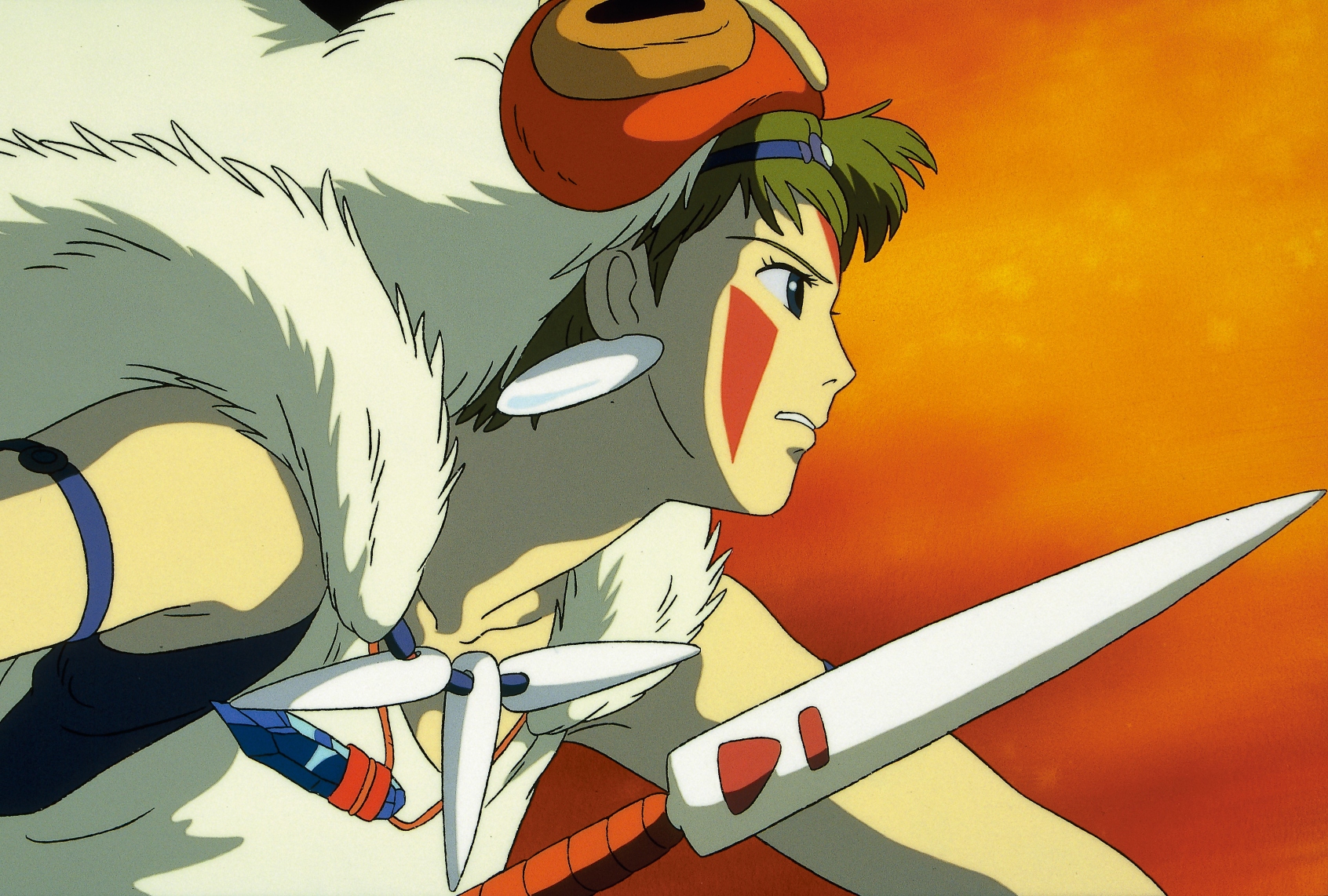
Throughout July, The Swell is celebrating the lasting cultural inspiration of animator Hayao Miyazaki and the legendary films he created with Studio Ghibli. As part of GKIDS’ annual Studio Ghibli Fest, which kicked off in June, you can enjoy theatrical re-releases of some of his most famous works.
My first gray whale sighting was entirely accidental. My husband and I had pulled over at a park somewhere on the Washington Coast, gotten out of the car to stretch our legs and decided to take a brief walk on a nearby beach.
I must have only taken about 10 steps when the sea titan breached, its spotted skin flashing in the sunlight briefly before plunging beneath the waves. Then it emerged again and submerged, rising and falling and growing smaller as it moved further away.
Before I relocated to the Pacific Northwest, I had only seen whales and other wildlife common to this region on TV. That makes Seattle a fitting place to have taken in “Princess Mononoke” for the first time.
When it made its stateside debut in 1999, I was still intoxicated by the city’s proximity to mountains, old growth forests and water – so much of it, fresh or salty. With all that in my backyard, Hayao Miyazaki’s verdant scenery teeming with ancient trees did not look so foreign. That made its giant beast gods feel real too, along with their snarling rage against annihilation.
Next year, “Princess Mononoke” turns 30. Its setting is much older, a version of medieval Japan where humans are crafting iron into firearms and beasts can talk, but nobody wants to listen to each other.
It’s a turning point similar to what we face now.
“Princess Mononoke” begins with a worm-covered demon attacking a pastoral village, only to be slain by its prince, Ashitaka. When the thing dies, the worms fall away to reveal that it wasn’t always a demon, but a boar god felled by a dark force. The village elders send Ashitaka west to find out how this curse came to be. What he finds is a conflict pitting human progress, and its attenuating battle for power and domination, against nature.
I was raised near the shore of Chicago’s slice of Lake Michigan, a body of water wide and blue enough to pass for the sea. We didn’t have whales, just freshwater fish like alewifes, which stunk up the beaches with annual die-offs that occurred in huge numbers. When I was a kid, I always wondered why that happened, and the only explanation adults could provide amounted to, “Because.”
Humans are raised to accept such things are part of a cycle that repeats no matter what we do, and regardless of whether whatever we’re doing impacts that cycle. Right now, gray whale carcasses are washing ashore in Washington at an alarming rate, with 30 dead ones counted so far, only five short of the 2019 record that the National Oceanic and Atmospheric Administration designated as an unusual mortality event.
What’s more depressing is that a research biologist interviewed by KING-TV, Seattle’s NBC affiliate, stated that the beached whales people have encountered likely represent only a quarter to a fifth of the total death toll.
The suspected culprit behind this loss is precisely what most would guess – warming seas, melting arctic ice and a decrease in prey availability. Yet many still doubt that the choices we make for convenience’s sake are destroying the planet.
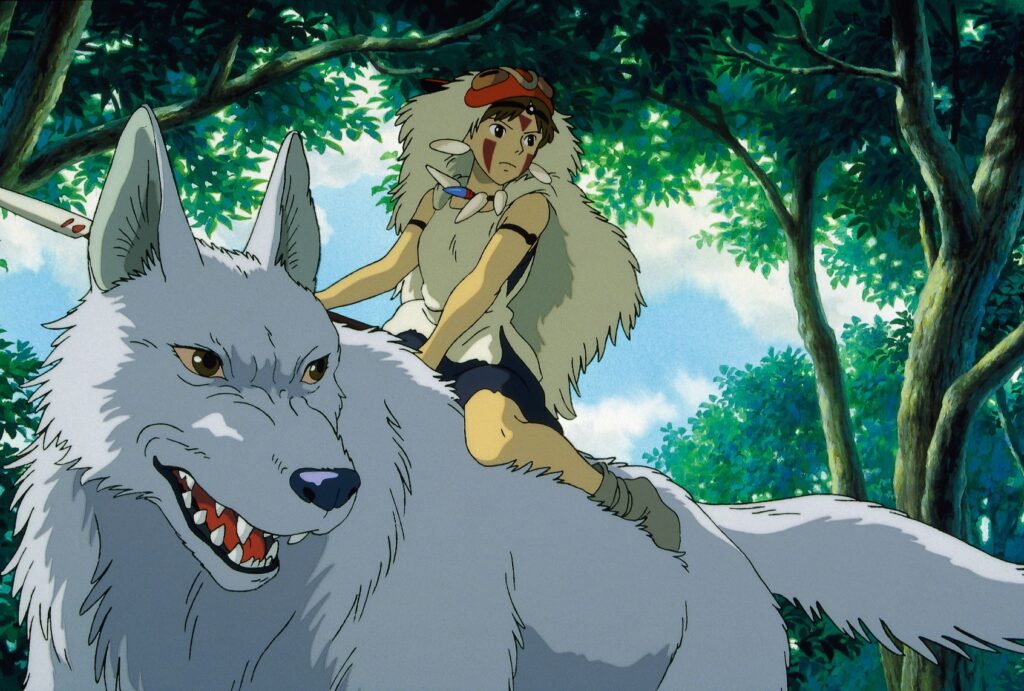 (©1997 Hayao Miyazaki/Studio Ghibli)
Ashitaka’s frustrations hit me like an earthquake decades ago, and still do. His people are ancient and few, a clan whose kinship with nature left them vulnerable to warring nobles who all but wiped them out. When he comes upon Irontown, led by the highborn Lady Eboshi, and listens to its people brag about burning down the boar god’s forest, one might expect him to be angry.
But while I fumed at seeing a tavern full of men laughing at the wanton destruction of life, Ashitaka simply listens, then heads to their neighboring woods to find San, the wild girl the locals whisper about, a human raised by a wolf god.
San was also raised to hate humans, and understandably so: the people of Irontown don’t just want to murder her mother, they’re also intent on beheading the Forest Spirit that keeps the land and plants healthy. Without it, the trees and animals will die, making it easier for the humans to clear-cut the land and settle there.
Miyazaki is a noted pacifist, but “Princess Mononoke” is his most humanist work. Its English language version is also marvelously cast, with Claire Danes voicing San, Billy Crudup as Ashitaka, Minnie Driver as Lady Eboshi and, best of all, Gillian Anderson lending her imperious snarl to Moro, San’s wolf mother.
Their work is a cultural bridge much like Ashitaka’s effort to bring the worlds of beasts and men together for a common cause, depicting what Miyazaki sees as one of humanism’s central conundrums. “One wild elephant, or the people who have to deal in ivory on the black market to survive – which do you value more?” he asked in an Animerica magazine interview tied to the film’s U.S. premiere.
“It’s like this that humanism itself gets swallowed up by nihilism,” he adds, concretizing that image in his movie with many scenes of environmental degradation realized as crawling blobs of death.
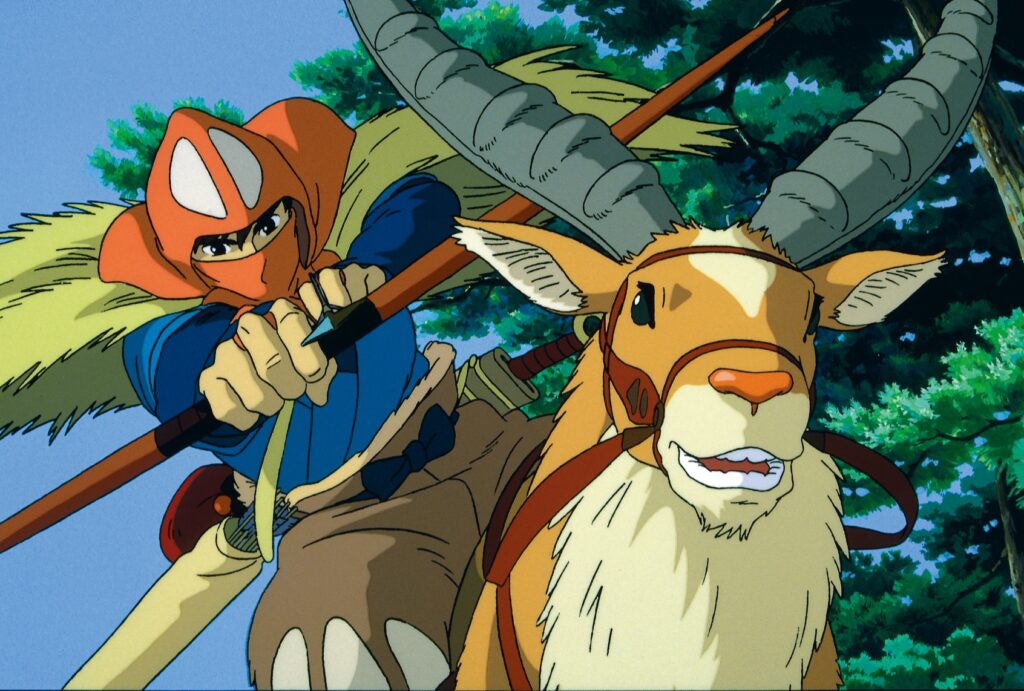 (©1997 Hayao Miyazaki/Studio Ghibli)
Even so, “Princess Mononoke” doesn’t glorify violence or tilt the audience against people like Lady Eboshi, who is more like us than we’d probably admit. Yes, she’s manufacturing weapons to kill the wolves, and we love the wolves! She also employs and supports a community of lepers and former sex workers who society would have otherwise cast aside. “The world is cursed,” says one of the lepers, “but still you find reasons to keep living.”
Seattleites compensate for months of rain and darkness by spending as much time outside as possible. I’m writing this from a chair in my backyard garden, which is where I’ll probably be when you’re reading it. It’s a good way not to think about the inevitability of the clouds and cold returning, and to enjoy hummingbirds and other winged neighbors up close instead of through a clammy windowpane.
Want more from culture than just the latest trend? The Swell highlights art made to last.
Sign up here
But it also reminds me of why Ashitaka’s central question remains as moving as the film’s visual feasts: Why can’t humans and the forest live together in harmony? Nobody has an answer – not Lady Eboshi, certainly not San’s wolf mother or a monk who turns out not to be a monk at all. The best wisdom that man can offer is that everybody wants everything. “That’s the way the world is,” he says.
“Princess Mononoke” proves that sometimes losing too much motivates us to help nature to regain some ground. I drew that potent conclusion from it when I first saw it, before our summers grew hotter and a long-ago sight I’d planned to repeat became something closer to a once-in-a-lifetime experience. All these years later the story is still one of my favorites – as resplendent as it was the first time, and more necessary than ever.
“Princess Mononoke” is streaming on HBO Max.
Read more
from Salon’s Culture newsletter, The Swell