
Democrats’ key to winning the midterms
American voters desperately want relief from rising prices — especially the increasingly unaffordable cost of healthcare. Democrats have a plan for that.
Massachusetts Sen. Elizabeth Warren recently introduced the Break Up Big Medicine Act with Sen. Josh Hawley, R-Mo., a bill that would split up the huge conglomerates that have made the current healthcare system so expensive and frustrating to navigate. Businessman Mark Cuban recently quipped that breaking up these near-monopolies could bring costs down by 40%.
If Democrats run on this healthcare affordability agenda, we stand a good chance of flipping not just the House, but the Senate too.
Insurers like UnitedHealth or Cigna don’t just sell coverage. They’ve consolidated power over virtually every part of our healthcare system, operating hospitals, clinics and pharmacy networks. And they use that control to generate billions in profits — by pushing patients toward care at the facilities they control.
UnitedHealth Group, for example, generates about 40% of its revenue — about $180 billion — from transactions between its thousands of subsidiaries. Its insurance branch steers patients to its roughly 90,000 affiliated doctors, and pressures those physicians to refer patients to its affiliated hospitals and clinics rather than lower-cost independent providers. And that’s not all. The company’s pharmacy benefit manager (PBM) arm pushes patients to affiliated pharmacies. Those pharmacies frequently upcharge patients for medicines, sometimes by 10 times the acquisition cost.
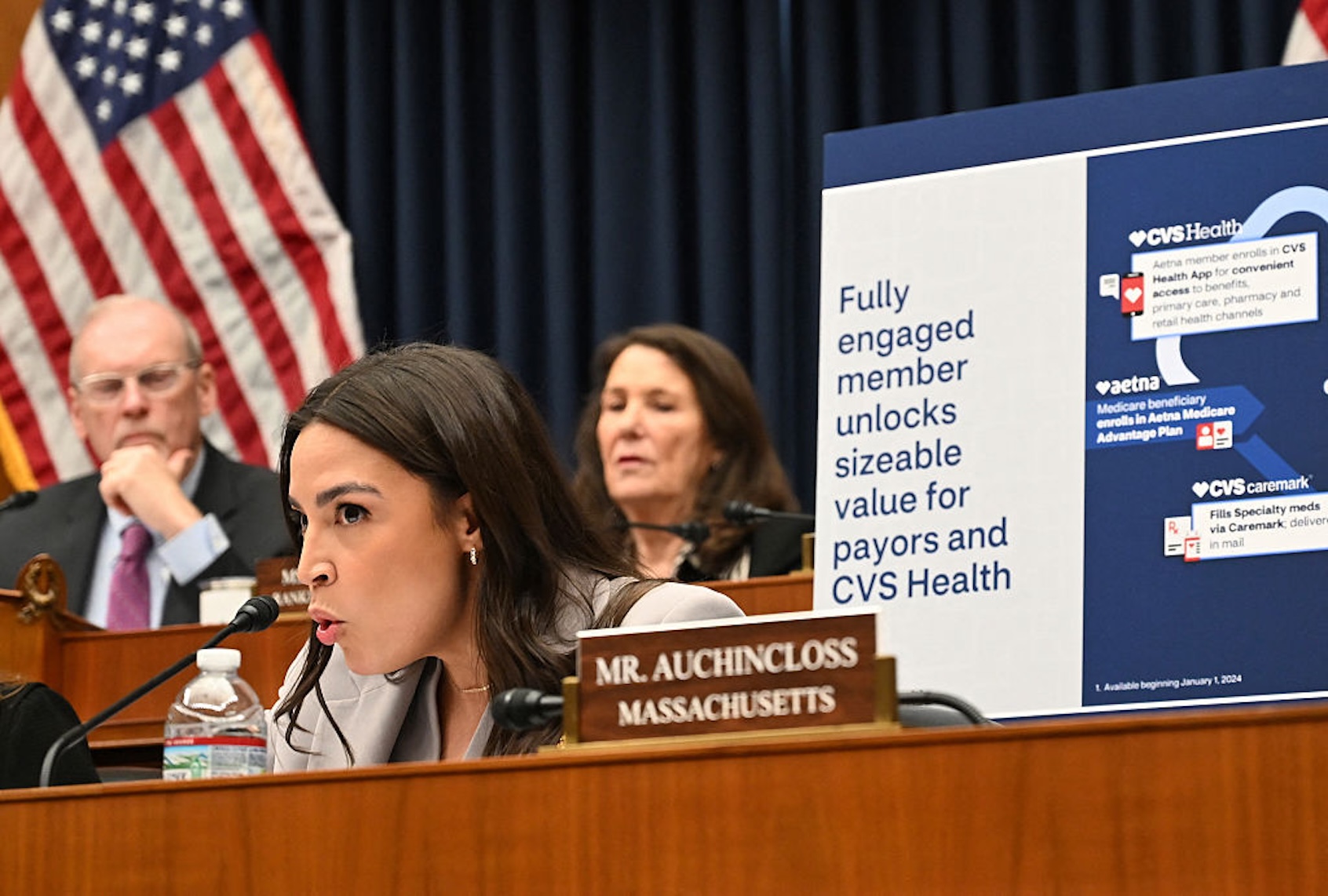
UnitedHealth Group is the largest of these conglomerates, but it’s hardly the only firm that operates this way. CVS Health owns Aetna, one of the nation’s largest insurers, in addition to the more than 9,000 CVS pharmacies it’s best known for. It also owns CVS Caremark, one of the nation’s largest PBM.
In theory, PBMs exist to save employers money by overseeing all the drug-related details of health insurance plans, and using their bulk-buying power to negotiate with pharmaceutical companies for big discounts and rebates. PBMs often tell employers that they pass along all the discounts and rebates they receive to the employer, minus a small fee for their services.
Start your day with essential news from Salon.
Sign up for our free morning newsletter, Crash Course.
What they typically don’t mention is that many PBMs are affiliated with foreign-based entities called “group purchasing organizations.” In 2025, the House Oversight Committee launched an investigation into whether PBMs are using these overseas entities to skirt government oversight. Lawmakers have raised concerns that these arrangements allow PBMs to retain rebate-related revenue and fees within opaque corporate structures, rather than transparently passing those savings on to employers and patients.
Meanwhile, insurers continually deny coverage for treatments and procedures that patients need. They often force doctors to get insurer approval — known as prior authorization — before prescribing, or they force patients onto less effective drugs. That places an immense administrative burden on physicians, who can spend an average of 12 hours per week completing prior authorizations, time that they’d certainly rather spend with patients.
Prior authorization can have dire consequences for patients. More than eight in 10 patients that face prior authorization simply give up on treatment. About a quarter of doctors say that prior authorization delays have led to a serious adverse event for a patient in their care — whether that’s hospitalization, permanent damage or death.
Breaking up the healthcare conglomerates that have enriched themselves by immiserating patients and cheating employers is good policy.
Polls show that voters overwhelmingly support bold healthcare reform. According to a recent poll, nearly seven in ten insured Americans identified either lowering out-of-pocket costs or nixing prior authorization as the single most important change they want from their health insurance. It would be a mistake for Democrats to content themselves with merely tweaking the Inflation Reduction Act, the party’s last major healthcare reform, which primarily focused on reducing the federal government’s pharmaceutical spending.
That kind of incrementalism won’t work — Democrats cannot win by being Republican-lite. We need to target the insurer and PBM practices that directly drive up Americans’ out-of-pocket costs and force too many people to choose between filling their prescriptions and filling their gas tanks.
If Democrats are looking for a 50-state strategy for the midterms — something I insisted on as chair of the Democratic National Committee during the 2006 blue wave — Sen. Warren’s bill offers a great place to start.
Read more
about healthcare