
Deadly Floods Expose Years of Neglect in Ghana’s Environmental Health Sector — Unposted Officers Association
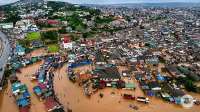
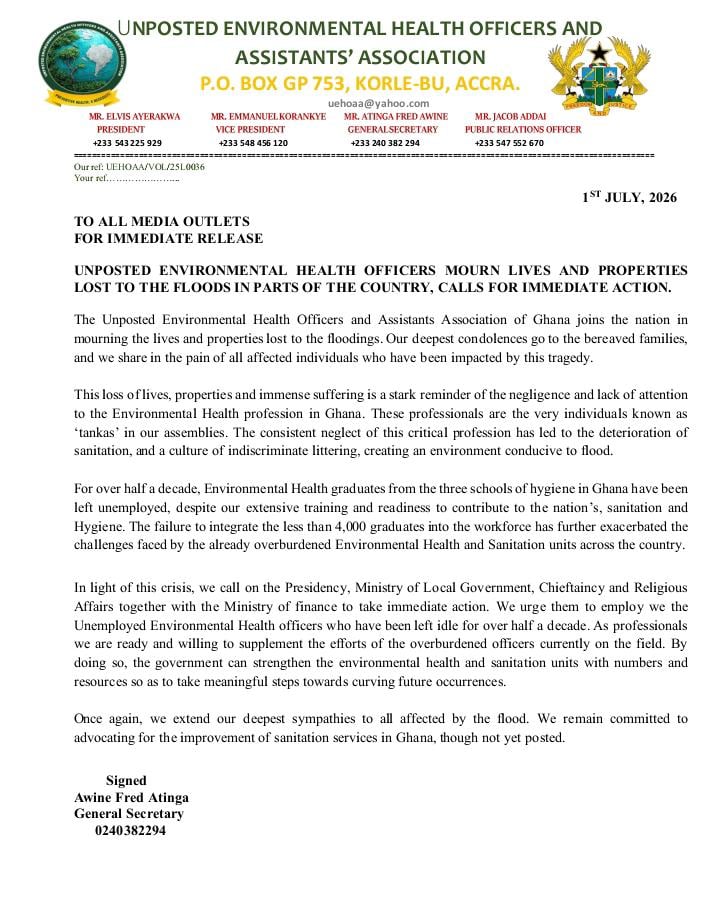
The Unposted Environmental Health Officers and Assistants Association of Ghana says the recent deadly floods that claimed lives and displaced thousands across parts of the country have exposed years of neglect of Ghana’s environmental health sector.
In a statement issued on Monday, July 1, the association said the June 29 floods—which affected communities in the Greater Accra, Central and Volta regions—should serve as a wake‑up call for authorities to prioritise environmental health and sanitation management.
The floods left more than 12 people dead, seven others missing, and displaced about 7,700 households.
Expressing condolences to families who lost relatives and property, the group said the tragedy reflects broader challenges in sanitation management and environmental health enforcement nationwide.
“Our deepest condolences go to the bereaved families, and we share in the pain of all affected individuals who have been impacted by this tragedy,” the statement said.
The association argued that the persistent neglect of environmental health professionals has contributed to worsening sanitation conditions, which in turn heighten the risk of flooding in many communities.
According to the group, Environmental Health Officers—popularly known as “tankas” in local assemblies—play a critical role in promoting sanitation, enforcing environmental regulations, and educating the public on proper waste management practices.
It said inadequate attention to the profession has led to deteriorating sanitation standards and a growing culture of indiscriminate waste disposal.
“The consistent neglect of this critical profession has led to the deterioration of sanitation and a culture of indiscriminate littering, creating an environment conducive to floods,” the association stated.
The group also renewed concerns over the unemployment of trained Environmental Health graduates, revealing that graduates from Ghana’s three Schools of Hygiene have remained without postings for more than five years despite being qualified and ready to serve.
According to the association, fewer than 4,000 trained graduates remain unemployed, while Environmental Health and Sanitation Units across the country continue to face staffing shortages.
It said the failure to recruit these professionals has placed additional pressure on existing officers and weakened efforts to address sanitation challenges at the local level.
The association therefore called on the Presidency, the Ministry of Local Government, Chieftaincy and Religious Affairs, and the Ministry of Finance to urgently facilitate the recruitment of the unemployed graduates.
It maintained that employing the officers would strengthen environmental health and sanitation units nationwide, improve enforcement of sanitation regulations, and support efforts to prevent future flooding incidents.
“We are ready and willing to supplement the efforts of the overburdened officers currently on the field,” the group said.
The association added that while it remains committed to advocating for improved sanitation services in Ghana, government must take immediate steps to utilise the expertise of trained Environmental Health Officers to help address the country’s growing sanitation and environmental challenges.
— CitiNewsRoom