
Lagos PHCs carry 92% immunisation burden, record maternal health gains – LSPHCB
By Henry Obetta
Primary Health Care (PHC) centres in Lagos State are administering 92 per cent of all childhood vaccines in the state despite accounting for just 32 per cent of patients accessing public healthcare services, underscoring their critical role in preventive healthcare delivery.
The Lagos State Primary Health Care Board (LSPHCB) said the figures highlight the central role of PHCs in child survival and maternal health, even as the state records improvements in key maternal and newborn health indicators.
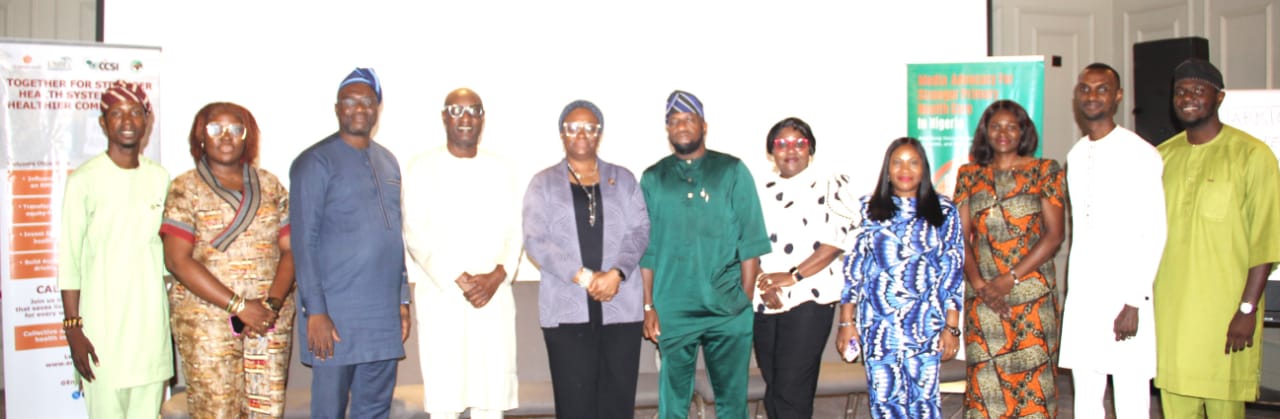
Disclosing this and more, at a Media Roundtable Dialogue on Evidence-Based Health Reporting and Public Discourse organised by the International Society of Media in Public Health (ISMPH) in partnership with EngenderHealth in Lagos, Head of Monitoring and Evaluation at the board, Abioye Amodu, said over 4,000 healthcare workers across PHCs in the state currently provide immunisation services to more than 3 million children.
“Those 4,000 workers in Lagos PHCs that are looking after over three million children are doing 92 per cent of the vaccination in the state,” she said.
Amodu said beyond immunisation, Lagos has recorded significant gains in maternal and child healthcare through sustained investments, improved staff capacity and stronger community engagement.
She disclosed that early initiation of breastfeeding within one hour of birth has risen to 96 per cent, while skilled birth attendance and administration of uterotonic drugs after delivery have each climbed to 98 per cent.
She added that the correct use of partographs during labour has improved to 79 per cent, while family planning uptake has increased by 68 per cent.
According to her, more newborns are also benefiting from chlorhexidine cord care, a critical intervention aimed at reducing neonatal infections and improving survival.
Amodu said regular monthly and quarterly assessments of health facilities using RMNCAH scorecards and PHC-FAT tools have shown consistent improvements across PHCs between 2023 and 2025.
Despite the progress, she raised concerns over late antenatal registration, warning that many pregnant women still present for care after 20 weeks, exposing them to avoidable complications.
“One of the issues the media can help us with is that mothers don’t come early to register for pregnancy. Most times, they come in after 20 weeks and there are so many complications that can arise from that,” she said.
She also identified manpower shortages, weak laboratory services and inadequate ambulance availability in some centres as key gaps requiring urgent attention.
Earlier, Head of Planning, Monitoring and Evaluation at the Lagos State Health Management Agency (LASHMA), Mrs Adetoro Tayo, said the agency had intensified engagement with journalists to deepen awareness of the state’s mandatory social health insurance scheme.
She disclosed that 56 health journalists were trained in January 2026, with another 30 expected to undergo training in the coming months.
“The successful implementation of health programmes requires not only robust policies and systems, but also effective communication that enables citizens to understand, embrace and participate in these initiatives,” Tayo said.
In his remarks, Programme Manager of ISMPH, Solomon Dogo, said the roundtable was aimed at strengthening journalists’ capacity to translate complex health data into impactful reports that can drive accountability and policy reforms.
Stakeholders at the event stressed that stronger collaboration among government, the media and development partners would be vital to improving public trust, health communication and primary healthcare delivery across Lagos.