
Democracy Day: Federal tertiary hospitals showcase healthcare transformation across Lagos
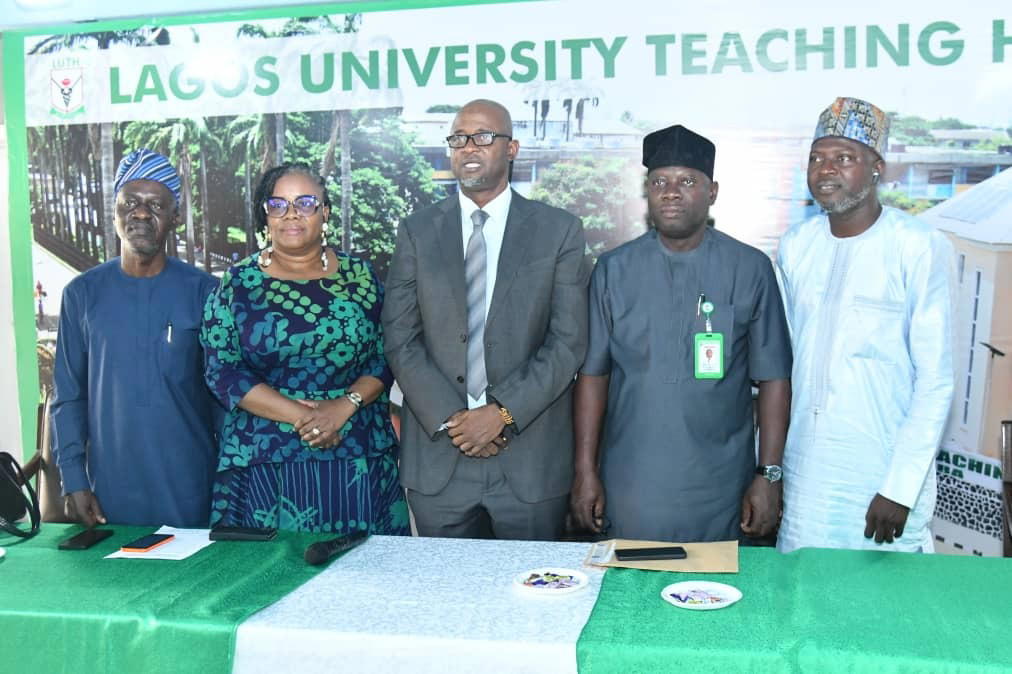
…Highlight gains in cancer care, infrastructure, manpower training, renewable energy, research
By Chioma Obinna
Federal tertiary health institutions in Lagos on Tuesday showcased major gains in healthcare delivery, infrastructure renewal, manpower development, research, and patient care services, attributing the progress to sustained Federal Government investments and ongoing reforms in the health sector.
The institutions, including the Lagos University Teaching Hospital (LUTH), Federal Medical Centre (FMC), Ebute-Metta, Federal Neuropsychiatric Hospital, Yaba, National Orthopaedic Hospital, Igbobi, Lagos (NOHIL) and Federal Medical Centre (FMC), Epe made the disclosures during a media engagement held to highlight achievements recorded over the past three years under the Renewed Hope Agenda.
They noted that despite systemic challenges, coordinated investments in infrastructure, specialist services, and workforce development have significantly strengthened access to quality healthcare for Nigerians.
Speaking at the press conference, the Chief Medical Director of LUTH, Prof. Wasiu Adeyemo, said the federal hospitals in Lagos have embraced collaboration rather than competition in delivering healthcare services.
He said the institutions, though established at different historical periods, are united by a shared mandate of improving healthcare delivery, training professionals, and advancing medical research.
According to him, “We are not working in isolation. The federal tertiary hospitals in Lagos complement one another to ensure that patients receive the best possible care regardless of where they present.”
Adeyemo said one of the most significant areas of progress is in cancer care, noting that the expansion of the NSIA-LUTH Cancer Centre has reduced medical tourism and improved access to specialised oncology services.
“More than 15,000 patients have benefited from cancer care services in the last seven years. This has drastically reduced the number of Nigerians travelling abroad for treatment,” he said.
He disclosed that similar cancer centres have been established in other federal teaching hospitals across the country, with more under development, adding that a nuclear medicine facility is also being planned for LUTH to strengthen diagnostic and treatment capacity.
On infrastructure, he said the Federal Government has supported the construction of a new multi-storey outpatient complex, alongside renovation of wards, specialist units, and expansion of service areas across the hospital.
He further highlighted improvements in renewable energy deployment, noting that LUTH has received approval for a $3.8 million solar power project, in addition to existing installations supported by government and private partners.
Adeyemo also pointed to ongoing workforce expansion and training reforms, explaining that federal tertiary hospitals now recruit annually to address manpower gaps.
“The government has also strengthened training through student loan schemes. At LUTH alone, 137 students have benefited from the Nigerian Education Loan Fund,” he said.
He added that investments in healthcare financing, including public-private partnerships, have strengthened services in oncology, renal care, and laboratory systems.
Also speaking, the Medical Director of the Federal Medical Centre (FMC), Epe, Dr. Adeleke
Kaka, said the newly established institution has recorded notable progress in specialist care, surgery, diagnostics, and training within its first year of operation.
He said the hospital successfully performed its first major orthopaedic surgery and has expanded specialist coverage to about 18 consultants across key disciplines.
“We are deliberately expanding access to services that were previously unavailable in this axis of Lagos.”
He added that the hospital has introduced advanced laboratory services, including genotype testing and immunology diagnostics, to support early disease detection and management.
Kaka also highlighted gains in maternal and child health through the Comprehensive Emergency Obstetric and Newborn Care programme, which allows vulnerable patients to receive treatment without upfront payment.
He disclosed that plans are underway to establish residency training and a College of Nursing Sciences to boost manpower production.
At the Federal Medical Centre, Ebute-Metta, Medical Director, Dr. Saheed Ogunme, said the hospital has expanded its clinical, surgical, and research capabilities over the past three years.
He cited advancements in minimally invasive surgery, endoscopy, colonoscopy, and cancer care services, noting that these have improved patient outcomes and reduced recovery time.
He also drew attention to the growing burden of renal failure, noting that patients with chronic kidney disease often require as many as three dialysis sessions weekly to survive.
According to him, the cost of each dialysis session previously ranged between ₦30,000 and ₦40,000, placing an enormous financial strain on patients and their families.
He explained that under the Federal Government’s Renewed Hope Dialysis Programme, the cost of treatment has been significantly reduced to about ₦12,000 per session in participating centres.
“Before now, patients could spend over ₦120,000 weekly on dialysis. That is not sustainable for most families. With the Renewed Hope initiative, they now access dialysis at ₦12,000, which has made life-saving treatment far more affordable,” he said.
He also announced that the institution performs about 20 research projects annually and recruits approximately 150 staff each year across various cadres.
Speaking on advancements in NOHIL, the Medical Director, Dr. Wakeel Lawal said Nigeria’s healthcare system has witnessed significant transformation in recent years, particularly in specialised and trauma-related services.
He noted that orthopaedic care, once limited in scope and capacity, has now expanded into highly specialised areas, reducing the need for patients to seek treatment abroad.
His words: “We have moved from general orthopaedic practice to advanced sub-specialties such as joint replacement, trauma surgery, deformity correction and orthopaedic oncology, and this has significantly improved outcomes for patients.”
He explained that these developments have strengthened confidence in local health institutions and contributed to a gradual reduction in medical tourism, especially in orthopaedic and trauma care.
Lawal added that improved infrastructure, expanded theatre capacity, and upgraded emergency response systems have made it possible to handle complex cases within Nigeria.
He also highlighted ongoing efforts to strengthen emergency services, noting that investments in theatres, equipment and referral systems are improving survival rates for trauma patients.
Speaking, the Medical Director, Federal Neuropsychiatric Hospital, Yaba, Dr. Gbenga Owoeye reported progress in mental healthcare delivery, substance abuse treatment, and professional training.
Represented by the Chairman Clinical Services Director, Dr Funmi Akinola said the hospital has strengthened its occupational therapy and psychiatry training schools, while also expanding methadone therapy programmes for opioid dependence.
He noted that the institution remains a leading centre for mental health training in Nigeria and continues to collaborate with international partners on substance use prevention.
Across the institutions, the medical leaders unanimously emphasised that Federal Government interventions in infrastructure, specialist centres, renewable energy, manpower development, and healthcare financing have significantly reshaped tertiary healthcare delivery in Lagos.
They, however, called for sustained investment to consolidate gains and further strengthen Nigeria’s healthcare system.