
What Stanley Tucci gets wrong about Olive Garden
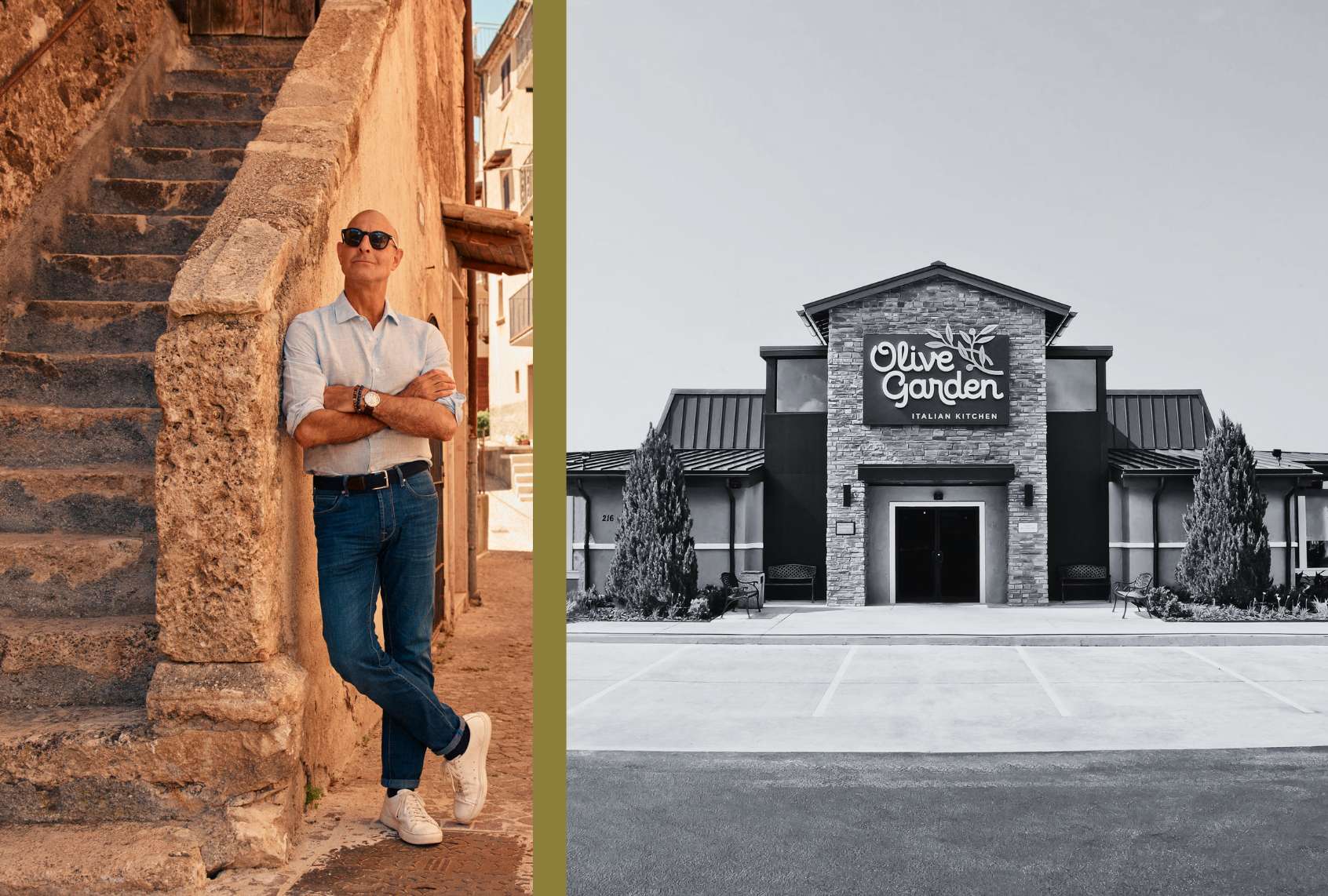
Stanley Tucci, who is now arguably as synonymous with food as he is with the movies, nearly broke his self-described policy of not naming restaurants he doesn’t like.
“Have you ever been to an Olive Garden in your life?” an interviewer recently asked the “Devil Wears Prada” star.
The answer, perhaps surprisingly to some, from the face of “Tucci in Italy” is “yes.” Years ago, Tucci was making a movie in Salt Lake City, and when he didn’t know where to eat, he went to Olive Garden. Stars, they’re just like us, right?
Not exactly. “I went to that place,” Tucci said, avoiding uttering the chain’s name aloud. “I still bear the scars.” For Tucci, who is an arbiter of taste in the culinary world, that trip to Olive Garden appears to have been a one and done. I, meanwhile, can’t count on my fingers and toes how many times I’ve been to “that place.” I have no scars to show for it — only memories born of breaking bread, or rather breadsticks, with loved ones.
A couple of days later, I went to see “The Devil Wears Prada 2,” and I was reminded that as much as we, the audience, love Tucci’s character Nigel Kipling for being a tastemaker in the world of fashion, who we truly fall for time and again is Anne Hathaway’s Andy Sachs. She’s one of us, a fan of an onion bagel for breakfast, even if it makes her breath stink. I would like to believe Andy’s been to Olive Garden more than once.
Coming from a middle-class home in the country’s heartland (at least in the film), she would be able to see that Tucci’s remarks on the restaurant chain are revealing — not just about him, but about our current culture. About us. About what it means to be a “foodie,” especially in this new era when stand and stir shows have disappeared from Food Network — and TV at large — in favor of ever-popular food competition series where the aim isn’t nourishment but rather a constant, unwavering pursuit of the best.
Rooted in cooking over competition, the shows that are greenlit these days are typically fronted by celebrities, often with various degrees of experience in the kitchen. Even they have trouble sticking the landing. We got two seasons of Meghan Markle’s aspirational “With Love, Meghan,” for example, but only one very memorable season of Paris Hilton’s perfectly imperfect “Cooking with Paris.”
The exception is the rare celebrity chef with a built-in or enduring audience, such as Gordon Ramsay. The Brit has hosted more competition shows than I can count, yet also gifted food lovers with “Uncharted” in the vein of Anthony Bourdain before him. Lidia Bastianich has a longstanding relationship with PBS, while Ina Garten lives immortal with “Be My Guest.”

(ANGELA WEISS / AFP via Getty Images) US actor Stanley Tucci attends the world premiere of “The Devil Wears Prada 2” at Lincoln Center in New York City, on April 20, 2026.
All of this is a result of the increasing noise — and power — of social media. On Instagram, as with Facebook before it, likes are a commodity. These days, the next Sandra Lee or Rachael Ray is more easily to be found on Instagram or TikTok. Or the next prominent food critic, for that matter. One no longer has to work for an institution like the Grey Lady when they’re able to gain millions of their own followers by rating what restaurant dishes are worth the hype.
Of course, social media has contributed to Tucci’s influence and rise. He was declared a “Patron Saint of Quarantine,” courtesy of a viral negroni he dutifully made for his wife. The cocktail that broke the internet predated the release of his foray into food TV: “Stanley Tucci: Searching for Italy.” He is an accomplished home chef, who began publishing culinary books years prior. “The Tucci Table,” for instance, was released in 2014. Before you buy it, you may see a blurb stating that in addition to being a best-selling author and beloved actor, Tucci is a “respected foodie.”
In the same way that food media has pivoted toward a pursuit of the best, so has the word foodie itself. To consider the word, I looked up its definition in Salon’s dictionary of choice. Merriam-Webster defines foodie as “a person who has an avid interest in food and the latest food fads.” We all eat to live, but for some it’s truly a passion.
***
I first came to wear the badge of foodie in college in the aughts, a time when the term meant leading with curiosity, a vector for discovering and exploring new cultures and ideas. I was living in Boston and traveling to New York every chance I could slip away, thanks to the $30 round-trip bus tickets I could get my hands on in Chinatown. Being a foodie opened up new possibilities to me that I didn’t have access to back home in Alabama. I hadn’t lived in a food desert, though there were plenty close enough to me.
When I was a kid and my dad was providing for a family of four on a salary of less than $40,000 a year, I never dreamed that I would one day be able to eat pasta in both Florence and Milan. We didn’t have access to many independent Italian restaurants, let alone those of the highest caliber I would later experience as a young adult in New York, like Il Postino, where I discovered that orange wine, somehow, existed. My friend’s dad covered the bill, and what I remember the most from that experience isn’t the taste of a new wine. Dinner for five cost hundreds of dollars.
We had few white tablecloth restaurants in my hometown, but what we did have was Olive Garden, which I discovered after being introduced to ravioli from cans of Chef Boyardee. My first lasagna was Stouffer’s, and my mom made spaghetti ragu using — what else? — a jar of branded Ragu. One time, when my Aunt Sue came to visit from Baltimore, she made hers with a jar of mushroom-flavored Prego, and I thought that upgrade was as divine as Bette Midler.
To us, Olive Garden was a step above, fancy even. To this day, I’ve never once been to the location I grew up with where there wasn’t a wait. “It somehow felt like it was upper-class,” Nana, my paternal grandmother, recently told me. “It may feel more accessible now.”
“To us, Olive Garden was a step above, fancy even.”
What I carry forward more than that fancy feeling are the memories my family created as we were seated, together, around the table. To us, the house salad that got passed around at the beginning of every meal was perfect, save for one ingredient: the plump, black olives. Every time a stray one landed on one of our salad plates, it was shipped over on a smaller bread plate to Nana. Seeing who could get the most olives to her became a sort of competition for our competitive family, but there were no stakes in this game except feeding someone we loved so dearly. Nana got her olives, and she would say the ones that we shared with her magically tasted better than the ones she had served to herself.
Today, food has become less about a shared experience than something else. As media has evolved alongside foodie-ism, it’s undeniably become an exhausting quest to find the best. Being a foodie has also become defined by leveraging a certain amount of cultural or social cache. That influence is yielded by access, which is dependent not only on location but also financial means. When it comes to the latter, having celebrity sure helps.
When Tucci revealed in the same recent conversation that he had been offered to judge food competition shows but turned them down, he decried the idea of competition over art or food, which strikes at the heart of this dichotomy. “To me, cooking is the opposite of that,” he said. “It should be a thing that brings people together, not separates them. A thing that allows for communion, not for competition.”
Why, then, does not liking Olive Garden feel incompatible with being a foodie — and so incompatible that it shouldn’t even be mentioned by name? It was at Olive Garden that I discovered a shared love for peperoncinos with Nana and encountered other shapes of pasta not named spaghetti for the first time. To be made to feel shame for this — including feeling compelled to reduce any conversation to whispers — could only be an exercise rooted in elitism. Yet even my former boyfriend from England, who I imagine having grown up with a silver spoon, would go on to acknowledge to me that Olive Garden was good in spite of his initial skepticism. His order became the “Tour of Italy.”
On the Sunday before Christmas this past December, I asked Nana where she wanted to go for lunch. “I want to go to the Olive Garden,” she told me, “because I haven’t had their salad in forever — and I love it.” When we pulled into a Houston-area location, we had to wait for some time to find a parking spot as the lot was at a standstill. There were countless families gathered there, some clearly after a morning of worship, ready to have a different kind of communion over food. To reframe Tucci’s own policy of naming names, why knock something that brings people together?
Tucci is Italian-American; his four grandparents are from Italy. Without a doubt, he should have an opinion about these cuisines. As for me, my great-great-grandfather on my maternal side, Domenico Trione, immigrated to the U.S. from Italy, and I fondly remember going to a family reunion in Florida when I was a kid and eating from a buffet of real Italian food. It sure was different than Ragu.
“When a new person asked me what the best Mexican restaurant in New York was, my response, without fail, was “I’m still looking for it.”
Nana, my only living grandparent, is an immigrant from Mexico. We both love food, and my fondest memories from childhood are standing in my abuela’s kitchen in Alabama, designed from clay and talavera tiles imported from south of the border, where she taught me how to cook. It’s no surprise to me that Laura Esquivel’s “Like Water for Chocolate” is one of my favorite books — magic happened in that kitchen.
Before relocating to a quieter, sunnier place by the beach, I lived in and around New York City for nearly a decade. I lost track of exactly when, but at some point along the way, when a new person would ask me what the best Mexican restaurant in New York was, my response, without fail, had become “I’m still looking for it.” I found myself in a constant pursuit of the best, and I was exhausted by the search, one that began to feel possibly impossible to accomplish.
It was only after quarantine, as I was able to dine outside in Manhattan again with real people, when I realized I had lost the plot. Even a frozen 32-ounce margarita — a pandemic menu addition known as the “abuela” — at Arriba Arriba was magical in its own way. It brought me together again with my chosen family to process what had happened while we were locked inside our tiny apartments — and it made me feel even more connected to Nana, who I could not yet safely fly across the country to visit.
***
My own cooking is grounded in the ingredients and spices Nana introduced to me. Today, if someone is coming over for dinner, we’re likely having Mexican food. On occasion, it’s Yucatecan dishes like cochinita pibil or sopa de lima, which you won’t likely see on a typical Mexican restaurant’s menu. At Christmas, we make my great-grandaunt’s tres leches cake for dessert, which comes from a hand-written recipe so old the measurements and method aren’t clearly spelled out.
Nana’s hands don’t work like they used to, so she has had to give up her love of cooking. Since she can’t walk like she once could, she has also largely given up traveling. When we do leave the house, it’s most often to enjoy a good meal. Even though she is Mexican and I’m Mexican American, from a lineage of home cooks like Tita de la Garza of “Like Water for Chocolate,” you’ll still find us at Lupe’s, our favorite Tex-Mex restaurant that has a killer, limelicious steak fajita marinade, or Torchy’s Tacos, where we order Democrats, the barbacoa tacos that President Obama once stopped his motorcade for.
I also eat a bowl at Chipotle about once a week, and when I was a youngster, long before that chain even existed, Nana often took me to her neighborhood Taco Bell, where we enjoyed seeing the very not-Mexican worker who would take our order and call me “sugar.”
Nana has now lived more of her life in the U.S. than in Mexico, and I was born here. Together, we’ve made ample trips to her birthplace in Merida, Yucatan, to visit our family and friends. We’ve tasted frijol con puerco so good it felt like a religious experience. We know what is authentic, but we are also cognizant of what brings us together and what feeds us.
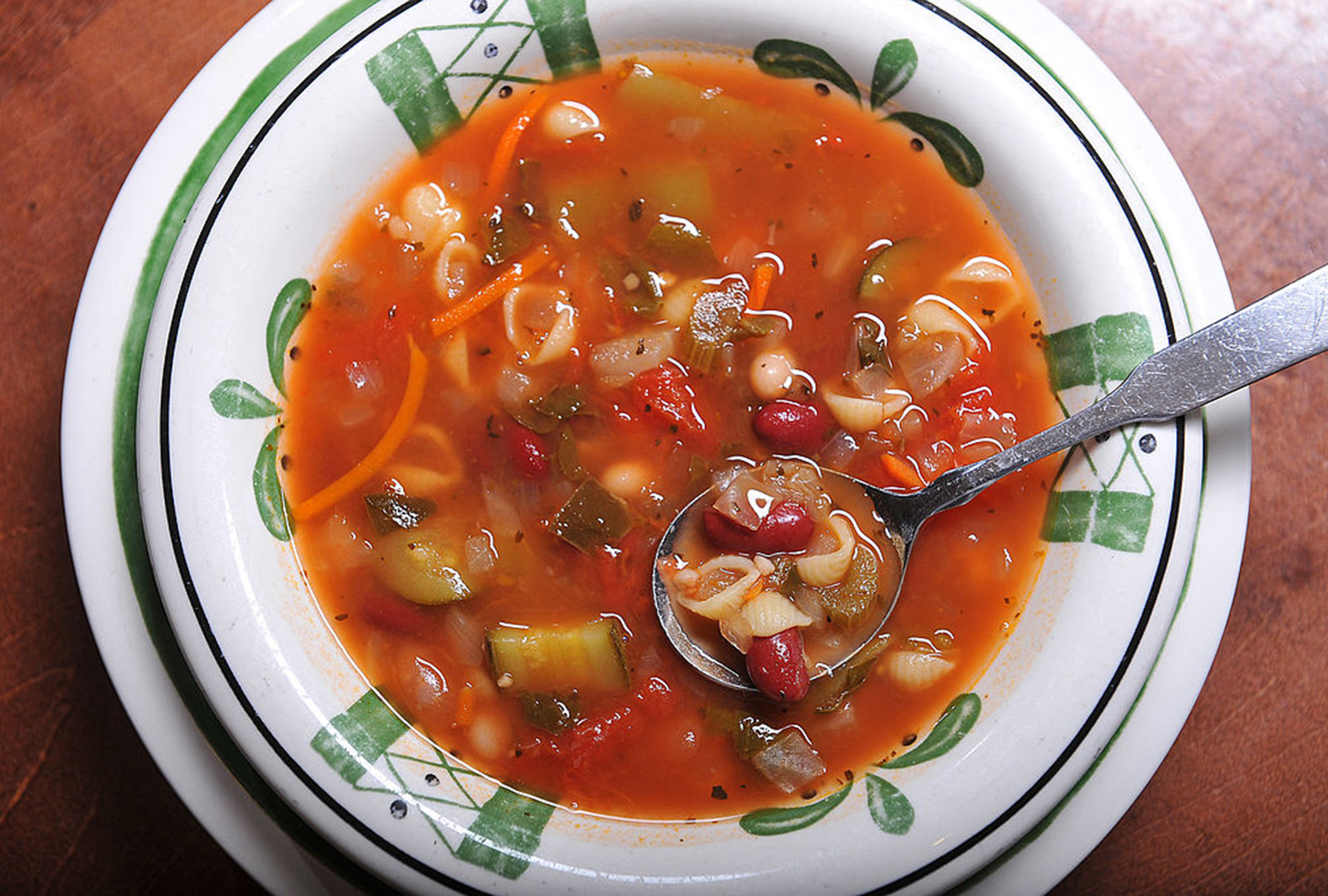
(Matt McClain/ The Washington Post via Getty Images) A bowl of minestrone soup is seen at Olive Garden Italian Restaurant.
Like Olive Garden, we know Lupe’s and Torchy’s aren’t the former, nor do we expect them to be. They’re Tex-Mex, but we find them both to be quite good. It makes Nana happy to see so many Mexican-inspired restaurants in the mainstream, which not only satisfy our shared palettes but also serve as unofficial ambassadors of the good of Mexico. We never consider any of them to be beneath us. They are, rather, signs of Latin America’s increasing influence in the culture.
What unites us more than the food, even, are the memories that we have created over the years each time we share one of these dishes. My other grandmother, Gigi, was a manager at our local Dillard’s, and I can still picture mom — on more than one birthday at Olive Garden — opening some of the new blouses I had hand-selected for her and then taken to the second floor of the department store to be boxed and gift-wrapped. A high-school athlete, she had ups and downs with body image and food after having two children, and buying new clothes for herself wasn’t a favorite exercise. But on birthdays, especially at Olive Garden, the calories didn’t count, and the extra Andes Mint I passed her — because I didn’t care for chocolate in my youth — could be savored.
As I got older and returned home from college for the holidays, I would join Gigi and my cousins Caroline and Elizabeth at Olive Garden for a meeting of the minds. Gigi always held court and, like good Southerners, we would not only share important life updates but also gossip over iced drinks. Even though we were old enough to have wine, our cups were filled with sweet tea. It was our watering hole.
“I was very proud of our family,” Nana told me the other day, “and the time we spent together at the same table was important.” We had a family tradition of Sunday suppers, and when we didn’t eat at home, we would go out to restaurants like Olive Garden. A devout Catholic, it was there that she gave my dad her most precious gift: her own mom’s rosary beads.
***
“The three of us did much more than break bread at Olive Garden — we commiserated.”
When mom passed away, I inherited a little money for the first time — and I used some of it to finally travel to Italy on my own. I was 30 when I landed in Milan, where I went to a white tablecloth restaurant personally recommended to me by Lidia Bastianich, who by that time I had been lucky enough to interview for Salon. The saffron risotto I had that night taught me the meaning of the word risotto.
I traveled to Florence, where I had pizza that was so good I cried. Later that week, I went to a Michelin star restaurant for lunch. There, I was served edible “leaves” on a bed of dead, brown leaves. The plate that my pea risotto was served on was much larger than the serving of risotto itself. I had what some would consider a true foodie experience, and the hundreds of dollars I was charged — this time, on my own, adult credit card — to prove it. The meal wasn’t as good as the pizza I had for just a handful of euros, and I went back to the pizzeria, hungry for more. The second time, I had the burrata special, featuring an entire cheese in the center of my cheese pizza.
What I remember about the Michelin star restaurant are those dead leaves and the photos I took of them; I would trade that experience for any trip to Olive Garden with family. I had finally made it to the boot of Europe, but I was missing my two partners in crime. Mom was gone from Earth, and Nana was no longer able to make the journey.
The three of us did much more than break bread at Olive Garden — we commiserated — and those are some of my first memories of being a foodie and closer to what the word really, truly means.
“What I remember about the Michelin star restaurant are those dead leaves and the photos I took of them; I would trade that experience for any trip to Olive Garden with family.”
Who can, in today’s economy, afford to go to Italy, amid burgeoning plane ticket prices with jet fuel through the roof due to yet another war in the Middle East? And it’s not just diesel: Climate change, inflation and tariffs have all caused the base of Italian food — the humble tomato — to skyrocket nearly 40% over last year. With affordability top of mind, Olive Garden recently introduced a smaller portions menu, with all items priced under $20, and the same unlimited salad and breadsticks. It has been a hit with Nana, who is price conscious in her retirement, even though she is no longer saving up for a trip to Rome.
Last month, at the same Olive Garden in Houston, as I looked around between bites from my salad, I noticed once again that many of the diners looked like my abuela and me. Nana did, too. “There are a lot of Mexican families here,” she told me after savoring the final crouton on her plate. The affordability crisis has changed how Latino households spend their dollars.
“I don’t think about Americans’ financial situation,” the president said in mid-May when discussing the Iran War. “I don’t think about anybody.”
Even the act of nourishment now feels despondent.
***
Being a foodie can and should be accessible to everyone. This year, on New Year’s Day, I had brunch at the elite Wynn casino in Las Vegas. At one point, I looked up and saw Kathy Hilton and her husband, the real estate tycoon Rick Hilton, sitting at the table across from us. As a longtime fan of “The Real Housewives of Beverly Hills,” I had finally seen one of the stars in person. Somehow, it felt like a sign of good luck to come over the next 365 days.
Later that day, I passed by the Grand Lux Cafe, which is basically a fancy Cheesecake Factory. I remembered that the Hiltons and I had something else in common: a shared love of the less-fancy version. In fact, they go to The Cheesecake Factory more often than me — once a week.
“All their food is good,” Kathy once told Page Six. “Actually, you walk in there, and there are people. We love that! We don’t want to sit in a restaurant with nobody in the room.” At the same time, she asked a question that’s stuck with me: “Where [else] can you get meatloaf?” I miss mom’s, which was her mom’s recipe, at least once a month. While food tastes change, a desire for comfort and nostalgia remain. I eat those Andes Mints now — and I smile when I think of mom.
What being a foodie should mean is enjoying the meatloaf at The Cheesecake Factory on a date with your husband, or savoring an Olive Garden salad with your abuela, who is lucky enough to eat every last olive. What ultimately counts in life — much more than access or the constant, exhausting pursuit of the best — is the act of nourishing and creating memories that last a lifetime over food, much like those never-ending bowls of mixed greens.
Hopefully, the word foodie can find its way back just like Anne Hathaway’s character found her way back to the magazine inspired by “Vogue” in the new “Devil Wears Prada” sequel. All that took was Stanley Tucci’s help.
Read more
about Food TV