
The useful rage of Godzilla
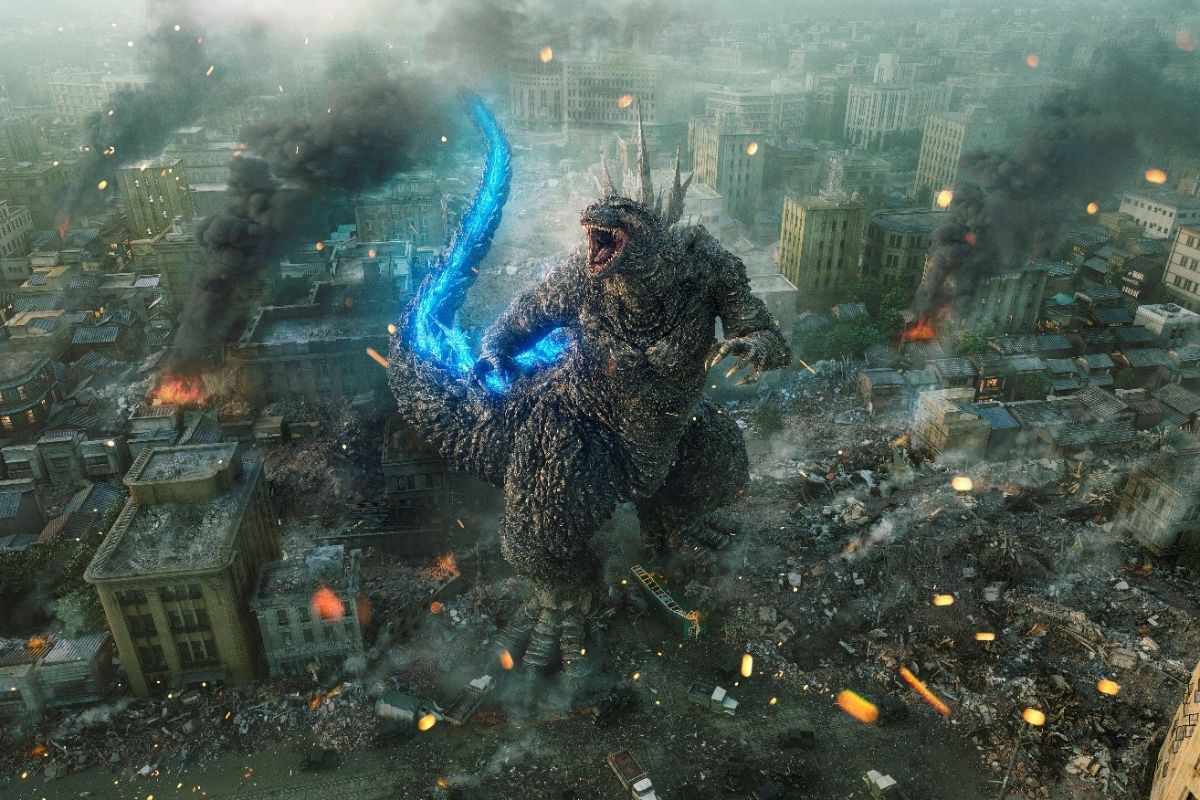
Acts of God are neutral and merciless. So, too, are acts of Godzilla. In 2023’s Oscar-winning “Godzilla Minus One,” he snatches a train car in his jaws, leaving its unsuspecting passengers to dangle in midair. When he turns his nuclear breath on the tanks that uselessly pepper him with ordnance, that blast’s aftershock reduces what’s left of Tokyo’s Ginza district to rubble.
Meanwhile, Apple TV’s series “Monarch: Legacy of Monsters” transports the inciting action to San Francisco, whose citizens suffer through the catastrophe known as G-Day, before returning to Japan. Both stories warn of the unpredictability of merging science and nature, and the hubris driving attempts to control what can’t be understood or destroyed.
Our relationship with Godzilla changes from movie to movie and age to age. Some films cast the King of the Monsters as a protector unconsciously joining humanity – and occasionally, King Kong – to fend off some mammoth existential evil. More often, he is a reckoning, reminding us of how puny we are in nature’s schemes.
But what keeps us hooked on Godzilla and other titanic terrors scuttling forth from the Earth’s fissures is a simple fear: meeting our end because we happened to be in the wrong place at the time.
People are incidental to Godzilla’s destructive marches through cities or transoceanic swims. We are insects who happen to be inside buildings he crushes as if they were built out of Saltines instead of brick and steel. We are the tiny beings inside the metal tubes confronting him on the water. We matter as much to him as a firestorm cares about kindling. Godzilla is a creature of thoughtless collateral damage.
A legacy of Godzilla
Perhaps he causes such extensive mayhem because he is the unintended side effect of a cataclysmic experiment. Most Godzilla tales present slightly different interpretations of a mythology that began with the first “Godzilla” released in 1954. In it, a government scientist discovers that a scaly creature worshiped by island villagers as a sea god has grown to a monstrosity that dwarfs tall buildings. Salon’s executive editor Andrew O’Hehir quotes producer Tomoyuki Tanaka’s summation in his ode to the original movie: “Mankind had created the Bomb,” Tanaka said, “and now nature was going to take revenge on mankind.”
If the American military hadn’t secretly detonated a potent hydrogen bomb at the Marshall Islands’ Bikini Atoll, Godzilla may have never taken out his anger on sailors, ships and (eventually) shopping centers.
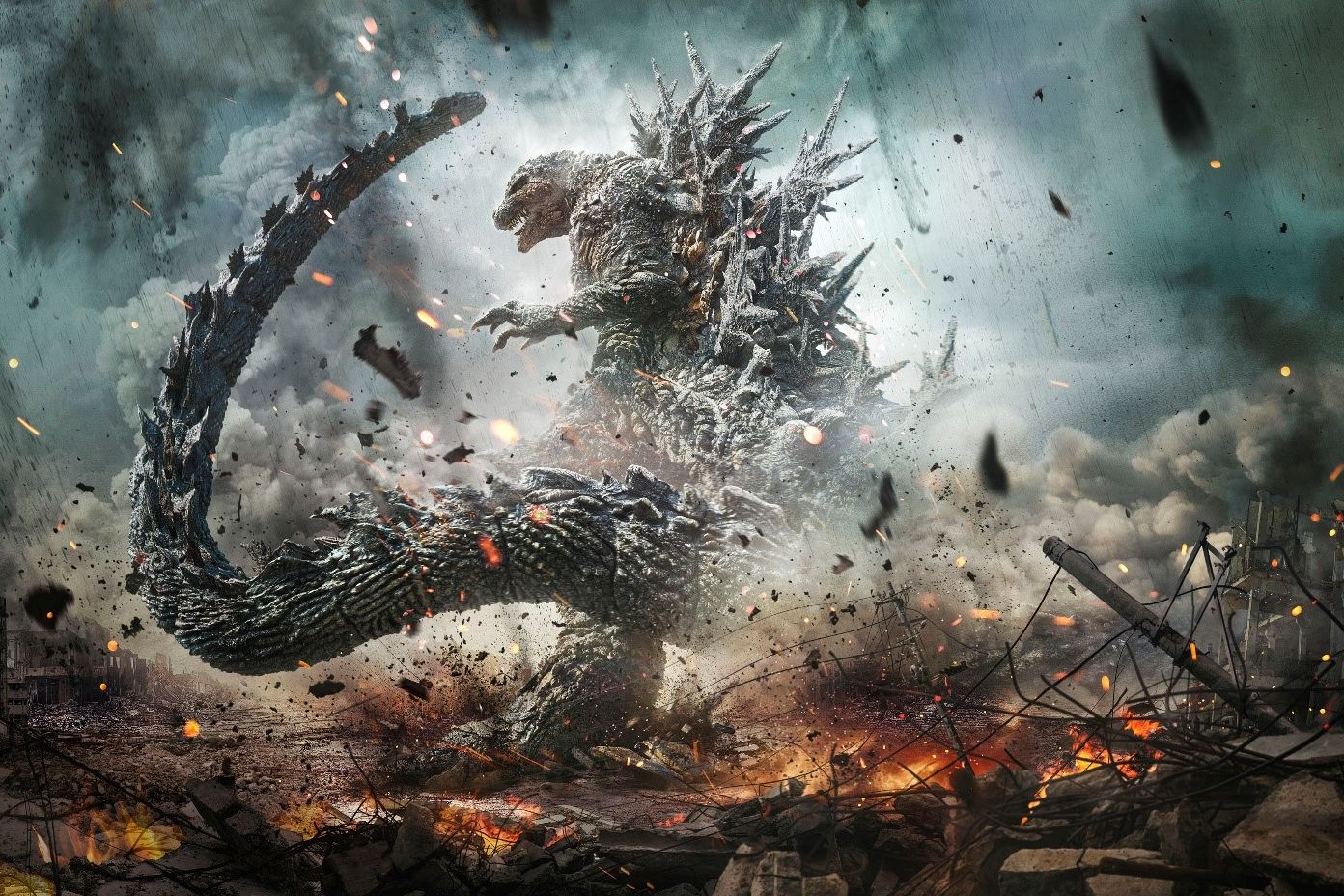
(TOHO International) “Godzilla Minus One”
According to the Legendary Monsterverse – the American franchise that encompasses Godzilla, Kong and Monarch, the organization dedicated to monitoring Titans — a few confident, uniformed men believed they were eliminating a future threat by using said bomb to destroy it. Instead, our first kaiju (which translates to “strange beast”) fed on the radioactivity — an apt stand-in for reckless rage, wouldn’t you agree? — and swelled to an unstoppable size.
But each springs from the same mutated DNA, mapping the source of Earth’s monster problems to mindless warfare, along with the intellectual vanity compelling man to seek an upper hand over nature instead of figuring out how to coexist.
Godzilla and the other Titans stampeding in his wake are post-World War II creations; Ishirō Honda, who directed the OG “Godzilla,” was a veteran of that war marked by his travel through the ruins of Hiroshima after the United States bombed its civilians and Nagasaki to force Japan’s surrender. The Geneva Conventions’ protocols made such acts illegal, but as we’re discovering with alarming frequency and force these days, laws are only as effective as our willingness to abide by them.
Want more from culture than just the latest trend? The Swell highlights art made to last.
Sign up here
Under President Donald Trump, the United States started a war with Iran that threatens to spiral the entire Middle East into armed conflict. Trump bragged that the conflict’s opening strikes decapitated Iran’s leadership, including Ayatollah Ali Khamenei, while downplaying mounting evidence that a U.S. missile killed more than 175 people at an elementary school, according to Iranian officials cited by the New York Times. Most of the victims were children.
These decisions were made by a few powerful men without consulting Congress or considering how these actions might affect the world’s economies or the safety of everyday people, both in Iran and surrounding countries, and in American cities. Action produces reaction; every cause nets an effect. A bomb meant to kill a monster ends up creating a gargantuan problem, one that has inspired 38 movies and counting. “Godzilla Minus Zero” is currently in production and set for a wide theatrical release in North America beginning Nov. 6.
A never-ending rampage
The Godzilla movies, whether American or Japanese, are metaphors for the ravages of warmongering and the despondence of those powerless to escape its wrath. But they’re also repeating warnings about poking at forces we aren’t prepared to deal with.
Each film’s scientists and soldiers guide us through ground-level excursions explaining why the monsters are attacking, but it’s the civilians who aren’t fast enough to outrun their death who pull our sympathies – or don’t, which should give us pause.
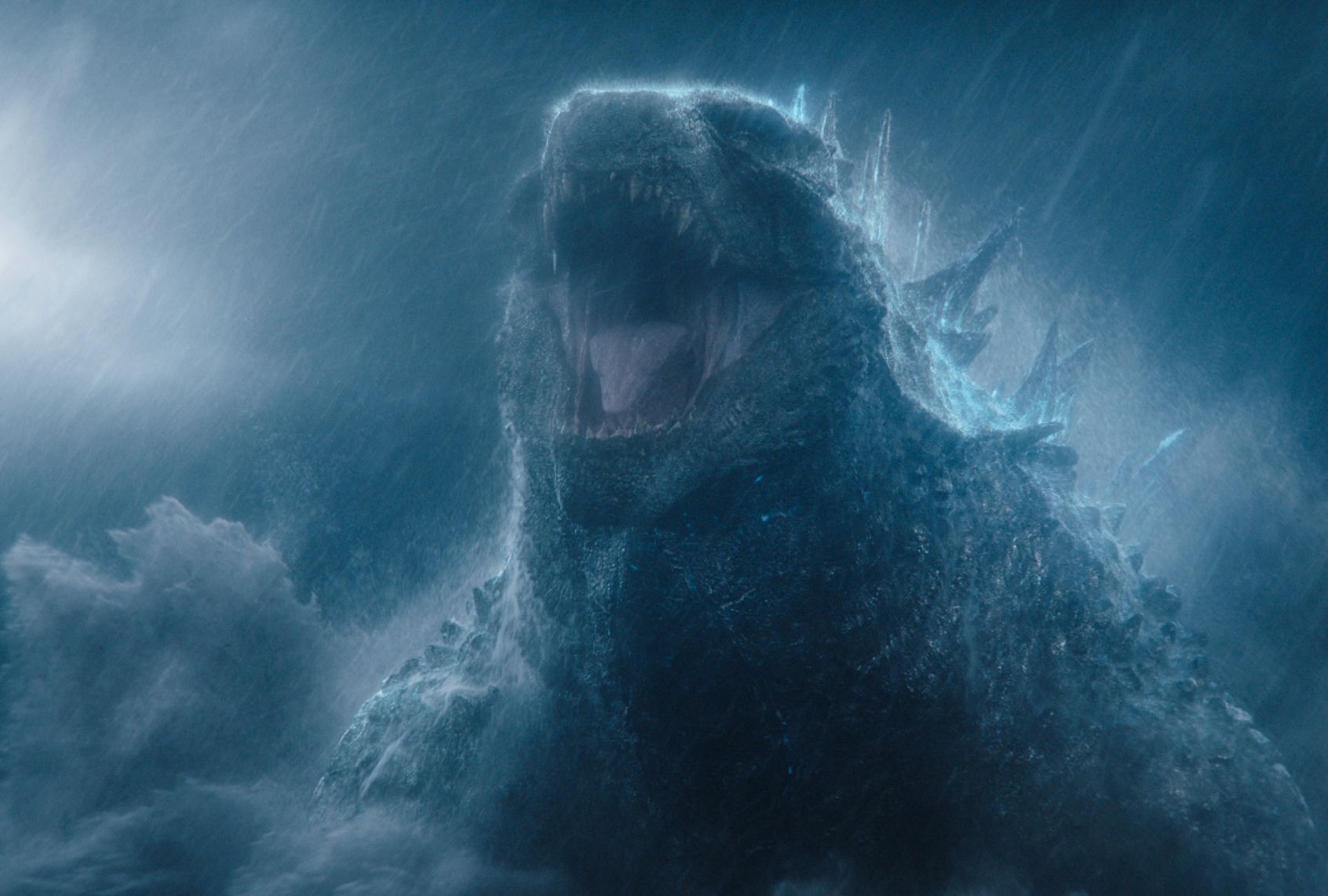
(Apple TV) “Monarch: Legacy of Monsters”
“Monarch” swaggers forth on the strength of Kurt Russell’s rebel cowboy spirit. Its second season begins with Anna Sawai’s heroine Cate Randa refusing to leave Russell’s retired U.S. Army colonel Lee Shaw, her team’s father figure, in the monster realm they call Axis Mundi. Leaving no one behind is an American virtue, so despite being warned that opening the rift that could bring him home could also let something more dangerous into our world, Cate does it anyway.
To her relief, Lee finds his way back to the surface. To the world’s grave danger, so does Titan X — a Lovecraftian tentacled behemoth whose emergence triggers Kong into a violent frenzy. Kong also fails to stop it from escaping into the sea, presumably leaving humanity’s salvation or destruction to be decided by You-Know-Who.
The distance between Americans and the people in other countries cowering as death rains down on them from the sky has always been vast both geographically and culturally. It is simpler to intellectualize a nonexistent reason for violence, or defend an endgame that doesn’t exist, when we can reason that those caught in the crossfire aren’t like us. To end World War II, America and its allies led the charge in depicting the Japanese people as less than human and therefore suitable for bombing. That makes us both Godzilla’s creators and the monster itself.
Much more than this, these stories keep reminding us that while we can monitor earthquakes, track hurricanes, or dig out of avalanches and mudslides, under no circumstances can we fully harness these phenomena without wrecking ourselves. Natural disasters are inevitable, but often, the most devastating slumber for decades, sometimes centuries, only awakening when provoked.
The Monsterverse’s mission tasks Monarch’s heroes to figure out how to live with Godzilla and the other Titans sharing our planet. Tens of Toho movies counsel getting out of their way, especially when Godzilla throws himself at greater monsters. Either way, once the King of the Monsters is unleashed, there isn’t much we can do to stop him. The world is much safer when its raging Titans are left asleep.
Read more
from Salon’s culture newsletter, The Swell