
Meet the Irish potato that’s actually candy
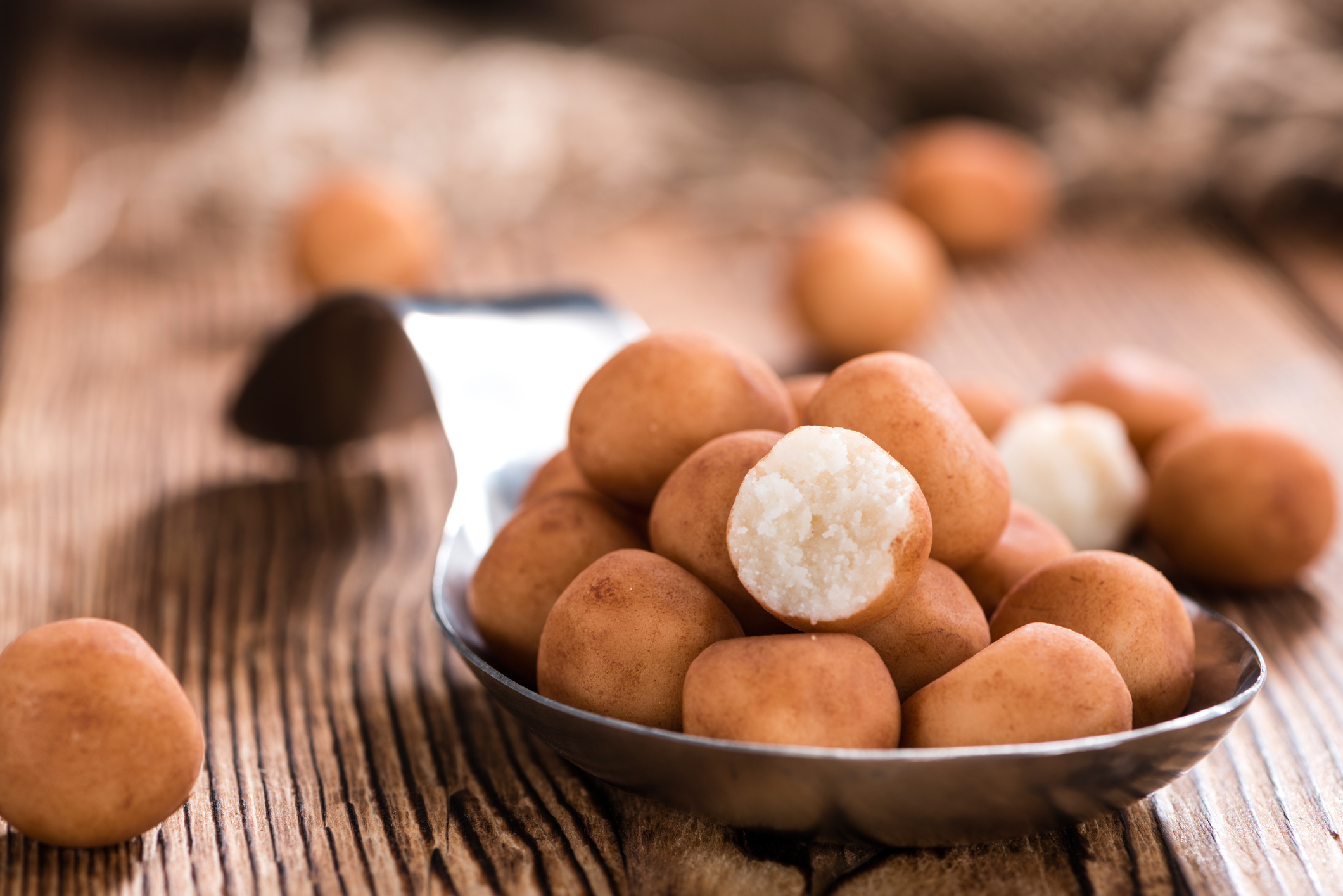
In most places, “Irish potatoes” means exactly what you think: starchy, dirt-covered tubers. In Philadelphia, it means something else entirely — a sweet, sugary confection that looks like a tiny potato but tastes like a coconut-cream dream.
If you grew up around Philly, you probably know them well. If you didn’t, there’s a good chance you’ve never heard of them — a cultural divide I didn’t fully understand until I left home.
For me, Irish potatoes were a sure sign that spring — and St. Patrick’s Day — had arrived. As a kid wandering the grocery store aisles with my mom, spotting the shiny green foil on the white O’Ryan’s boxes felt almost as exciting as presents from Santa on Christmas morning. The candies themselves looked like tiny, dusty potatoes: irregular little lumps of sweet cream with bits of coconut rolled in cinnamon, dusty and warm-smelling, tucked into a plastic tray. Before I knew I could make a career out of food, I was fascinated by taste, texture and surprise. I loved when a dish caught me off guard.
Irish potatoes are the perfect sugary, bite-sized treat. The sensory mismatch — a coconut-flavored “potato” — is a little kid’s dream, like the Jelly Belly “Bean Boozled” pack or a cupcake that looks like a hamburger.
But when I moved out of state for college, I learned something truly shocking: nobody else knew what Irish potatoes were. And they didn’t know about Tastykake either.
I remember casually bringing it up one March, only to be met with blank stares. They thought I was crazy. Irish potatoes? Like… regular potatoes?
No. Obviously not.
Want more great food writing and recipes? Sign up for Salon’s free food newsletter, The Bite.
But no one else had seen them, let alone eaten them. And when I tried to find a box to prove their existence, I couldn’t. Outside of the Philadelphia area, I was living in an Irish potato desert.
Like the Philadelphia-born, Italian American that I am, I had a newfound determination to make sure everyone I knew had the mind-blowing experience of tasting my favorite coconutty, bite-sized treat.
After a visit home, I returned to campus with a stockpile, like a confectionery smuggler crossing state lines with sugary contraband stuffed between sweatshirts in my suitcase. My friends were skeptical as I placed the uneven, cinnamon-covered blobs in their palms. They held them up to the light, pressed them between their fingers, hesitating — until, one by one, they took a bite. The kind of bite where your lips pull back, your teeth barely touch the thing, and you brace for impact.
I felt something close to pride as I watched their eyes light up in realization: this was actually a very good sweet — not some leprechaunian trick. Despite explaining multiple times that it was made with coconut, I think half of them still expected a savory, dirt-like potato flavor.
Irish potatoes are about as Irish as spaghetti and meatballs are Italian — a product of immigrant communities in America rather than the old country itself. Their history traces back to the late 19th century, when Philadelphia was a bustling port city receiving shipments of goods from around the world, including sugar. The city quickly became one of the nation’s largest candy producers, home to more than 200 confectioners, including recognizable names like Milton Hershey (who later moved to Dauphin County) and Stephen F. Whitman. By the early 20th century, Philadelphia was known as the candy capital of the United States.
The exact origin of the Irish potato isn’t tied to a single person or company, but several theories persist. One is that candy makers, eager to stand out, created a St. Patrick’s Day treat to bridge the seasonal gap between Valentine’s Day and Easter. Another suggests Irish immigrants crafted the candy as a nostalgic nod to home — or even as a reference to the Great Famine. Others believe it may have been invented by accident, a clever use of leftover coconut cream.
Whatever its origins, the candy has endured — a beloved, if hyper-regional, delicacy.
Oh Ryan’s, based in Boothwyn, Pennsylvania, has been making Irish potatoes since its founding in 1989 and remains the most widely recognized producer. David Lamparelli, a second-generation candy maker, says the company produces about 90,000 pounds of Irish potatoes between December and March, with peak production reaching up to 75,000 candies a day.
Although they’re primarily sold in Pennsylvania, New Jersey, and Delaware, West Coasters may recognize a distant cousin. See’s Candies, founded in Los Angeles in 1921, makes a “St. Patrick’s Day potato” using divinity — a nougat-like, marshmallowy confection — mixed with walnut, coated in chocolate, and rolled in cocoa powder and cinnamon. These versions are also much larger: while an O’Ryan’s potato is about the size of a thumbprint, See’s can stretch up to three inches long.
So can you really compare the two? As a day-one Philly stan, I’m going to say no.
The regional isolation is part of what makes Irish potatoes feel so special. They’re one of those hyper-local food traditions — like scrapple or water ice — that quietly define a place without ever quite breaking into the national conversation. You grow up assuming everyone knows them, only to realize they belong to a very specific cultural bubble. And no matter how many times I say, “I promise scrapple with syrup is an elite breakfast side,” I still get a look — usually somewhere between confusion and mild horror — when I explain what scrapple is made from.
The regional isolation is part of what makes Irish potatoes feel so special. They’re one of those hyper-local food traditions — like scrapple or water ice — that quietly define a place without ever quite breaking into the national conversation.
Recently, I was reminded just how powerful that local bubble can be.
A few weeks ago, I got a text from my grandma: “A special delivery is on its way to you.”
This wasn’t unusual. She’s long been a prolific sender of care packages — sweets, soup mixes, plants, little odds and ends she thinks I might like. But when the box arrived and I opened it, I found something I wasn’t expecting: a container of homemade Irish potatoes.
They looked just like the ones from the store, only better.
Each one was slightly imperfect, dusted generously with cinnamon. The first bite was softer than I remembered, almost cloudlike. The coconut was sweet and nutty, the cream cheese adding a gentle tang that kept the sugar in check. The cinnamon brought a warm, woody spice that tied everything together. They practically melted in my mouth, pulling me back to childhood grocery store aisles, gripping a box of O’Ryan’s and begging my mom to bring them home.
Maybe that’s why Irish potatoes have remained so stubbornly regional. They don’t need to travel. They live in grocery store aisles and family kitchens, in care packages and childhood memory — passed hand to hand, season to season, exactly where they belong.
Nana’s Irish Potatoes
Yields
60 candies
Prep Time
20 minutes, plus chilling
Ingredients
- 4 ounces cream cheese, softened
- 1/4 cup butter, softened
- 4 cups confectioners’ sugar
- 1 teaspoon vanilla extract
- 2 1/2 cups flaked coconut
- 1 tablespoon ground cinnamon
Directions
- Beat cream cheese and butter together in a large bowl until smooth.
- Add confectioners’ sugar and vanilla; beat until smooth. Mix in flaked coconut.
- Roll mixture into balls or potato shapes; roll balls in cinnamon. Place onto a cookie sheet and chill to set, at least 10 minutes. If desired, roll potatoes in cinnamon again for a darker color.
Read more
about this topic