
Amanda Seyfried’s “Housemaid” performance is a cinema-saving miracle
At the closing ceremony of the 81st Venice Film Festival in August 2024 — after major movies like “The Brutalist,” “I’m Still Here,” “Babygirl” and “Maria” premiered in competition — the festival’s jury president, Isabelle Huppert, approached the microphone with an important announcement. “Good evening, everybody,” Huppert began, her structural, white Balenciaga gown commanding the room’s attention. “I have good news for you: Cinema is in great shape.”
Though she was correct at the time, Huppert couldn’t have known that her proclamation was actually a prophecy. Cinema wasn’t just in great shape; it was pacing itself, building its strength for one of its most exemplary, most deceptively important films this century: “The Housemaid.”
“The Housemaid” lives and dies by Seyfried’s hand, and she keeps the film cradled in Nina’s white-knuckled grip for each one of its eye-popping 131 minutes. Considering how compelling Seyfried is, it’s no surprise audiences have taken such a shine to the movie, though it is important.
Admittedly, heaping this much flattery onto a tawdry piece of airport fiction adapted into a Sydney Sweeney-starring, big-screen sensation may seem hyperbolic. But if you’ve seen the film yourself, you’ve experienced the feeling I’m referring to — and if you haven’t, surely someone in your immediate orbit has and would be happy to extol its merits over a glass of dry chablis. That’s just basic math, given that the film has raked in a whopping $300 million globally and is still going strong in its theatrical run. People are flocking to the theater in droves to see this movie. And while a cursory examination of the film might ascribe that attribute to the public’s taste for poorly made, mid-tier trash, that conclusion would be wholly incorrect. “The Housemaid” is far from the formulaic thriller its trailers and general synopsis suggest. In actuality, “The Housemaid” is about as depraved and delicious as a mainstream film can get, packed with narrative twists and guffaw-worthy choices from everyone involved.
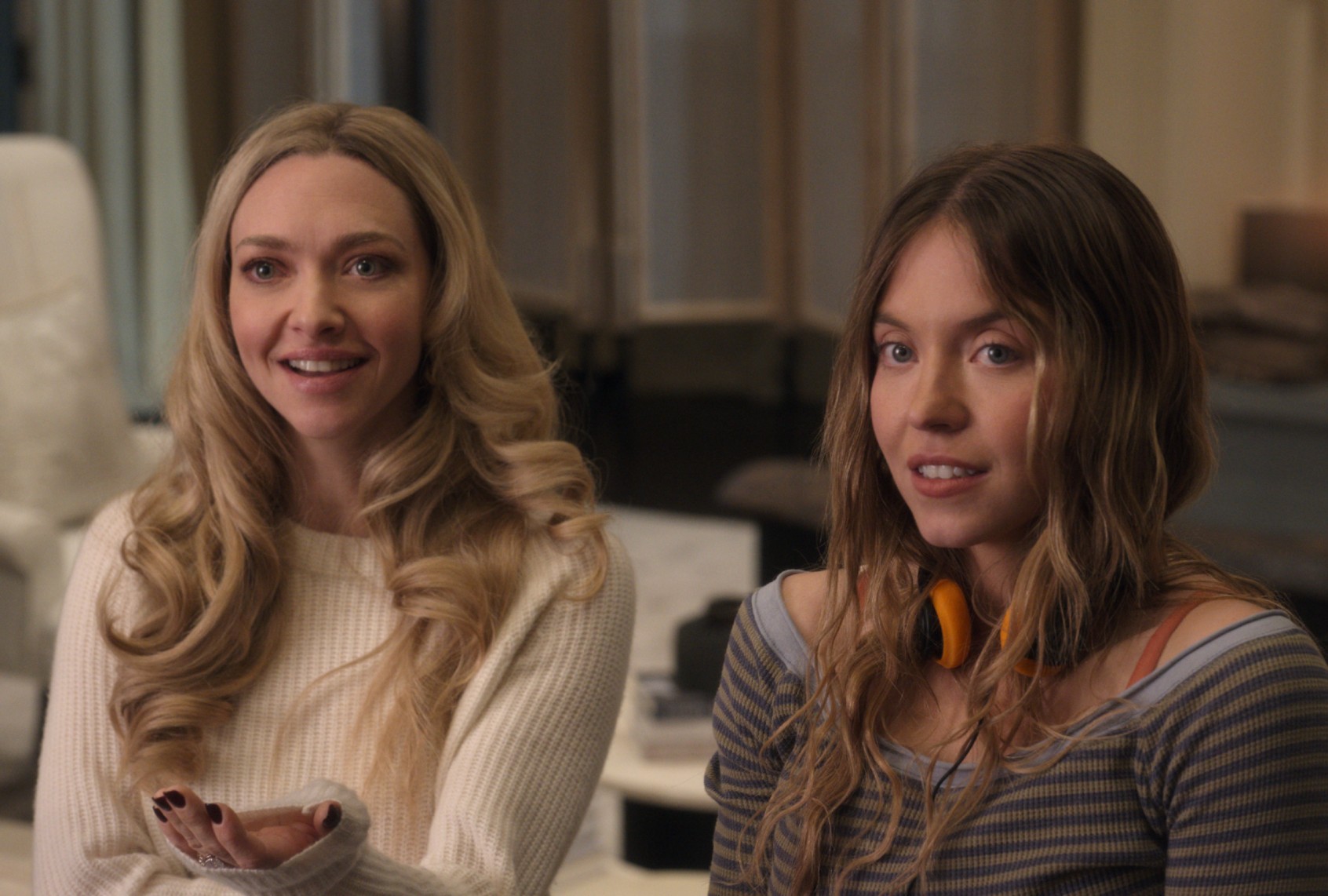
(Lionsgate) Amanda Seyfried as Nina Winchester and Sydney Sweeney as Millie Calloway in “The Housemaid”
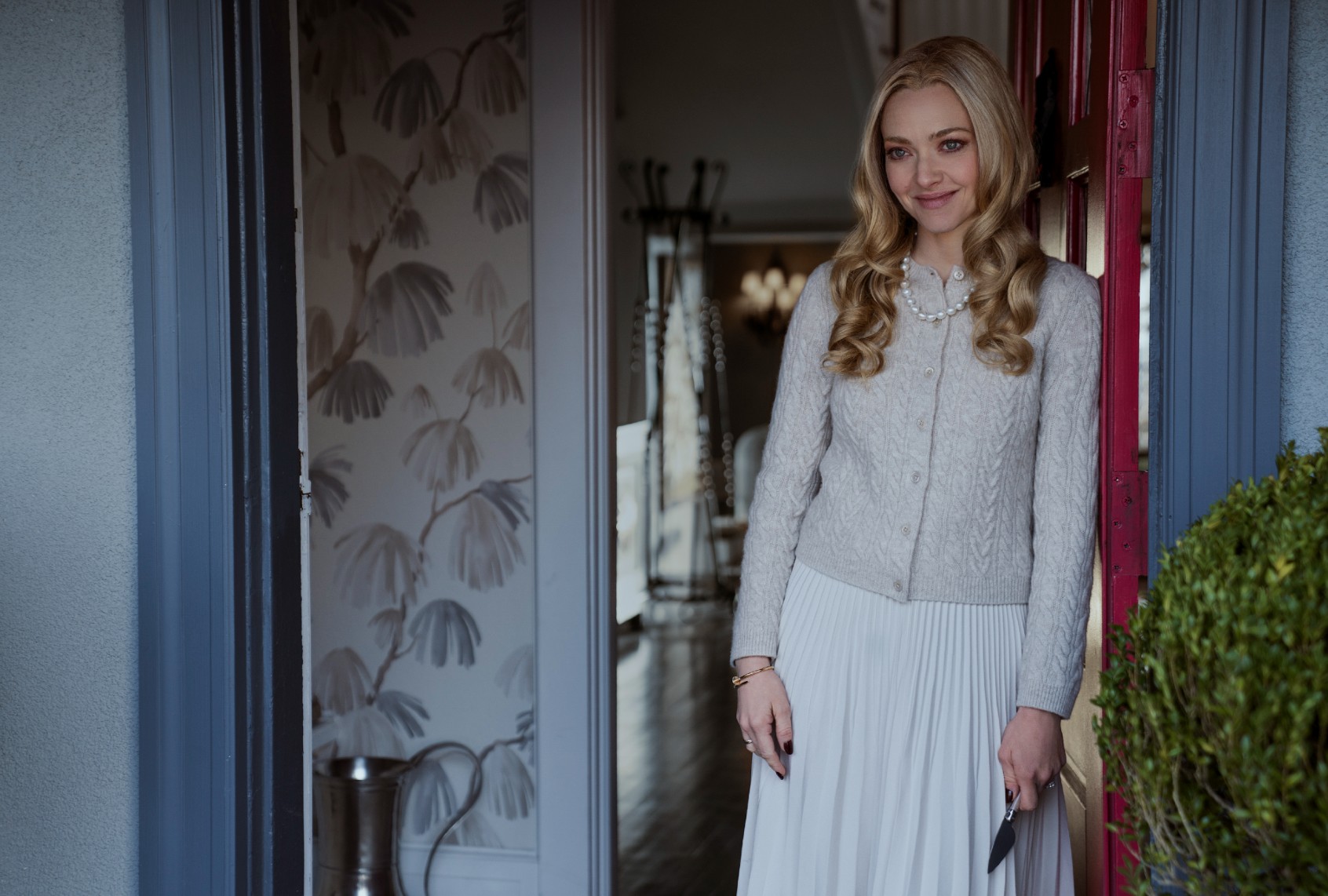
But none stand as tall as the film’s co-lead, Amanda Seyfried, playing the seemingly perfect housewife, Nina Winchester, who hires Sweeney’s down-and-out parolee, Millie, to work and live in her house, and take care of her child, without so much as a background check. A red flag for sure, but it’s not long before Nina is practically loading a harpoon gun with red flags and firing them at her new housemaid, left and right. Seyfried’s performance is, no exaggeration, one of the finest and most mesmerizing turns any actor has given across the thriller genre. She has Nina’s mannerisms detailed down to their minutia. Every gesture, word and expression is a marvel to behold, made all the more stunning by the fact that Seyfried essentially plays three different personality types throughout the film.
“The Housemaid” lives and dies by Seyfried’s hand, and she keeps the film cradled in Nina’s white-knuckled grip for each one of its eye-popping 131 minutes. Considering how compelling Seyfried is, it’s no surprise audiences have taken such a shine to the movie, though it is important. A film like “The Housemaid” delighting viewers this much and making boatloads of cash doing it is a sure sign of cinema’s vitality. It would be ignorant to dismiss how critical this film is for the mid-budget movie’s longevity just because it also happens to be extremely campy. The vulgar kitsch of “The Housemaid” is its silly secret weapon, and it’s Seyfried who stays reloading the ammunition, making sure that this hefty dose of frivolity is as unforgettable as its conventionally prestigious contemporaries.
Directed by Paul Feig — who, after helming this and “Another Simple Favor” in the same year, should be considered the king of neu-pervert cinema — “The Housemaid” often plays like an extended softcore fantasy. There are bare feet and hard nipples abound. Implication and thematic suggestion go hand-in-hand. At times, the movie almost feels like watching something you’re not supposed to see, like staying up past your bedtime to get a peek at late-night television and sexy infomercials.
Feig and screenwriter Rebecca Sonnenshine cleverly use this teenage-boy-daydream element to reel in male audiences who may be begrudgingly watching with their girlfriends, and Seyfried perfectly plays into the reverie. As soon as Millie begins working for the Winchesters, the sexual tension between the new housemaid and Nina’s husband, Andrew (Brandon Sklenar), is palpable. After a pleasant initial interview and first day on the job, Millie awakens to Nina shouting and smashing things in the kitchen, desperately searching for notes for a speech she has to give at an important PTA meeting. (Seyfried’s prior assertion that the speech needs to be “a barn-burner” — something she tosses out with a delightful Stepford wife characterization — is a brilliant throwaway line.) Nina’s breaking dishes and smashing milk jugs on the floor, convinced that Millie threw her notes away. The behavior is a complete 180-degree switch from Nina’s demeanor the day before. Sonnenshine and Feig trust that this outsized display will quickly convey Nina’s vast emotional swings. That something is fueling these outbursts is all the viewer needs to know, and with that information communicated, we can sit back and let Seyfried rip.
Want more from culture than just the latest trend? The Swell highlights art made to last.
Sign up here
There is no minimizing what maximalism Seyfried brings to “The Housemaid.” Nina’s behavior only grows increasingly erratic, and that means Seyfried is free to lean hard into her performance. We’ve long been inundated with mid-budget thrillers and horror movies where actors pull their punches, and for good reasons. Lesser-known actors are hesitant to go full psycho mode lest they be pigeonholed before their careers take off, and more established performers like Seyfried have the privilege to decline roles that feed outdated tropes about hysterical women. “The Housemaid” initially appears to have those trappings, slowly revealing that Nina is on a steady cocktail of antipsychotics after a trip to the psych ward. And while Seyfried is no stranger to roles that are just as challenging for the viewer as they are for the actor — and as dimensional as Seyfried as she plays up Nina’s mentality — even this type of “Fatal Attraction” hysteria would feel archaic.
Just as the viewer starts to see the first shades of monotony rising over the horizon, Seyfried and Feig flip the script. (And it’s here where you should stop reading if you want to remain entirely spoiler-free.) As it turns out, Nina isn’t the unhinged madwoman she’s perceived to be. Rather, she’s snared Millie in a trap while desperately trying to wriggle free from one herself. All of this mania and madness has been an over-the-top act to drive a wedge between her and Andrew now that her husband has his sights set on another woman. And though this is not an entirely unexpected plot twist, the film has plenty more up its sleeve, including the opportunity for Seyfried to, once again, turn on a dime.
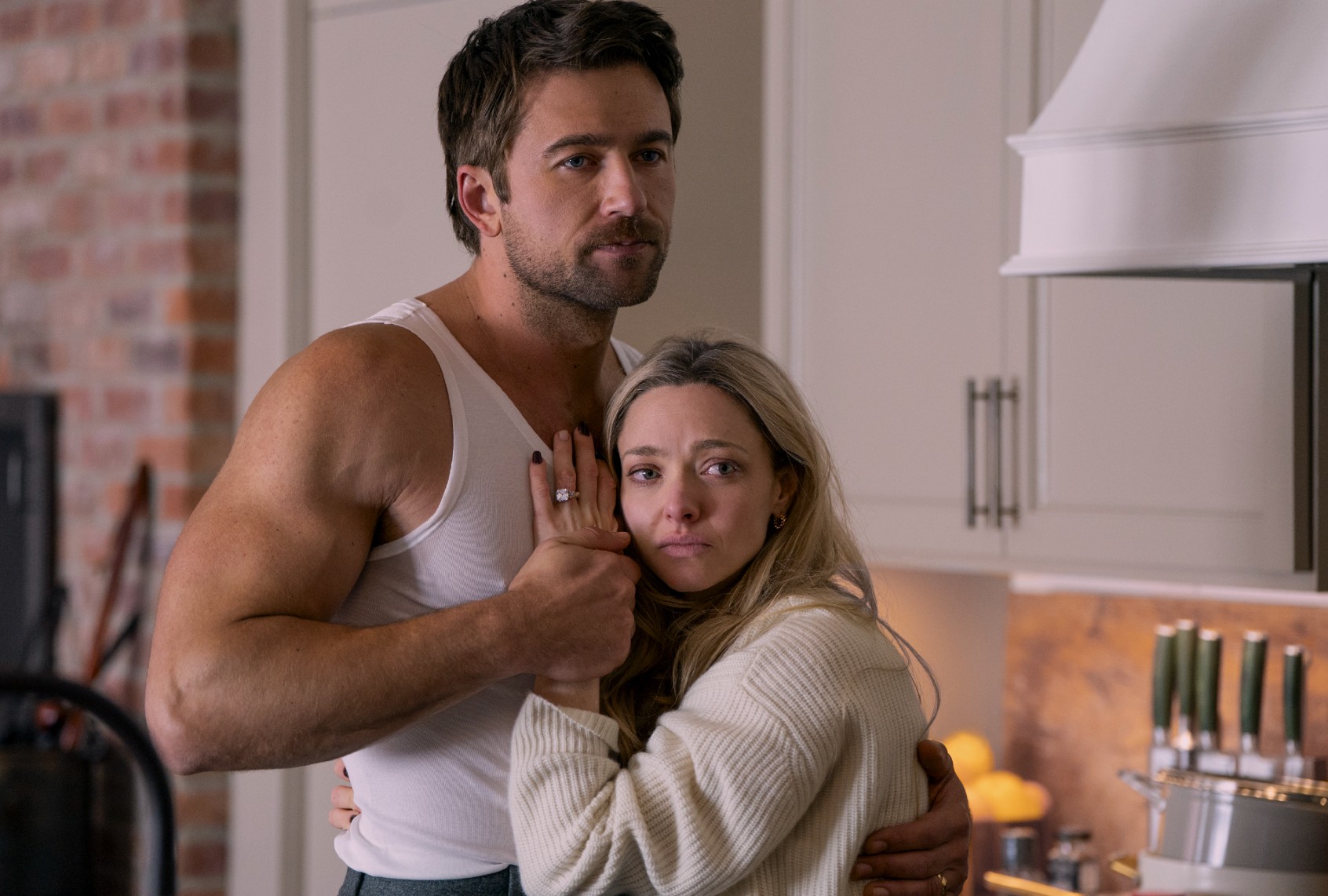
(Daniel McFadden/Lionsgate) Brandon Sklenar as Andrew Winchester and Amanda Seyfried as Nina Winchester in “The Housemaid”
The characters in movies like these are designed to be expendable fodder for the chills and thrills. Crafting someone that the audience can connect to emotionally is a critical asset to this movie’s larger success. It’s Seyfried who elevates “The Housemaid” from guilty pleasure status, making it an exhilarating enigma at one moment and genuinely affecting the next.
Deep inside this winding narrative labyrinth, Seyfried relishes the chance to show off her dynamism. “The Housemaid” would be enjoyable enough had Seyfried only been giving a layered performance as a mentally ill housewife. (Problematic, sure, but anyone coming to a Feig film looking for political correctness better mosey over to “Zootopia 2” in the neighboring auditorium.) But in the third act, Seyfried turns the tables and goes for something smarter, something more extraordinary. We see Nina as the person she was before she met Andrew, and how he lured her in with his dazzling smile and rugged charm, only to pivot to violent, manipulative extremes without warning.
To say the film handles this shift toward a commentary on the abject violence against women with grace would be a lie. “The Housemaid” stumbles, and it doesn’t help that Sweeney spends much of the film meandering throughout its narrative like a piece of driftwood that keeps washing back onto the shore. But even when things get shaky, Seyfried is there to buttress the film with a truly inhuman strength. She channels all of Nina’s prior faux delirium into a ferocious finale that raises the stakes tenfold. Making the viewer care about what happens to the characters in a film like this is no small feat. The people in stories like these are designed to be expendable through the film’s ensuing events, fodder for the chills and thrills. Crafting someone that the audience can connect to emotionally is a critical asset to this movie’s larger success. It’s Seyfried who elevates “The Housemaid” from guilty pleasure status, making it an exhilarating enigma at one moment and genuinely affecting the next.
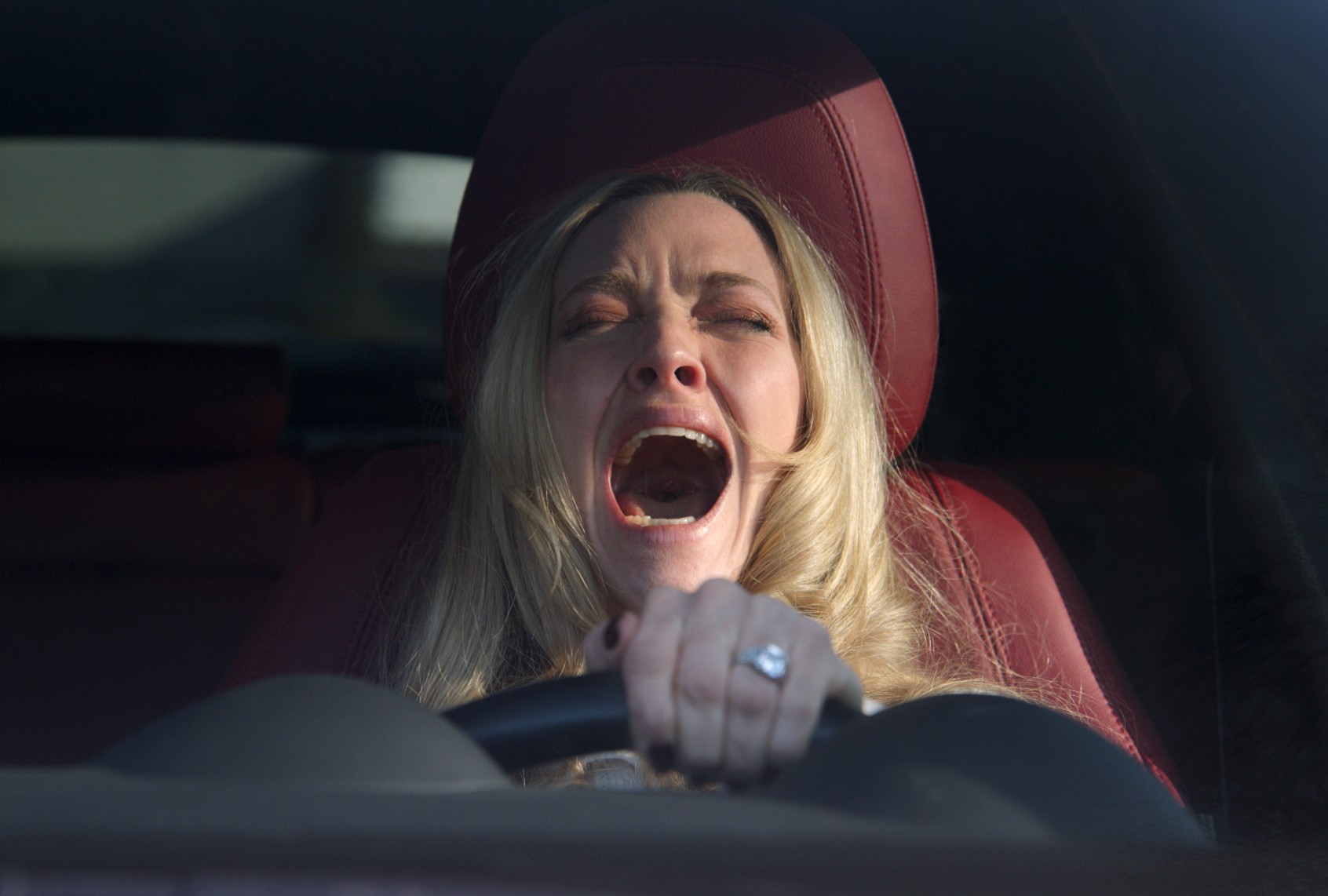
(Lionsgate) Amanda Seyfried as Nina Winchester in “The Housemaid”
What’s more, Seyfried is as phenomenal here as she is in “The Testament of Ann Lee.” These two roles couldn’t be more different, but Seyfried’s ability to bring each one a uniquely stirring depth can’t be discounted. Her dedication to pursuing complicated parts about exceptionally determined women has set her far apart from her peers. Like “The Housemaid” itself, Seyfried is full of surprises. It’s not just that we can’t predict what kind of character she’ll play next, but that it’s equally impossible to foresee what expression she might wear for any given scene, or what cadence she’ll deliver her dialogue with — quite the opposite from a certain marble-mouthed co-star.
That dissonance works to Seyfried’s advantage here, too, but “The Housemaid” remains her show. And if audiences are putting up hundreds of millions of dollars to see it, all the better. The fact that so many people are seeing work of this magnitude is a massive net win for cinema in the industry’s unstable modern moment, and not only because the mid-budget movie is making money again. Viewers being exposed to and captivated by Seyfried’s sincerely spectacular work are receiving a gift, perhaps without even realizing it. When we see performances like this, especially in movies where we might not anticipate them, it’s a shrewd reminder that we can never be too sure what we’ll get when we go to the theater. Even the schlocky stuff — the films we assume will float from our memories the second they’re over — can turn out to be barn-burners as unforgettable as a good PTA speech.
Read more
about why we go to the movies