
Meals that help when life gets hard
Like a lot of people who grew up in the church, I have a complicated relationship with organized religion. Still, I find myself missing certain sensory elements of the whole endeavor. I miss the smell of my childhood church: the slightly scorched scent of freshly vacuumed shag carpet, the chlorine tang of the baptistry, the papery dust of yellowing Bible pages, the varnished wood of pews, the cloud of old-lady perfume that lingered long after the final hymn. I miss the feeling of singing in a group. And, perhaps most of all, I miss the food culture.
I was raised in a tradition where women were barred from official leadership roles, yet their domestic labor kept the entire operation humming quietly beneath the service. There were the expected rituals: post-church potlucks, small-group doughnuts and coffee, spaghetti dinners served before Wednesday night Bible study.
But what stays with me most vividly is watching generations of women mobilize when someone was having a hard time. They rose up, bearing casserole dishes and Starbucks gift cards, responding to everything from complicated pregnancies to family deaths to long, dragging illnesses. I also grew up steeped in the language of “spiritual gifts” — the notion that whatever you do well, whether painting or singing or roofing or accounting or cooking, can be offered up in service to others.
Strip away the theology, and I think the idea still holds.
Our natural talents are often the clearest way we enter community, sometimes without even naming it as such. I saw it again and again: shoulders dropping, voices softening, the brief but unmistakable relief produced by a hand-delivered lasagna — sometimes homemade, sometimes unmistakably Stouffer’s — and the quiet knowledge that someone had shown up.
Lately, it’s hard not to notice how much people seem to need one another. Everyone feels a little stressed, a little skittish, a little tender to the touch. We are more digitally connected than ever, yet much of that connection functions as a kind of stand-in — a convincing facsimile that still leaves us hungry. The pandemic, for all its lessons, quietly atrophied some of our neighboring muscles, and many of us are still figuring out how to use them again.
So, as a way to round out January here at “The Bite,” I wanted to experiment with a series of short, friendly guides centered on building community through food. They’re practical, but also aspirational: how to use food to get to know the neighbors; how to plan a casual at-home birthday party for friends and loved ones (I suspect at-home parties are due for a renaissance); how to plan a special dinner for two; and this one — how to use food to care for someone who needs a hand.
If you like cooking or baking (or even just the gentle creative direction of someone else’s meals) consider leaning on that impulse this year. It’s a small, generous way to practice showing up, one that asks very little and often gives back more than you expect.
Let’s dive in:
It’s the thought that counts. Truly
(Ashlie Stevens ) Butter and a bow
In my mid-twenties, during my first week at a new remote job, I felt both giddy and strangely unmoored — delighted to have shed my commute, unsettled by the sudden absence of physical colleagues. One afternoon, one of my best friends called me from my apartment parking lot. “Look out the window,” she said. When I did, there she was, standing below, waving. She was holding a cup of coffee and a homemade turkey sandwich — white bread, cut on the diagonal, slathered with Kewpie mayo and layered with lettuce — tucked into a brown paper bag. Inside was a note: Don’t forget your lunch.
I still remember it, years later.
If you want to get into the practice of using food to care for someone who needs a hand, it helps to hold two ideas at once: start small, and let the gesture look like your real life. You do not need to be the friend who arrives with a full meal (though we’ll get there, if that’s your speed). You can be the friend who brings the cup of tea. The friend who shows up with a Frosty and a sleeve of fries because you were already at the drive-through. The friend who drops off a portion of whatever you were making for dinner anyway. The friend who brings a loaf of bread and a good stick of butter.
You can be the friend who brings the turkey sandwich.
What I’m suggesting is simple: when someone is having a rough stretch, showing up is always more important than showing off, so feel free to rethink what “showing up” looks like for you.
You can feed people without cooking
(Ashlie Stevens ) Thermos and mug
Before we even get into the kitchen, it’s worth lingering on a quieter truth: one of the most meaningful ways to show up for someone having a hard time is to help them stay fed — not necessarily by cooking, but by making eating easier. I tend to think of this as reducing the cognitive load of food, not just the physical labor. Sometimes the gift isn’t a freezer meal; it’s the absence of yet another decision.
Instead of dropping off a casserole, you might offer to handle grocery pickup or coordinate a week of delivery. You could brave the supermarket on their behalf, hunting and gathering the basics — bread, butter, bananas, eggs — for a gentle kitchen restock. You could arrive with paper towels, dish soap, and trash bags (not especially Instagrammable, but deeply loving all the same).
You could drop off breakfast in the form of convenience-store pastries and a thermos of hot coffee to share. You could send a delivery gift card with a short note attached: These are my three favorite soups to order when I’m feeling wrecked. Guidance, it turns out, is a form of care.
I’ve also, in the past, offered up my kitchen time to friends: let me come over and wash, chop, dry, and store your produce for the week while you rest. I’ll bring the cold brew. I’ll bring a good playlist. You don’t have to host.
We’re not trying to solve hunger permanently here. We’re simply trying to offer our loved ones a small reprieve from all the thinking and doing that goes into keeping themselves fed — a brief pause, a little breathing room, delivered in a paper bag or a grocery app notification.
What makes a good sick-day (or hard-day) meal
(Ashlie Stevens ) Vegetables in a bowl
So let’s say you do want to cook something homemade for someone. Wonderful. When I’m putting together a sick-day or hard-day meal, I like to keep a very simple framework in mind. A good caring meal, at its best, is three things:
We’re looking for softness here — in texture, in flavor, in overall vibe. Nothing aggressively spicy, acidic, or crunchy. Think foods that are kind to a tired or slightly nauseous stomach: comforting without being heavy, reassuring without being bland.
The best meals to drop off assume very little energy on the other side of the door. Aim for dishes that still taste perfectly fine when eaten lukewarm, that don’t seize up or congeal the moment they cool. Meals that can be eaten in small portions, over time, without urgency — nothing that demands, You must eat this all right now or else — are ideal.
Low-decision
Whatever you bring should come clearly labeled and ready to enjoy, with simple reheating instructions if needed. Even if you’re tempted by a more ambitious, “project” recipe, it shouldn’t feel like a project for the person receiving it. The goal is ease: fewer steps, fewer questions, fewer moments of mental math.
Care, in this context, isn’t about impressing anyone. It’s about anticipating fatigue — and cooking accordingly.
6 ideas that go beyond lasagna
(Ashlie Stevens ) Honey and granola
I once visited a friend who had just had a baby and she asked me to grab a lasagna from the freezer to pop in the oven. “Any particular… one?” I asked, suddenly confronted with a wall of nine lasagnas, each dutifully dropped off by a loving member of her orbit.
She laughed, then leaned in and whispered conspiratorially across the kitchen: “I will trade you four lasagnas for whatever you were going to make for dinner tonight. My entire parental leave has just been taking care of a new human and baking lasagnas.” Then she snapped back, quickly and sincerely: “But I know I should be grateful — I am grateful! I could also just… go for something else.”
I tell this story not to cast shade on lasagna — or on those who lovingly bake and bring it. I love layered pasta as much (if not more than) the next person. Lasagna freezes beautifully, feeds a crowd, and carries a whiff of familial nostalgia that says, I’ve got you. Grade-A comfort food behavior.
But if someone in your life is facing a longer stretch of being down and out — parental leave, a long illness, a rough mental-health patch, a job search from hell — it can be nice, for both of you, to branch out a little. Consider these gentle, flexible, low-decision alternatives.
Bright, herby grain salads
When the menu starts to skew beige, a grain salad can feel like a small mercy. Think farro or brown rice, fresh herbs, an easy protein (finely chopped rotisserie chicken or well-salted chickpeas both shine), and a good dressing. Maggie Hennessy’s pickled pepper dressing is a particular favorite here. Mix it all together and deliver in a lidded deli tub.
Granola and yogurt
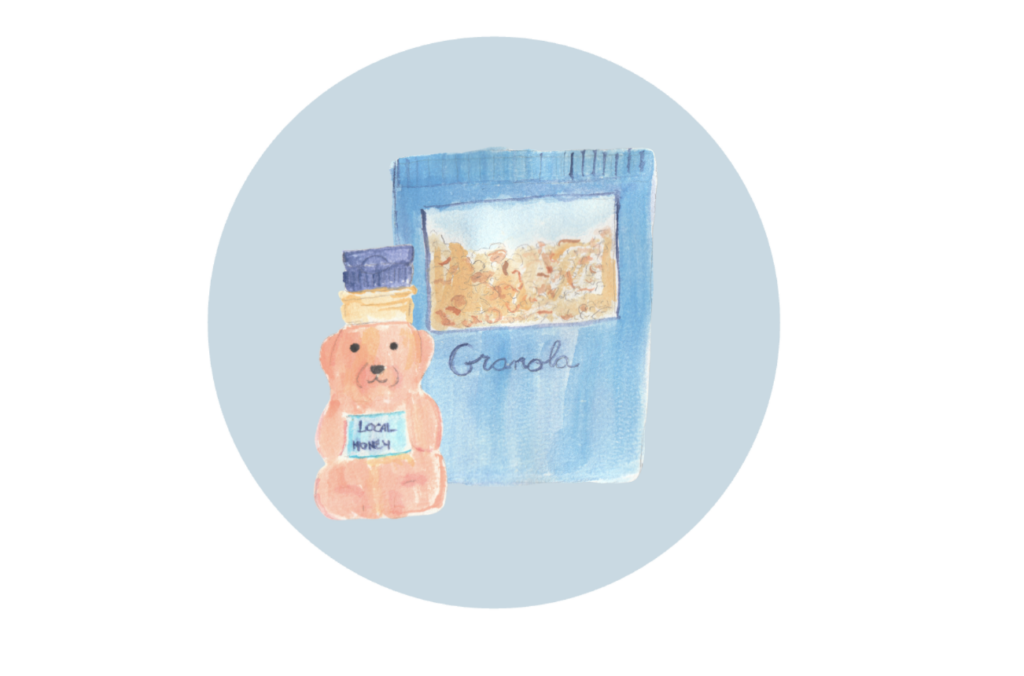
When people organize meal trains, dinner gets most of the attention. Showing up with breakfast can feel quietly heroic. A bag of really good granola — homemade or store-bought — and a tub of excellent yogurt is thoughtful, useful and rarely redundant.
Really, really good smoothies
Smoothies are an underrated choice for sick days. When I had COVID for the first time, my partner kept me going with a steady parade of avocado smoothies from the Vietnamese spot down the street. They arrived, once again, in a resealable deli container, with a straw — no pressure to finish in one sitting. You could do the same for someone you love, starting with this guide to making a better smoothie.
The goal, as ever, isn’t novelty for novelty’s sake. It’s variety, relief, and the quiet pleasure of realizing there’s something in the fridge that doesn’t feel like an obligation.
And in the end, feeding one another has never really been about the food. It’s about noticing — who might need a little steadiness right now, who could use something warm, who would benefit from not having to decide what’s for dinner. These gestures don’t fix everything, and they aren’t meant to.
They simply say, in a language older than most of us: you are not alone, and you don’t have to carry this part by yourself.
This story originally appeared in The Bite, my weekly food newsletter for Salon. If you enjoyed it and would like more essays, recipes, technique explainers and interviews sent straight to your inbox, subscribe here.
Read more
about this topic