
Conservatives are flipping civil rights principles on their head
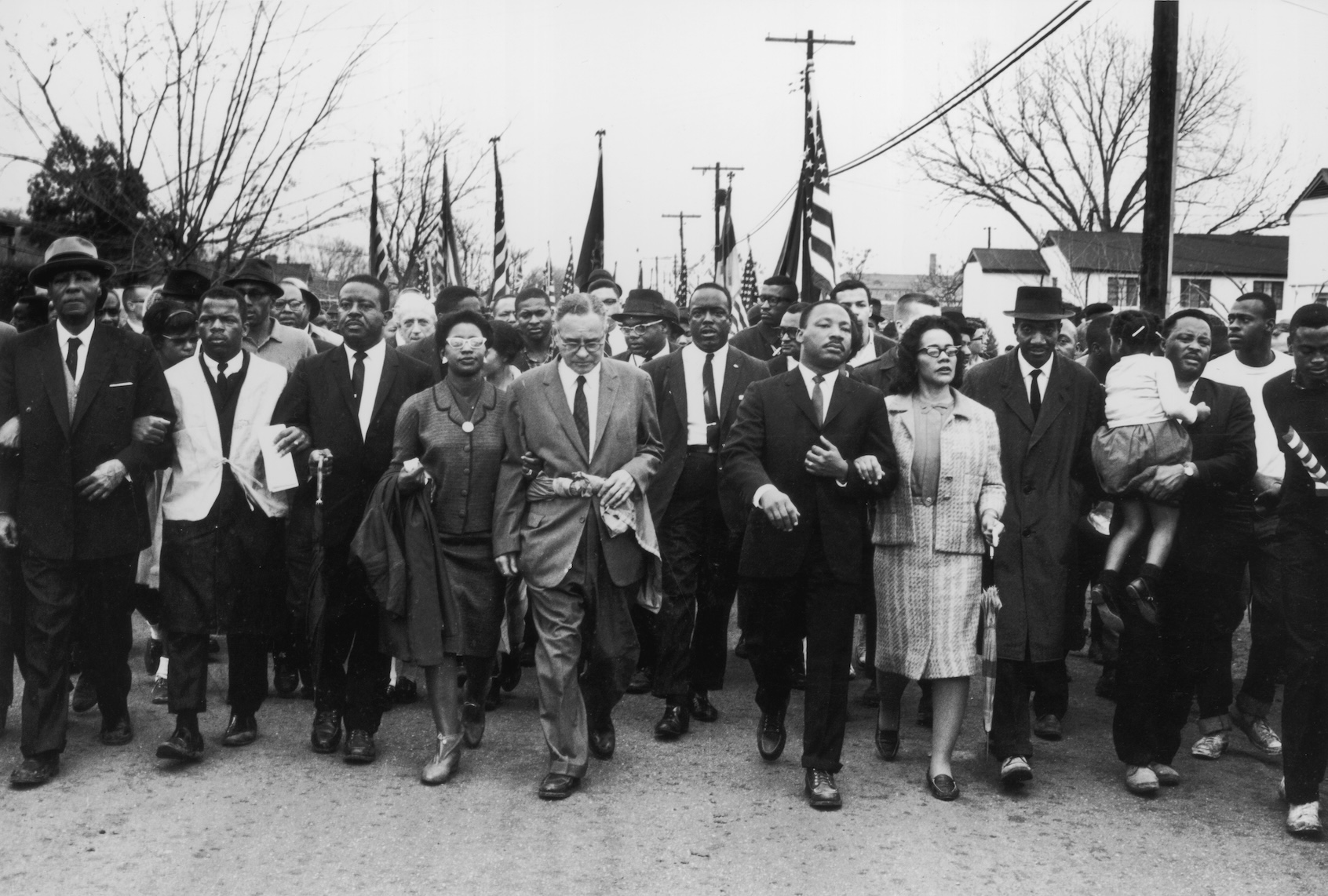
A year into President Donald Trump’s second term, the federal government is flipping the logic of civil rights on its head, using the language of nondiscrimination to destroy the legal structures that themselves aim to prevent discrimination.
Early in Trump’s second term, he moved to end federal diversity, equity and inclusion measures, popularly referred to as “DEI” programs. While DEI programs found themselves the topic of conservative ire in the 2020s, especially after the summer of 2020, the programs go back decades.
For example, President Lyndon Johnson’s 1965 Executive Order No. 11246 mandated nondiscrimination in federal government employment and the employment practices of federal contractors. This required government agencies to establish a “positive program of equal employment opportunity” and required private contractors to file compliance reports with the federal government, demonstrating their nondiscrimination practices.
While diversity programs have gone by a variety of names over the decades — nondiscrimination, affirmative action, DEI — they all trace their roots to the Civil Rights Movement, which lasted from 1954 to 1968. Now the Trump administration is ending those policies, claiming that they violate civil rights legislation.
“Diversity, equity and inclusion is not a trend,” Kiesha Bross, the director of opportunity, race and justice at the NAACP, told Salon, explaining that it’s about diverse hiring practices and representation within the workforce, but also more than that.
“It’s around providing resources and tools within different federal agencies around inclusion, so everyone has an ability to receive equitable practices and solutions,” Bross said. “We’re talking about all the different classifications that have an inclusive opportunity to succeed in federal government and also just holistically across the country.”
One of Trump’s first executive orders as president was to declare such programs “illegal,” claiming that they “violate the text and spirit of our longstanding Federal civil-rights laws” and “undermine our national unity.”
“Diversity, equity and inclusion is not a trend.”
The order, Bross explained, sent ripple effects across American society, with private companies, aiming to appease the administration, dismantling these programs. The list includes Google, Bank of America, Coca-Cola, Target and several dozen others. Some nonprofits, looking to avoid becoming a target of the administration, did the same.
Trump alluded to the motivation for the assault on diversity programs recently, telling the New York Times that he believed that the Civil Rights Act resulted in anti-white discrimination.
“White people were very badly treated, where they did extremely well and they were not invited to go into a university to college,” Trump said. “So I would say in that way, I think it was unfair in certain cases.”
This sentiment has already been expressed through policy and, specifically, by flipping the language of civil rights legislation on its head, claiming that anti-discrimination policies are the real discrimination.
For example, late last year, the administration announced that it would end a longstanding “disparate impact” policy that prohibited local governments and federally funded organizations from maintaining policies that disproportionately harmed people of color. They did so, claiming that considering race at all was a violation of the Civil Rights Act of 1964.
The same backwards interpretation of civil rights legislation has played out elsewhere in the administration. For example, the Equal Employment Opportunity Commission has launched a campaign to encourage white men to bring workplace discrimination lawsuits.
“Are you a white male who has experienced discrimination at work based on your race or sex? You may have a claim to recover money under federal civil rights laws. Contact the EEOC as soon as possible,” EEOC Chair Andrea Lucas said in a video last year.
While it is illegal to discriminate against white men on the basis of their being either white or a man, Bross said that this move, and moves like it, are part of a larger campaign from the government to twist civil rights legislation into a legal framework that effectively works against the intent of civil rights law.
“There’s a population of people — particularly white men, white conservative Christians, white conservative Christian men — who have protection under this administration and have the ability to lead,” Bross said. “And why am I saying that? Because when you dismantle diversity, equity and inclusion, you are taking a classification of protected people, telling them that their rights and equity and their protection in this country does not equal the protected class of white male Christian conservatives.”
In practical terms, the administration’s attack on diversity and equal opportunity programs, as well as mass government layoffs, have resulted in a disproportionately high unemployment rate among Black Americans. In December of 2025, the unemployment rate among Black Americans was 7.5%, almost twice as high as the unemployment rate among the general public, 4.4%.
Bross said that it’s also clear that Black women have been disproportionately impacted as well. At an October 2025 job fair hosted by the NAACP, Bross said that there were over 4,000 people who registered and 80% of them were Black women. This is only a small fraction of the 300,000 who were pushed out of the workforce in just three months in 2025.
“The court struck down a law that didn’t exist. It struck down a caricature.”
Civil rights, however, are only one side of the conservative inversion of the logic of civil rights legislation. A decades-long push from the conservative legal movement to dismantle the Voting Rights Act of 1965 is on the precipice of success with a case currently before the Supreme Court, Louisiana v. Callais.
Justin Levitt, who served as senior policy advisor for democracy and voting rights in the Biden administration, is now at Loyola Law School. He told Salon that the case before the court “could be a very big deal.”
The case concerns a 2024 Louisiana congressional district map. The map was a product of a court order, that forced Louisiana to redraw an earlier map so it would be in compliance with the Voting Rights Act of 1964 and specifically Section 2, which prohibits state and local governments from enacting laws that result in the “denial or abridgement of the right of any citizen of the United States to vote on account of race or color.”
Maps that deliberately dilute a racial minority’s voting power have historically been considered to violate this section. In Louisiana’s case, the state had drawn a map following the 2020 Census where just one of the state’s six congressional districts was majority Black, despite the fact that around a third of the state is Black. In 2022, a federal judge ruled that the map likely violated Section 2, ordering the state to draw a new map, this time with two majority Black districts.
In the case currently before the Supreme Court, the group of voters who brought the case now argues that it was unconstitutional for the state to have considered race in their district drawing, citing the Equal Protection Clause of the 14th Amendment. The logic here reflects the same logic expressed by Trump in his comment on his feelings about the Civil Rights Act, that the measures fighting discrimination were actually discriminatory against white people.
While Levitt was hesitant to speculate on what the Court might do, noting that the court has backed down from dealing a deathblow to the Voting Rights Act in the past, he did say that there was potential for this case to eliminate the most powerful still-standing provision of the law.
Start your day with essential news from Salon.
Sign up for our free morning newsletter, Crash Course.
“They essentially say, as some people have suggested that they might, that effectively drawing district lines has to be race blind. That would be a very big deal. It would also ask people drawing the lines to do something impossible, which is to forget what they already know,” Levitt said. “Race blind means you can’t know if people are white either. So one future version of the world is profoundly ideological, but divorced from reality, and asks legislators to do the impossible. It’s tough to write an opinion that says that.”
Levitt said that arguments like the one before the Supreme Court are, crucially, not built in relationship with the Voting Rights Act or the Civil Rights Act, but against a “caricature” of those laws.
“You see this caricature show up in Shelby County. The court struck down a law that didn’t exist. It struck down a caricature: that the Voting Rights Act basically promises a district to minority citizens, wherever they may be,” Levitt said. “They’ve done a very similar thing to civil rights laws, and you see it most strongly in discussions of ‘disparate impact.’ Disparate impact cases are never — literally never — just about disparate impact.”
Disparate impact cases were notably the cases where the administration declared that it was a violation of the Civil Rights Act to consider race in policymaking at all. Levitt explained that those cases are normally not just about disparate impact but rather an unjustified disparate impact, resulting from a seemingly neutral policy.
“I think that messaging and marketing backlash to Dr. King’s work does a real disservice to the work itself, and I think it is an important context for why there has been legal pushback, not just by the courts, but by the administration,” Levitt said.
Read more
about civil rights