
Trump found guilty in New York hush money trial, becoming first ex-president convicted of a crime

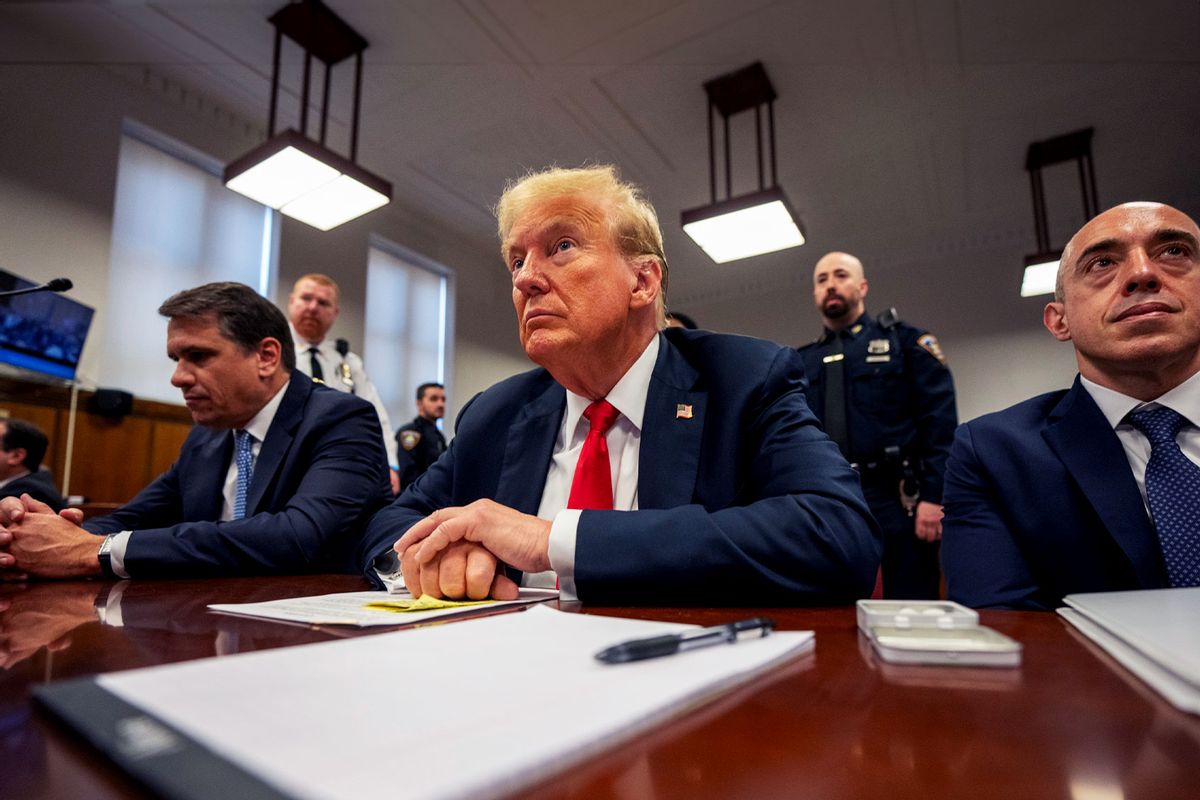
Donald Trump was the first U.S. president to ever be charged with a crime after leaving office. Now, he is also the first to be convicted.
On Thursday, after six weeks of testimony from some 22 witnesses and two days of deliberation, 12 jurors entered a midtown Manhattan courtroom and found Trump guilty on all 34 felony counts of falsifying business records that he faced. It’s now up to Judge Juan Merchan to sentence Trump, who faces the prospect of not only fines but also time behind bars.
Whether or not Trump is ultimately hit with a fine or prison time, it’s a stunning development that threatens to upend the race for the White House. Polling has previously suggested that even some Trump supporters might bail on his candidacy should he be convicted of a crime. Indeed, a survey from Marist, released May 30, found that 17% of registered voters said they would be “less likely” to vote for Trump if he is convicted. (Fifteen percent said they would be “more likely.”)
Of all the criminal cases against Trump, the Manhattan hush money case wasn’t the one that most of his critics originally wanted to go first. It doesn’t involve allegations of Trump inciting a mob to storm the U.S. Capitol in an effort to overturn a democratic election, nor does it pertain to Trump allegedly taking top-secret national security documents with him to Mar-a-Lago after leaving office.
Even Manhattan District Attorney Alvin Bragg was at one point skeptical of bringing charges, as prosecutors had to not only show that Trump had approved of the hush money scheme but also convince jurors that he did so in service of another crime, such as evading taxes or campaign finance laws.
At the same time, the optics of the case were striking: It featured the apparent Republican nominee for president having allegedly made a total mockery of the traditional family values that his party claims to represent. Trump allegedly had sex with a woman, who was not his wife, and seemed to care more about how the voting public would react than the mother of his child.
“Don’t worry. How long do you think I’ll be on the market for?” That is how Michael Cohen, who spent a decade working as Trump’s personal attorney, described his reaction to the news that Daniels’ story could come out.
Cohen said he then, at Trump’s request, tried holding off on paying Daniels before the 2016 election — because, afterwards, who would care? Hope Hicks, a longtime and loyal aide to Trump, likewise testified about Trump’s relief when another woman who had been paid off, Playboy model Karen McDougal, only went public after he was in the White House, saying to her: “It would have been made to have that story come out before the election.”
In his closing arguments, defense lawyer Todd Blanche stuck with his client’s assertions that he never had a sexual relationship with Stormy Daniels and never repaid Cohen for buying her silence. Despite prosecutors introducing an invoice showing that Cohen had paid Daniels’ lawyer — with handwritten notes from former Trump Organization Chief Financial Officer Allen Weisselberg detailing how Cohen would be reimbursed — Blanche insisted that the former president’s fixer at the time was only paid for his legal work, pursuant to a retainer that was never documented.
Ultimately, not even one juror thought that argument had merit — or any reasonable doubt that Trump was guilty.
Read more
about Trump’s legal battles