
Trump’s economic war on Black America
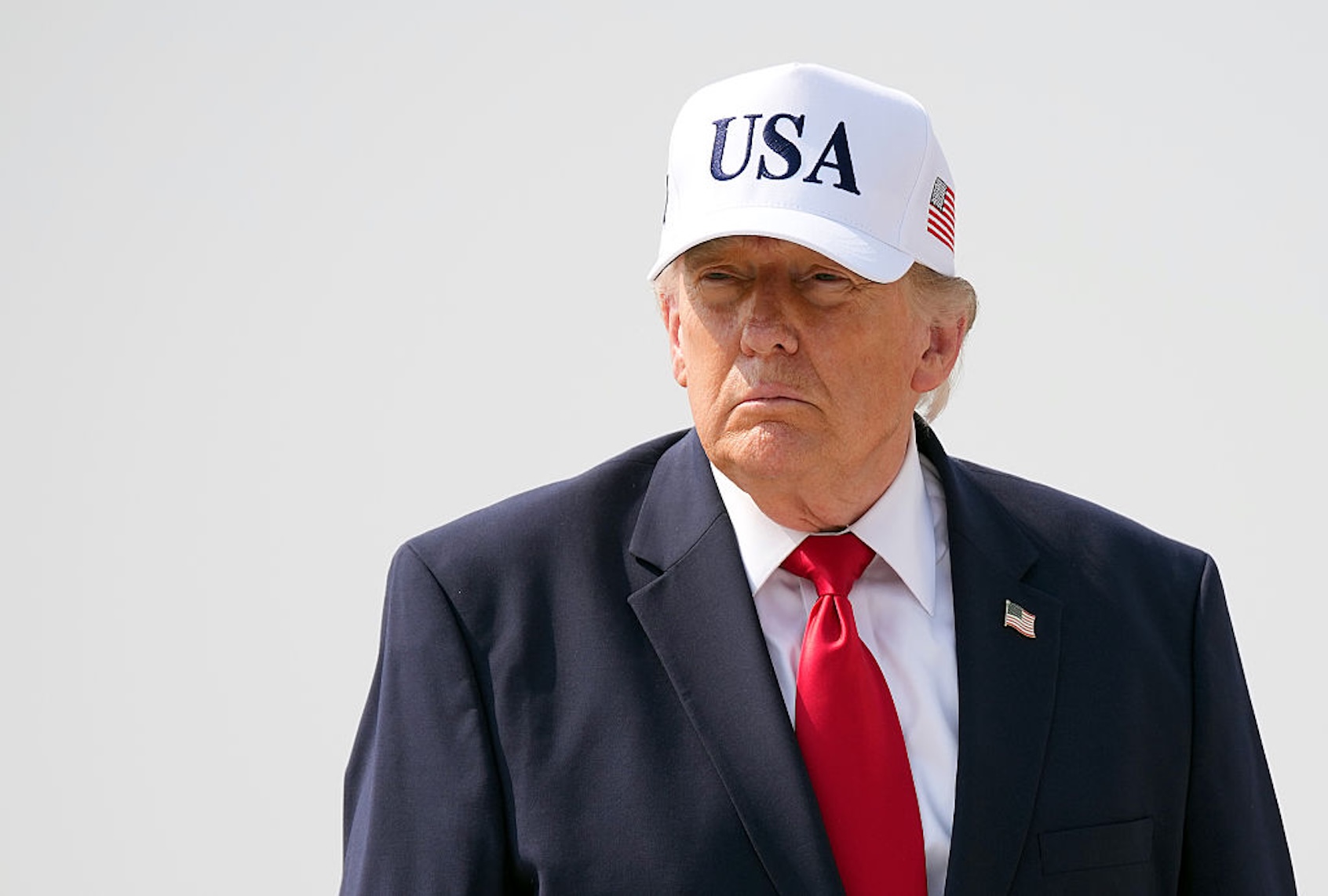
Donald Trump claims he is a great friend to Black America. He loves “my African Americans,” he says, and claims to be the greatest president for Black people since Abraham Lincoln. He has pledged to protect “Black jobs” from “illegal aliens,” and that he will bring the factories back to America so that Black men can get good jobs working on assembly lines. Trump, of course, believes that Black Americans love him back: he won 15% of the Black vote in 2024, up from 8% in 2020.
Racism and white supremacy — not “working class” anxiety — lifted Trump to the White House twice. The president is fluent in crude racism and white racist conspiracy theories, and he has been explicit about his role as defender and champion of White America and MAGA.
But racism is much more than words, intent or what is in a person’s heart. It is also determined by outcomes and policies.
But racism is much more than words, intent or what is in a person’s heart. It is also determined by outcomes and policies. By that standard, Donald Trump is engaging in economic warfare against Black America, and it will take generations to recover from the damage.
Trump’s policies have, both directly and indirectly, increased the unemployment rate for Black Americans, who are approximately 13% of the U.S. population and have long faced disproportionate levels of unemployment and lack of access to employment and high-wage jobs. While the national unemployment rate stands at approximately 4.3%, the Black unemployment rate is almost double. At 7.3%, it is approaching Covid-19 pandemic-era levels. The reality is far bleaker. Because of how the data is collected and analyzed, the true unemployment rate is usually (at least) twice the official unemployment rate.
In an interview with TheGrio, Trump was asked about the increase in Black unemployment since he took office. “We’re doing very well with the Black jobs, African-American jobs,” he said. “We saw some numbers that we’re doing really well.”
A 7.3% unemployment rate among white Americans would be considered a national emergency.
The real numbers are quite different. Black unemployment did hit a record low of 5.3% during Trump’s first term — the lowest the Bureau of Labor Statistics had ever recorded — until Joe Biden brought it down to 4.8%. Since Trump returned to office, the Black unemployment rate has only gone up from 6.2% in January 2025 to 8% last fall, according to the New York Times.
A large portion of the blame for that can be laid directly at the feet of the president and congressional Republicans. Government employment has long been a ladder to economic security for Black Americans, but Trump kicked it out from under them. Draconian budget cuts and other policies by MAGA Republicans have devastated the Black professional and managerial class. Black women have suffered a disproportionate amount of this pain; more than 300,000 have left the labor force since June 2025.
This is part of a broader assault on the legacy of the Civil Rights Movement. The administration has basically stopped enforcing anti-discrimination laws that protect the rights of minorities and other marginalized groups in the workplace and employment. Instead, it is focusing on the phantasm of reverse discrimination and racism against white people, specifically white men.
Race and class overlap in America. As sociologists and other experts have repeatedly demonstrated, a person is not poor because they are Black or brown. However, being Black or brown makes a person far more likely to be poor and materially disadvantaged — and to stay poor across generations.
Start your day with essential news from Salon.
Sign up for our free morning newsletter, Crash Course.
Despite this reality, and even as the ladder is being kicked out from under them, Black and brown Americans have not abandoned the idea of America.
This is the paradox at the center of the color line and the American story: The people paying the highest price for Trump’s economy are also among the most invested in the promise of America.
A new report from Navigator Research found that over 80% of Black and Latino Americans say being American is central to their identity, a figure that is on par with white Americans. But belief in the American dream is fading. Only 20% of Blacks and Latinos think it remains achievable, compared with 27% of white Americans.
If the current trends hold, there will be many more economically precarious Black and brown Americans — and more on both sides of the color line — at the end of Trump’s second term than at its beginning.
Black America’s economic challenges are not just a Black problem. It is an American problem, and its costs will not be limited to Black people.
Black America is the miner’s canary.
In a 2001 speech at the Massachusetts Institute of Technology, legal scholar Lani Guinier made this very point, arguing that the country has “tried to locate the problem in the canary, when in fact the canary is signaling to us a much bigger problem with the atmosphere in the mine that is affecting all of us.”
“The challenge,” she continued, “is not to pathologize the canary, not to outfit the canary with a little pint-sized gas mask so that it can withstand the toxic atmosphere in the mine. The challenge is to fix the atmosphere in the mine so all of us can breathe cleaner air.”
The American people desperately need that clean air right now. Getting it will take social democracy and real populism, not the fake populism and racial authoritarianism of Donald Trump and his MAGA experiment. Their politics is toxic and smothering for nearly everyone breathing it, including the president’s own followers who inhale it the deepest, confusing poison for life-nurturing oxygen.
Read more
by Chauncey DeVega