
Democrats better hope they don’t have another Manchin in their midst
Ever since the Covid-19 pandemic, America has been in a funk. The whole country has seemed to be in a sour mood, unhappy with everything, feeling as if the world has gone off its axis and life is out of balance. The trauma of that experience was probably far deeper and more injurious than we wanted to admit, so we just sort of sleepwalked as events cascaded around us, feeling emotionally distanced and impotent.
We finally woke up and shook it off. For the first time in six years, the American people took back control of their own destiny and issued a stunning, overwhelming rebuke to the Republican Party, which had fallen back into power during that period of national somnolence and took a wrecking ball, figuratively and literally, to the country. America, it seems, decided to save itself.
The historic landslide Democratic victory in Tuesday’s midterms elections is far more thorough than even the most positive polls had indicated. Analysts assured us that while it looked likely the party would gain at least a House majority, the so-called real victory would be if Democrats reduced the margins in red states, which would serve as a warning to Republicans that they had gone too far. Nobody really expected that Democrats would actually win in places like South Carolina, Kansas, Iowa or perhaps even Mississippi, where, as I write this, Democrat Scott Colom has a 43-vote lead over GOP incumbent Senator Cindy Hyde-Smith.
Political polarization was assumed to be set in stone; the GOP’s redistricting gambit and the Supreme Court’s gutting of the Voting Rights Act meant that Democrats could not expect to flip more than a handful of seats, and the party was facing one of the most inauspicious midterm Senate maps in recent memory. At this moment, they are expected to end up with 245 to 255 seats in the House and possibly 55 seats in the Senate, an unthinkable outcome as recently as yesterday morning.
It will be a while before we see the final tally, but the results are so obviously decisive that even Donald Trump cannot fatuously claim that this election was stolen. All the threats against election workers and plans to contest the outcome are empty in the face of such a victory. It is finally, once and for all, clear that the country does not want the insanity and chaos that Trump has wrought.
Want more sharp takes on politics? Sign up for our free newsletter, Standing Room Only, written by Amanda Marcotte, now also a weekly show on YouTube or wherever you get your podcasts.
According to voter polls — formerly known as exit polls — the top issue for voters was the cost of living, as expected. Reversing the tariffs and putting an end to the war with Iran would be the obvious ways to begin to alleviate some of the stress, followed by restoration of funding for healthcare and other vital safety net programs. Rolling back Trump’s tax cuts for the wealthy would go a long way as well. But the president Trump has already promised to be “Mr. Veto,” so the prospect for a new era of bipartisan comity with the White House does not look good.
It’s always possible that congressional Republicans will feel chastised enough that they will work with Democrats to create veto-proof majorities on those issues, but I wouldn’t hold my breath. The best the Democrats can hope for is that Trump decides he needs to do something positive for his legacy besides building his ballroom and renaming the Atlantic Ocean, and he agrees to compromise on something. I wouldn’t hold my breath on that either. But that doesn’t mean Democrats shouldn’t pass the legislation — and make Trump and Republicans block it.
Progress is hard to attain when, to maintain a majority, your coalition must include some who are opposed to it.
As great as it is that Democrats will decisively control both houses of Congress, that big tent brings with it some perennial problems that are likely to manifest themselves again. The red state-blue state divide represents a structural problem that has always been around, and it has been a specific problem for Democrats going back to at least the time of Franklin Roosevelt. Progress is hard to attain when, to maintain a majority, your coalition must include some who are opposed to it. During Roosevelt’s long presidency, the Democratic coalition included powerful southerners who controlled many congressional committees, and they would simply not pass anything that included civil rights or equitable federal programs. By the end of the 1930s, they had successfully joined with northern Republicans to block much of what remained of the New Deal agenda.
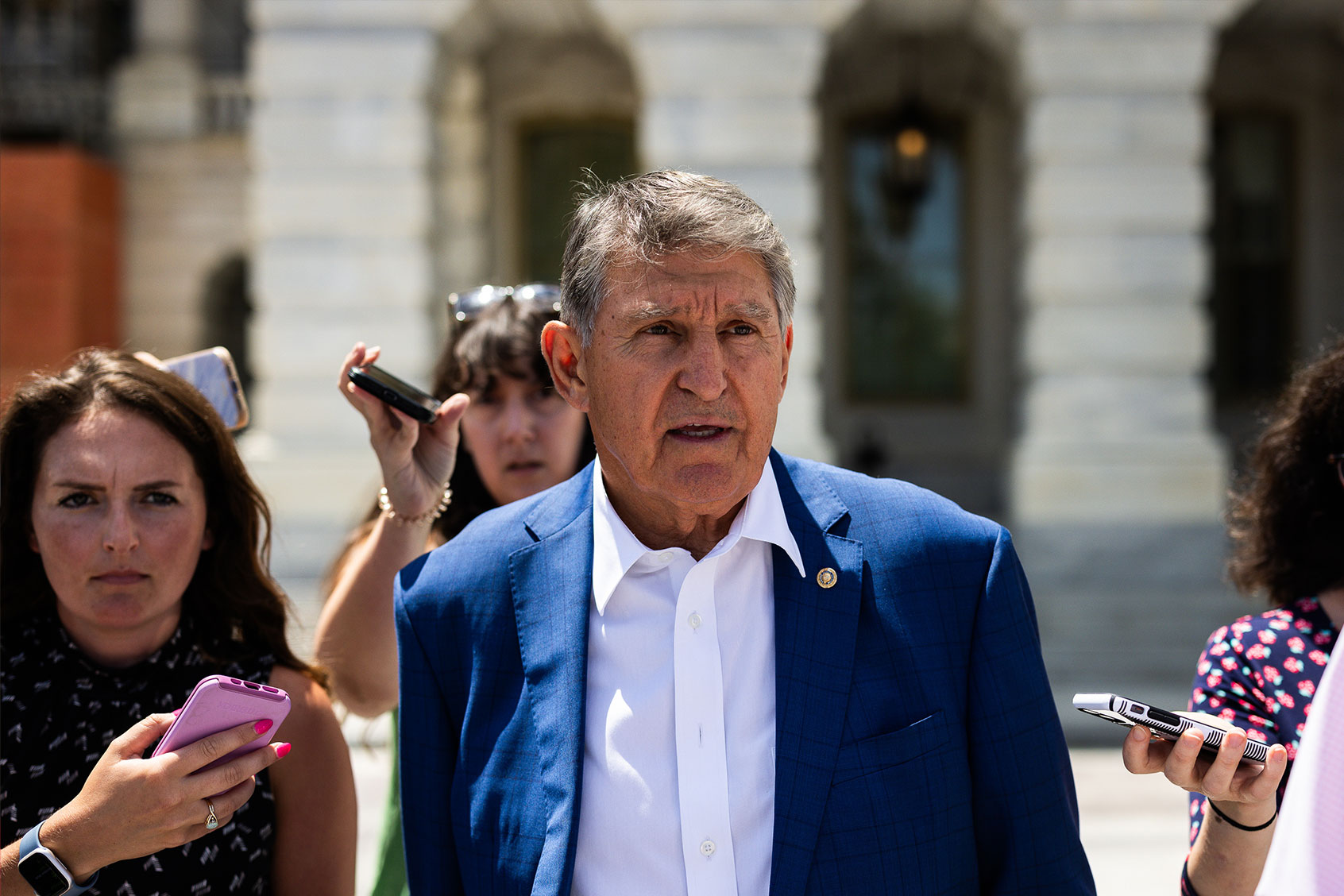
Eventually, as we know, most of that bloc migrated to the GOP, but until fairly recently it’s always been a somewhat fluid dynamic with a few conservative states in the heartland, the West, Southwest and even the South that would elect conservative Democrats. In the last Congress, we dealt with West Virginia’s Joe Manchin and Arizona’s Kyrsten Sinema in the Senate, and it was like pulling teeth to get legislation passed as they used their leverage to extract concessions and block progressive initiatives.
In the not too distant past, Sen. Zell Miller, D-Ga., cosponsored tax cuts, supported the Iraq War resolution and even delivered a keynote speech at the 2004 Republican National Convention. Centrist senators Ben Nelson of Nebraska and Joe Lieberman of Connecticut, along with the conservative Blue Dog Caucus in the House, successfully blocked progressive provisions of the Affordable Care Act. There were other so-called mavericks throughout the 1990s and 2000s who would join with the GOP or leverage their position to thwart liberal initiatives.
I only bring this up to remind people that with the addition of these red state legislators will come a whole set of problems. But given the alternative, they are good problems to have. While the pundits have already begun their ritual of handwringing over the possibility of progressives “overreading the mandate,” the reality is that everyone else understands that the most important priority for Democrats, as a now powerful force of opposition, is to put a check on Trump and begin the critically important process of oversight and accountability. One suspects that on this issue there will likely be unity among all the factions. MS NOW reports that their voter poll showed that 90% of voters said that government corruption was a crucial or major factor in their House vote. That also tracks with the findings of a recent Gallup poll. I would say that’s a pretty clear mandate and a good place to start.
Whatever problems await the Democrats, and there will be many, this was the result we have needed ever since Trump first won the presidency 10 years ago. The damage he has caused in this decade of destruction is immeasurable, but maybe, just maybe, we have finally reached the beginning of the end of our long national nightmare, and we can begin the process of renewal and reformation.
Read more
about the Democrats’ stunning win