
Trump’s willingness to sacrifice LA is familiar to Native Californians
Earlier this month, during a campaign rally in Nebraska, Donald Trump said that losing Los Angeles in a potential attack from Iran would be “a small price to pay.” To many Californians, the idea that a president would write off a city of millions sounded unthinkable. To the Tongva, the indigenous people of the Los Angeles Basin, it sounded familiar.
Tongva displacement began with Spanish settlement in the 1770s, and was codified in the 1840s and 50s when the U.S. acquired California and failed to ratify 18 different treaties that promised reservation lands, livestock and education. But if California Indian treaties were rendered purposeless, Trump’s words aren’t so random. “There is debate on what Trump meant when he said Iran can take out Los Angeles and San Diego and as in all his . . . speeches, it becomes the listeners’ responsibility to decipher truth from lies,” Tongva tribal elder Tina Calderon told Salon. “But I believe calling out two cities that he heavily targeted with ICE and who are against his attacks on [the] environment and Peoples was quite intentional.”
Calderon’s words are striking. They also name a pattern. Trump didn’t select two cities arbitrarily; he picked the places that denied his fascist will outright. Deciding whose homelands are sacrificed has always been a political choice, and Native Californians have been on the butt end of it for a long time.
What happened to Native Californians was also a harbinger, not a footnote. Their land and water — under Spain, Mexico and the United States — became a small price to pay for the state’s growth.
What happened to Native Californians was also a harbinger, not a footnote. Their land and water — under Spain, Mexico and the United States — became a small price to pay for the state’s growth. That habit isn’t restricted to Trump’s party. California Gov. Gavin Newsom, a Democrat, condemned the president’s remark, but he has vetoed bills that would have protected tribes’ sacred sites and given them a say over the state’s water.
However dangerous to the nation, Trump is undeniably talented at getting his many grudges to materialize one way or another. His threats have a way of actually becoming policy. When he pontificated about calling Canada the 51st state, tariffs followed. Los Angeles had already learned this lesson firsthand. In June 2025, after Angelenos protested Immigration and Customs Enforcement raids, Trump sent federalized National Guard forces into the city. So when he names L.A. as expendable, Calderon is right to not simply treat it as a slip of the tongue.
For Native Californians, being a nominal sacrifice for the state is a part of history. “It’s a small price to pay, but the price has already been paid there, and Native people are still there, feeling the impacts of that,” Jolie Varela, Nüümü Huupi and Yokuts tribal member and founder of Indigenous Women Hike, told Salon.
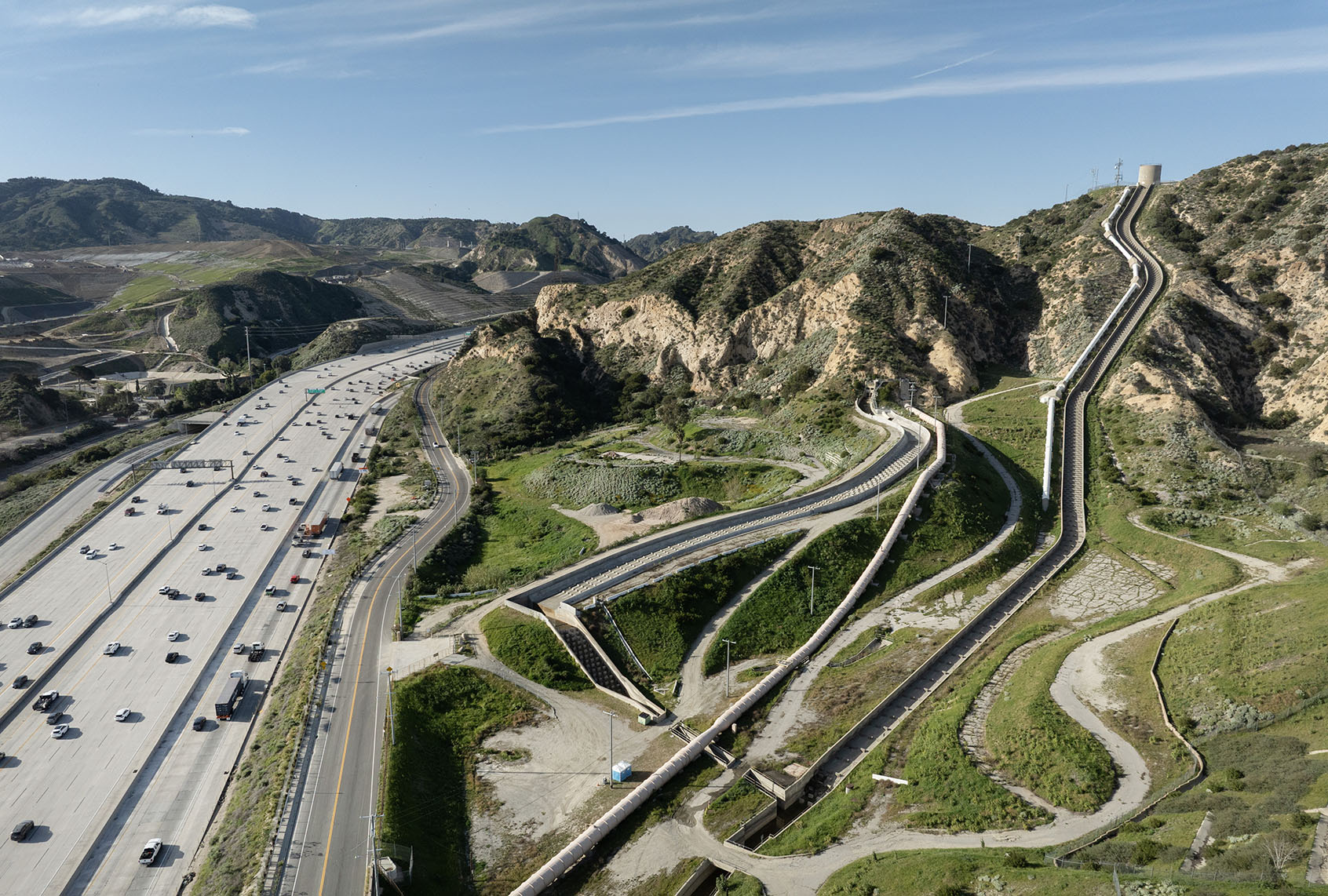
Varela lives in Payahuunadü, the Owens Valley, in the Eastern Sierra, more than 200 miles north of Los Angeles. In 1913, the city began draining the valley’s water through the newly built L.A. Aqueduct. When she drives through the desert to reach her hikes, Varela is reminded each time by the landscape that her homeland was not always so arid, and that this historic transgression benefits Los Angeles to this day. “When you turn on your water, and when you wash your hair in the shower, you can thank a Paiute for that water,” she said.
“Los Angeles could not exist the way that it does without stolen water,” AnMarie Mendoza, a Tongva citizen and University of California, Los Angeles doctoral researcher, told Salon. Her response to Trump’s insertion of L.A. and San Diego into the Iran war was trenchant: “It aligns with the settler colonial realities of thinking that all of the homelands in this country are expendable.”
That is the through-line: a city, a state and a country that objectify Native homelands, treating them as expendable and raw material. Trump’s remark only extended that logic to include everyone else in Los Angeles.
The Los Angeles Department of Water and Power’s (LADWP) desiccation of Owens Valley has had long-term symbolic and physical impacts. The valley’s original name was Payahuunadü, which means “the place where water flows,” Varela said. “It makes me think of, specifically here in Payahuunadü, my elder who had to breathe in the dust that was created from the LADWP draining Patsiata, and the reservations here.” She noted that LADWP controls over 95% of the valley floor, leaving almost no land available for the Paiute, who’ve called it home for over 15,000 years, in the past 300 years. “Theft is still ongoing,” says Varela.
L.A. didn’t just take water a century ago. It still holds the land, the water rights and the future of the Nüümü community, and it raises the question: Why aren’t Angelinos asking where they get their water?
Ignorance about California water is nonpartisan. Agriculture uses most of the state’s developed water, and wealthy growers like the Resnicks are in control of much larger water rights than any tribe. Yet during the 2025 fires, a Fox News host blamed Native Americans for the region’s wildfires in 2025. The scapegoating wasn’t just happening on the right: A former L.A. resident who is Iranian-American and a Democrat told Salon that during the 2025 fires, friends reposted claims blaming Native communities for water shortages. “Well-meaning liberals are so quick to punch down on Natives,” he said. He shares concern over the ill-informed framing of Native people as responsible for extreme water use in the state. “It’s so untrue and also racist to blame lack of water on Indigenous people . . . No one was talking about the Resnicks and their water rights for all their agricultural land, or all the data centers.”
Want more sharp takes on politics? Sign up for our free newsletter, Standing Room Only, written by Amanda Marcotte, now also a weekly show on YouTube or wherever you get your podcasts.
The Iranian-American diaspora in L.A. has lauded Trump’s attacks on Iran. Salon’s source in the community attributes this to a nostalgia among former Persian oligarchs residing in Beverly Hills, which is known colloquially as Tehrangeles. “Funny how quickly a foreign place can feel like home to immigrants . . . but obviously all that comes at a cost that typically other people have to bear.”
Asked how the Iranian community in L.A. might view the Native response to Trump’s remarks, he said: “It’s not their L.A. It’s the other L.A.”
In Sylmar, a suburban neighborhood in north Los Angeles that borders the Angeles and San Gabriel National Forests, Varela walked with Mendoza along the L.A. aqueduct. She recalled something others see as banal but that, to her, means something else: “I saw water flowing down into the street, and [thought] ‘That’s our water, and we can’t water on certain days, and we have limitations here, but yet I’m here in a wealthy neighborhood in Tovaangar, hundreds of miles away, and our water is flowing into the streets.’” The image is a mise en abyme, a scene within a scene; water that should sustain Nüümü community is flagrantly wasted on a lawn in a city that has never had to think about where it comes from.
Mendoza echoed Varela, saying Paiute (Nüümü) people were “my first water teachers” and “water is a living relative.”
This is a lesson that politicians like Newsom, whose 2019 apology for California Native genocide was followed by abject inaction, have still failed to grasp. Earlier this month, he killed a water bill that would have given Native tribes a larger role in the state’s water policies. Although there have been small, token land returns, California Native nations still hold less than 1% of the state’s land. “Newsom is a hypocrite,” Varela said.
Native peoples carry a long collective memory, and Newsom’s quickly growing record of attacks on California Native tribal sovereignty could become an albatross that won’t be forgotten if he decides to run for president in 2028, as is widely expected. At an estimated national population of 9.7 million, Native Americans represent roughly 3% of the country and could swing key states like Arizona and New Mexico in a competitive primary and general election.
Mendoza, though, sees no partisan refuge: “Whether it be red or blue, they all know how to discriminate against Native people.”
That’s really what makes Trump’s remark so revealing. He said out loud what Sacramento has practiced surreptitiously for generations: that some Californians, and their land and water, are a fair price for everyone else. The difference is that for once, the people being written off were everyone else.
Californians should be upset by Trump’s comments. But they should not be confused by what it obscures. This is a chance to ask who’s already been written off in a Los Angeles the president considers expendable — and to learn from California Native tribes how they survived it.
Read more
about California