
Reps back Tinubu, Dangote, NMDPRA, demand pipeline funding
…Open probes into NIPCO gas licences,
NNPCL executive
By Gift ChapiOdekina, Abuja
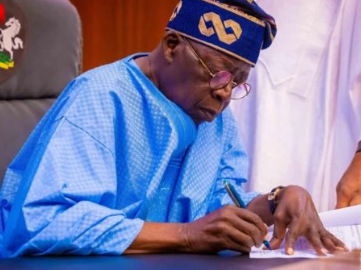
The House of Representatives Committee on Petroleum Resources (Downstream) has passed votes of confidence on President Bola Ahmed Tinubu, the Nigerian Midstream and Downstream Petroleum Regulatory Authority (NMDPRA) and industrialist Aliko Dangote, declaring that Nigeria’s drive towards energy security is gaining momentum.
The committee, however, called on the Federal Government to increase funding for pipeline surveillance, enforce domestic crude supply obligations and strengthen legislation to protect local refineries from supply disruptions and unfair competition.
Chairman of the committee, Ikenga Imo Ugochinyere, announced the votes of confidence on Monday in Abuja at the technical briefing marking the end of Downstream Week 2026.
He said the committee’s assessment of developments in the downstream petroleum sector showed improvements in domestic refining, fuel supply and pipeline security, while stressing the need for sustained government support to consolidate the gains.
Ugochinyere commended the NMDPRA Chief Executive, Rabiu Abdullahi Umar, and the authority’s executive directors for what he described as a job well done, saying the regulator had “brought stability where there was uncertainty”.
According to figures presented at the briefing, domestic refineries now contribute more than 75 per cent of national petrol supply, while the country has recorded no supply shortfalls and maintained more than 25 days of national sufficiency.
The committee also highlighted the commissioning of the Port Harcourt petroleum product laboratory, the licensing of a petroleum liquid trading exchange described as Africa’s first, and the completion of a framework for a National Strategic Stock capable of covering up to 20 days of supply.
It said plans were underway to increase the strategic reserve to 90 days in 2027.
Pipeline security, crude supply
On crude oil production, the committee expressed confidence that Nigeria could achieve its target of three million barrels per day, attributing the recent increase in output partly to improved pipeline surveillance and security.
Ugochinyere said better protection of oil infrastructure would reduce crude losses, increase feedstock availability for domestic refineries and boost government revenue.
“Fewer breaches mean less crude lost, more product for our refineries, and more revenue for the Federation,” he said.
The committee urged the Federal Government to increase funding for pipeline surveillance contractors and ensure the timely release of funds and logistics needed to sustain operations.
It commended the contractors for their contributions but maintained that improved funding and operational support would further strengthen crude oil production.
The chairman said the committee was also working on legislation to address the persistent challenge of crude oil availability to domestic refineries.
“A refinery without reliable crude is an investment at risk,” he said, stressing the need for statutory guarantees on crude supply, fair market access and a stable policy environment.
On petroleum product importation, Ugochinyere said imports should only be permitted to address verified supply shortfalls rather than serve as a permanent alternative to domestic refining.
“Our goal is balance: security of supply today, and a strong domestic refining industry for tomorrow,” he said.
The committee also disclosed that it had rejected a World Bank recommendation on import licences, insisting that Nigeria’s energy policy must reflect the country’s economic and industrial priorities.
“Nigeria’s energy policy must be written in Nigeria,” Ugochinyere said.
He added that the committee was advancing the Petroleum Industry Act (Amendment) Bill to strengthen provisions on domestic crude supply, licensing, protection of local refiners and regulation of petroleum product imports.
Dangote refinery, marketers
The committee also commended Dangote over the ongoing initial public offering of the Dangote Petroleum Refinery, describing the facility as a strategic national investment valued at about $20 billion.
Ugochinyere said the refinery had introduced fresh momentum into the downstream petroleum market, adding that the National Assembly would support measures to protect domestic refining investments while ensuring fair competition.
He also praised petroleum marketers’ associations, including the Major Oil Marketers Association of Nigeria, the Depot and Petroleum Products Marketers Association of Nigeria, the Independent Petroleum Marketers Association of Nigeria and the Petroleum Products Retail Outlets Owners Association of Nigeria.
He said the associations had invested in depots, jetties, trucks and filling stations, helping to sustain distribution and bridge supply gaps whenever domestic output fell short.
The committee said the contributions of the marketers remained important to national fuel security, particularly as Nigeria worked to expand local refining capacity.
Reps open probe into petitions
Meanwhile, the committee has established two sub-committees to investigate petitions seeking the cancellation of gas distribution licences issued to NIPCO Plc and alleging money laundering and abuse of office against NNPC Limited’s Executive Vice President, Downstream, Dr Mumuni Dagazau.
The petition against NIPCO seeks the investigation, suspension and cancellation of gas distribution licences issued by the NMDPRA to the company for Lagos, Ogun, Oyo and Osun states, as well as the Lagos and Lekki Free Trade Zones.
The petitioners have also requested a public hearing on the matter.
The committee appointed a sub-committee chaired by Mathew Nwogu, with Shehu Dalhatu as deputy, to conduct a preliminary investigation and report its findings to the main committee.
In the second petition, Dagazau was accused of money laundering and abuse of office.
The committee appointed a sub-committee chaired by Aliyu Ibrahim Al-Mustapha, with Cyril Hart as deputy, to investigate the allegations and submit its report within seven days.
Ugochinyere emphasised that the petitions had not been proven and that the committee had yet to reach any conclusion on the allegations.
“These are allegations, and the Committee has reached no conclusion on them. All parties will be given a full and fair opportunity to be heard,” he said.
He added that the committee would not ignore complaints capable of affecting public confidence in the downstream petroleum sector.
The chairman also disclosed that the committee had opened an inquiry into alleged underpayment for crude oil by some companies and questioned NNPC Limited over legacy transactions and refinery rehabilitation.
“We will not accept silence as an answer,” he said.
Neither NIPCO Plc nor Dagazau had publicly responded to the petitions as of the time of the briefing.
The committee said the investigations would proceed alongside its legislative and oversight activities aimed at strengthening transparency, accountability and efficiency in Nigeria’s petroleum industry.