
Manufactured goods imports surge 17% to N18trn in H1’26
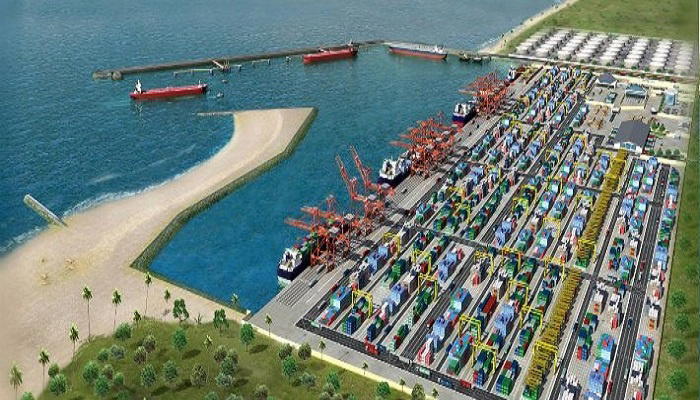
Lekki Deep Seaport.
By Yinka Kolawole
Nigeria’s manufactured goods imports surged Year-on-Year, YoY, by 16.9 per cent to N18 trillion in the first half of 2026 (H1’26), deepening concerns over rising import dependence and the growing pressure on local manufacturers.
Latest Foreign Trade Statistics released by the National Bureau of Statistics (NBS) showed that manufactured imports rose from N15.4 trillion in H1’25 to N17.99 trillion in H1’26.
The increase was driven by a sharp rise in the second quarter, when manufactured goods imports climbed 12.1 per cent Quarter-on-Quarter, QoQ, to N9.51 trillion, from N8.48 trillion in Q1’26.
On a YoY basis, Q2’26 manufactured imports rose 20.7 per cent from N7.88 trillion recorded in Q2’25.
Similarly, imports in Q1’26 increased by 13 per cent YoY from N7.51 trillion in Q1’25.
The surge comes in despite government efforts to promote domestic production, local content and import substitution.
The trend has also raised concerns about the ability of local manufacturers to compete with imported goods amid persistent financing, energy and production-cost pressures.
Manufacturers have repeatedly warned that high operating costs and expensive credit are eroding their competitiveness and limiting their capacity to expand output.
In June, 2026 the Manufacturers Association of Nigeria (MAN) noted that bank credit to the manufacturing sector declined by N1.92 trillion to N6.61 trillion in December 2025, from N8.53 trillion a year earlier.
The association also lamented the high cost of borrowing, noting that despite the Central Bank of Nigeria’s reduction of the Monetary Policy Rate (MPR) to 26.5 per cent, average prime lending rates remained around 27 per cent, while maximum lending rates at some commercial banks reached 35.6 per cent.
With manufactured imports continuing to rise, manufacturers are urging stronger policies to curb smuggling and unfair import competition, while reducing the cost of finance, energy and other inputs to enable local producers compete more effectively.