
Trump sued the BBC — now Jared and Ivanka may pay for it
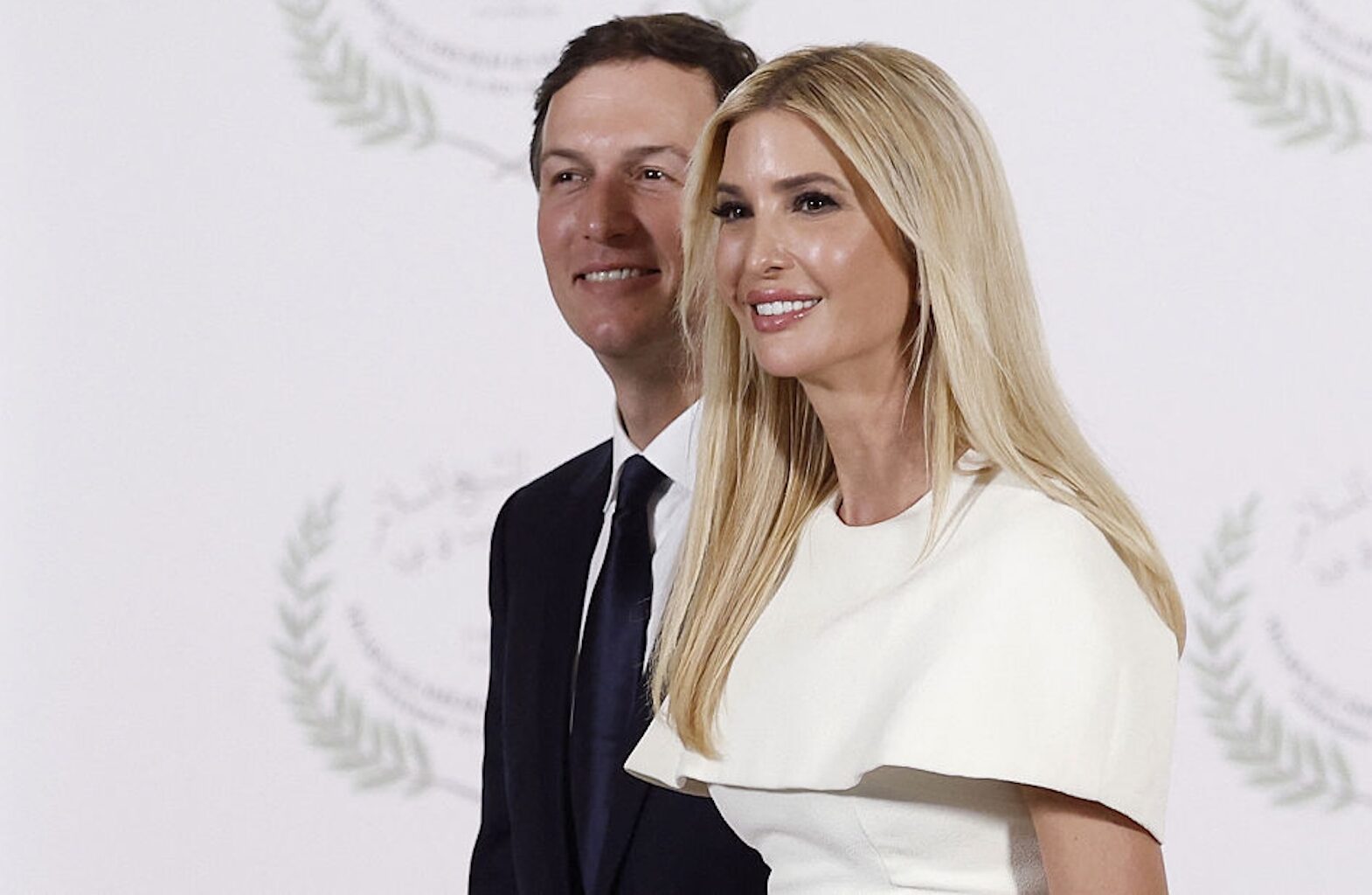
In the year the United States celebrates the 250th anniversary of its break with the British crown, there is something almost painfully ironic about a broadcaster from the kingdom that once ruled us now being more willing to stand up to Donald Trump than much of the American establishment. But the irony isn’t really the story. The story is that the president filed a $10 billion lawsuit to punish the BBC, and in doing so, he may have handed the corporation a legal instrument to drag his children Ivanka and Donald Jr., and his son-in-law Jared Kushner, into a Miami courtroom to answer for what happened on Jan. 6.
The lawsuit was supposed to be another exercise in the familiar Trumpian playbook: File a claim, demand an astronomical sum, bury the target in legal expenses, force a humiliating settlement that gets marketed as a political win. That strategy has worked before. In 2024, ABC News agreed to pay $15 million after network anchor George Stephanopoulos inaccurately said Trump had been found liable for rape. Paramount later paid more than $24 million over CBS News’ handling of an interview with Vice President Kamala Harris that took place during the 2024 presidential race. With that track record, Trump had every reason to expect the BBC to fold in the same way.
He miscalculated badly. As a public service corporation, the BBC operates under a royal charter that explicitly bars it from entering into out-of-court financial settlements to make litigation disappear. It cannot cut a check to sweep away Trump’s claims. The corporation is legally bound to fight until a verdict is reached — or until Trump himself gives up. And its defense team, anchored by the First Amendment firm Ballard Spahr, has used that obligation to go straight at the people closest to Trump on Jan. 6.
The underlying claim concerns a 2024 documentary about Trump’s candidacy that aired on “Panorama” — the same program that aired the former Prince Andrew’s toe-curling interview with Emily Maitlis about his alleged abuse of the late Virginia Roberts Giuffre and connections to Jeffrey Epstein. Titled “Trump, A Second Chance?”, the program edited together separate portions of Trump’s Jan. 6 speech so that it sounded as though he said, in immediate sequence, “We’re going to walk down to the Capitol and I’ll be there with you,” followed by “we fight, we fight like hell.” Those lines were actually spoken nearly an hour apart, and the BBC has apologized for how the edit was constructed. But the corporation has not apologized for the underlying accusation — because the documentary’s producers and the BBC’s lawyers believe it is true. The BBC has also noted the documentary never aired in the U.S., including in Florida, which creates its own problem for Trump’s attempt to establish the legal connection between the broadcast and the injury he claims to have suffered.
But the discovery fight is where this stopped being a media dispute and became a family liability. Because the entire defamation claim hinges on Trump’s intent — on what he meant by the phrase “fight like hell” — the BBC’s lawyers moved to subpoena the people who helped draft that speech and who were closest to him as the Capitol riot unfolded. On Aug. 14, the BBC asked a federal court in Miami for permission to compel testimony and records from Kushner, Ivanka Trump, Donald Trump Jr. and Kushner concerning the drafting and meaning of the speech.
According to the BBC’s own filings, Donald Jr. and Ivanka were in the room while the speech was being revised and were present when it was delivered. Kushner drafted a statement condemning the Capitol violence that the White House never issued. He also reportedly told then-chief of staff Mark Meadows the situation was “getting really ugly” as it unfolded, while Trump Jr. texted Meadows begging him to get his father to “condemn this” immediately.
These are not neutral bystanders being swept into a media spat. They are three people who watched the fire get lit and, by their own contemporaneous words, knew exactly what was burning.
These are not neutral bystanders being swept into a media spat. They are three people who watched the fire get lit and, by their own contemporaneous words, knew exactly what was burning. And if the case proceeds, they may have to say so under oath.
Trump’s own conduct made this exposure worse. The BBC also sought his financial records to test the legitimacy of the massive damages he claimed to have suffered — a maneuver that prompted him to quietly abandon his monetary claims rather than open his ledgers to public scrutiny. His lawyers had previously dismissed the request as a “fishing expedition.” But this is how discovery works: If you claim a broadcast inflicted extraordinary economic harm, the defendant gets to test that claim. Trump built the case that now threatens to expose his own children and son-in-law, and he built it because he assumed no one would ever call his bluff.
But the most revealing part of the BBC’s filing isn’t the subpoenas themselves — it’s the account of what happened when the network tried to serve them. Process servers attempting to deliver subpoenas to Ivanka and Kushner at their fortified Miami residence in May were physically blocked by local law enforcement, who directed them to coordinate through the Secret Service. When the BBC’s legal team did exactly that, Secret Service counsel Troy Epstein flatly declared the agency was neither authorized to accept service on the family’s behalf nor willing to help facilitate it. The BBC says it also could not serve Trump Jr. at Trump Tower. It has now asked the court for permission to use alternative methods — email or certified mail — because the ordinary machinery of American process service has been quietly closed off by a federal agency to a foreign broadcaster trying to hold the president’s family accountable.
Start your day with essential news from Salon.
Sign up for our free morning newsletter, Crash Course.
That is the part of this story that should trouble people well beyond press freedom circles. Taxpayer-funded federal security agencies are being used as a private shield for a political dynasty, deployed to physically block the basic mechanics of a civil lawsuit that Trump himself initiated. It echoes the darker pattern already established around this family and this date — the Secret Service’s unexplained failure to preserve text messages and call logs from around Jan. 6, and allegations that agents played a role in intimidating witnesses like former Trump aide Cassidy Hutchinson before her explosive congressional testimony. A protective detail meant to keep the first family safe is being repurposed to keep it unaccountable.
Trump has responded predictably, complaining that the BBC is “abusing the deposition process.” His projection is transparent. Nobody dragged his family into this. He is the plaintiff. He asked for $10 billion. He put his own reputation, his financial losses and the meaning of his own speech at the center of a case he chose to bring, and in doing so he opened the door to exactly the kind of scrutiny now aimed at Ivanka, Donald Jr. and Kushner. A defendant testing the plaintiff’s claims isn’t harassment. It’s the legal process working according to centuries of jurisprudence — just as the president intended.
None of this guarantees the subpoenas will be enforced, or that Ivanka, Donald Jr. or Kushner will ever sit for testimony. The court could still limit the subpoena’s scope, and the family’s lawyers will fight the serving of them on every available ground. But the posture itself matters.
While the BBC absorbs real financial strain from international litigation against a sitting American president, it has refused to play the domestic game of corporate capitulation that has defined how ABC, CBS and so many other news outlets have handled Trump’s legal threats. It punched back in the fight Trump started and pushed it toward the people who were actually in the room on Jan. 6 — the same people the taxpayer-funded Secret Service is now, apparently, working to keep out of reach.
Read more
by Sophia Tesfaye