
50 years later, the Ramones’ debut still defines punk
50 years ago, the Ramones released their self-titled debut LP. Adorned with a black-and-white photo of the faux brotherhood against a brick wall at the back of CBGB (taken by photographer and CB’s door person, Roberta Bayley), Johnny, Tommy, Joey and Dee Dee stood somewhat awkwardly wearing jeans in various stages of destruction, T-shirts (shoutout to drummer Tommy for going with the belly shirt), leather jackets and sneakers.
It’s important to remember that it was 1976, so this particular fashion choice was not yet au courant, because they had just codified it. The outfits that they’d wear walking around were the same outfits they’d wear onstage. They standardized on this particular uniform because everyone had different ideas of what they wanted to wear onstage and they didn’t want audiences to think they were a glam band or, worse. “I mean, these guys were not hippies,” said Legs McNeil, co-creator of “PUNK” magazine. No, they weren’t.
“Blitzkrieg Bop” feels ubiquitous. The intro gets blasted at sporting events to raise energy or when something good happens, and it never fails to rally a crowd.
“Ramones” features 14 songs in total, seven songs on each side, because Ramones songs come in around two minutes and change. The album opens with one of the best opening tracks of any debut album: “Blitzkrieg Bop.” That wall of sound barrage of guitars and then: “Hey, ho, let’s go!” It never fails to sound like a call to arms. As an introduction to this band, they couldn’t have chosen a better song; it precisely conveyed exactly who the band was and what they were about.
Fifty years later, “Blitzkrieg Bop” feels ubiquitous. The intro gets blasted at sporting events to raise energy or when something good happens, and it never fails to rally a crowd. That opening track has been featured in at least one video game and a wide selection of TV commercials for a long line of different product offerings: airlines, car brands, fast food, exercise equipment, financial products, mobile phone networks, vaccinations, a cartoon movie, and perhaps most memorably, diet soda, featuring animated pogoing soda cans.
But in 1976, and in fact the entire duration of the band’s existence (they officially ceased operations in 1996), the Ramones did not achieve chart positions of any note. “Ramones” went to #111 on the Billboard 200, and their highest charting album was 1980’s Phil Spector-produced “End of the Century,” which reached #44 in the U.S. and got as high as #11 in the U.K. “It’s crazy when Phil Spector produces your record and you still don’t have a top ten record,” Eddie Vedder mentioned when he inducted the Ramones into the Rock and Roll Hall of Fame in 2002.
Their singles didn’t do much better. Only three Ramones songs ever made it to the Billboard Hot 100 — “Rockaway Beach,” “Sheena Is A Punk Rocker,” and “Do You Wanna Dance,” all absolute bangers that should be enshrined in the culture. “Rockaway Beach” did the best out of the three, and by “best” we’re still talking #66 (and it took a year to get there); the other two only got as high as the 80s. The numerous post-breakup compilations and live albums didn’t fare any better, and not even an appearance on “The Simpsons” in 1993 or numerous other mainstream cinema placements (like the title track for a Stephen King movie, “Pet Sematary”) moved the needle in any meaningful direction from a sales or chart or airplay perspective.
The Ramones didn’t have any hits, not in 1976 and not ever. That wasn’t the plan — no one in the Ramones, their management or their record company was pretending that commercial success wasn’t important to them. It just eluded them.
With that information in hand, it won’t be surprising to learn that none of the singles released from the 14 albums put out during the band’s existence (or again, afterwards) garnered any radio airplay on commercial radio (college radio is of course another story), and outside of places like Brazil (and towards the end of their career), the Ramones could not get arrested, much less sell out arenas or anything much larger than a theater. (In Brazil, however, they sold out stadiums and their tour bus was mobbed with crowds that made Beatlemania look like nursery school.)
“Ramones” also featured such hits as “Beat on the Brat,” “Now I Wanna Sniff Some Glue,” “I Don’t Wanna Walk Around With You,” and “Today Your Love, Tomorrow the World.” Of course that statement is inaccurate, because the Ramones didn’t have any hits, not in 1976 and not ever. That wasn’t the plan — no one in the Ramones, their management or their record company was pretending that commercial success wasn’t important to them. It just eluded them.
To quote Legs McNeil in “End of the Century: The Story of the Ramones”: “Those songs are classic American pop songs. Why weren’t they played on the radio?”
Two words: punk rock.
Want more from culture than just the latest trend? The Swell highlights art made to last.
Sign up here
The Ramones were the second band from downtown NYC’s Class of 1975 to be signed to a major label (Patti Smith was first). They had the full support of Sire Records and a great manager in Danny Fields (who would become the subject of the band’s song “Danny Says” later). The band toured the U.S., playing anywhere that would have them; there was no touring circuit for original bands starting out back then. Danny Fields later explained, “Every place we went to, there were bands that did not exist when the Ramones first played there, and when they came back, they did.” (They’re not the only band that can make that claim, but that doesn’t make it untrue or irrelevant.)
A show the band played in London on July 4th, 1976 is considered by the people involved to be a major impetus to the formation of U.K. punk rock, with members of the Clash, the Sex Pistols, the Damned (and more) in the audience that night. No less than Joe Strummer would later say, “If that Ramones record hadn’t existed, I don’t know that we could have built a scene here. Because it filled a vital gap between the death of the old pub rocking scene and the advent of punk.”
But it would be precisely that historical moment that would be the band’s downfall. When the Sex Pistols’ record came out, initially the Stateside reaction was positive, at least from people in the Ramones’ camp. “Not only did Malcolm [McLaren, Sex Pistols’ manager] steal the scene and repackage it, but the music was good,” Legs McNeil was quoted as saying. “We kind of felt us and the Sex Pistols would become almost like The Beatles and the Stones; we were the new revolution,” Joey said.
And that might have happened, if the Sex Pistols had booked their first U.S. tour through the kinds of major, music-friendly cities that most bands visit. Instead, Malcolm McLaren wanted the tour routing to go through more authentic, working-class cities, so it opened in Atlanta and traipsed through the Southwest, visiting places like Memphis, San Antonio and Tulsa before finishing up (and breaking up) in San Francisco.
If you could even find a Ramones T-shirt in the ’70s or ’80s, you weren’t going to wear it anywhere besides a Ramones concert unless you wanted to find yourself in an argument, or worse.
The Sex Pistols headlining the Palladium in New York City or the Agora in Cleveland wouldn’t have made splashy headlines. But when you play smaller cities that don’t usually get international touring acts, and when everything you hear about the band and the movement they represent is exaggerated and sensationalized, and the band are absolutely willing to play into all of that for the sake of headlines, it’s not going to end up well for anybody. The Sex Pistols arriving in Memphis was the kind of news story that would show up on your local news station at 6 p.m., and once one station ran with it, the rest followed.
“It was getting such a negative feeling of . . . it was going to destroy the whole thing, which is what happened; it scared everyone else off, scared off the music industry, scared off the radio,” Joey remembered. And then there was the episode of NBC’s “Weekend” news magazine, which would run in place of “Saturday Night Live” one weekend a month. In June of 1977, “Weekend” ran an episode about U.K. punk. Years later, Joey Ramone offered, “One day on 60 Minutes was a thing about the Sex Pistols and the safety pins and everybody gouging each other’s eyeballs out and strangulation, and everybody flipped out, and things changed radically. It really kind of screwed things up for ourselves.”
Danny Fields explained how the view of the Sex Pistols as 100% representative of “punk rock” ended up impacting the Ramones: “. . .when their records went around to radio stations, they intuitively say, ‘What do I know about them? They’re trouble. They throw up, and if we play it, we’ll have to have them here, and they’ll throw up on the console in the recording studio, and we don’t want them. Don’t play their records; it’s easier.’ It’s always easier not to do something than to do it.”
It wasn’t just the Ramones. Blondie’s Debbie Harry complained that the radio stations would tell her, “We like you. Give us something to play,” when they’d just released their version of “Denis,” a surefire pop hit if there was one. Blondie would eventually break through into actual pop stardom, but also had to fight back against the “punk” label.
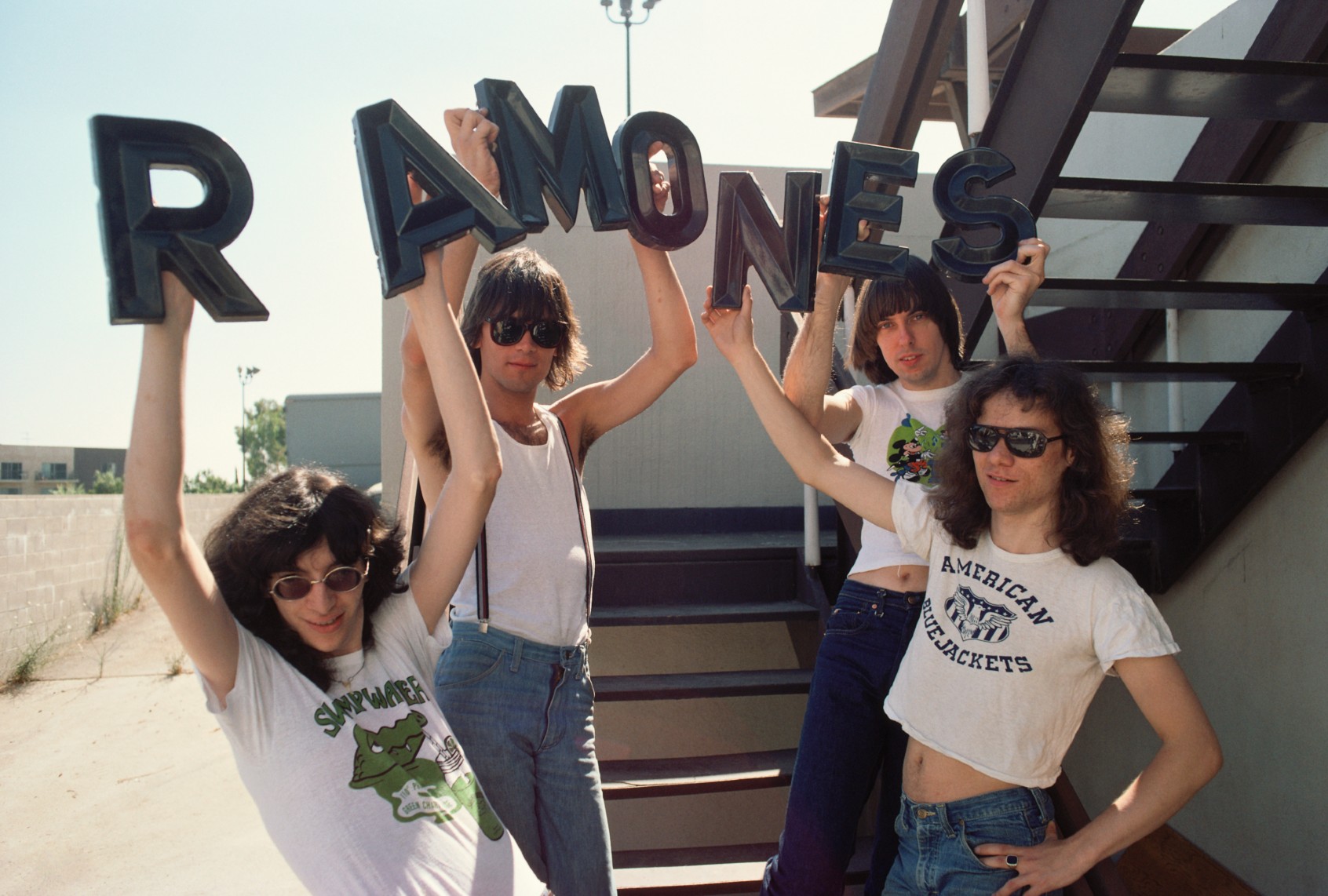
(Michael Ochs Archives/Getty Images) The Ramones, 1976
This explanation is going to feel thoroughly anodyne in 2026, when you can walk into places like Hot Topic or Target and buy merchandise from bands that at least once upon a time were considered “punk.” If you could even find a Ramones T-shirt in the ’70s or ’80s, you weren’t going to wear it anywhere besides a Ramones concert unless you wanted to find yourself in an argument, or worse. Musician Jesse Malin lived in Queens, a subway ride away from CBGB, and yet he tells endless stories about getting hassled by random passersby or having stuff thrown at him from car windows just for dressing differently.
The Ramones eventually retired because of interpersonal issues: Johnny stole Joey’s girlfriend. And it would probably be a lot easier to deal with all of that if your band had achieved the kind of commercial success you deserved and weren’t still touring in an Econoline van. (When they were inducted into the Rock Hall, Eddie Vedder commended them for still touring in a van, but a tour bus might have kept them around a while longer.) The Ramones wrote songs and played music because it was the only thing they wanted to do, the only thing they could do, the only thing that made sense to them.
Countless bands have given them their props — Pearl Jam took them out on tour, they were asked to play Lollapalooza in 1996, U2 wrote a song about them, among many others — and the Ramones were inducted into the Rock and Roll Hall of Fame in 2002, their second year of eligibility, but not early enough for Joey to have seen it happen; he died in 2001, and would be followed by Dee Dee (2002), Johnny (2004) and Tommy in 2014. (Later, Ramones CJ and Marky are still carrying the torch.)
The records are still there and still sound great, even if they didn’t earn their creators the kind of money and lifestyle that they deserved. And the Ramones are still inspiring kids all over the world to write a song, pick up a guitar, and go out and play, no matter how bad they might think they are, because that’s exactly what the Ramones did.
Read more
from music columnist Caryn Rose