
Kamala Harris’ biggest opponent in 2028? Herself
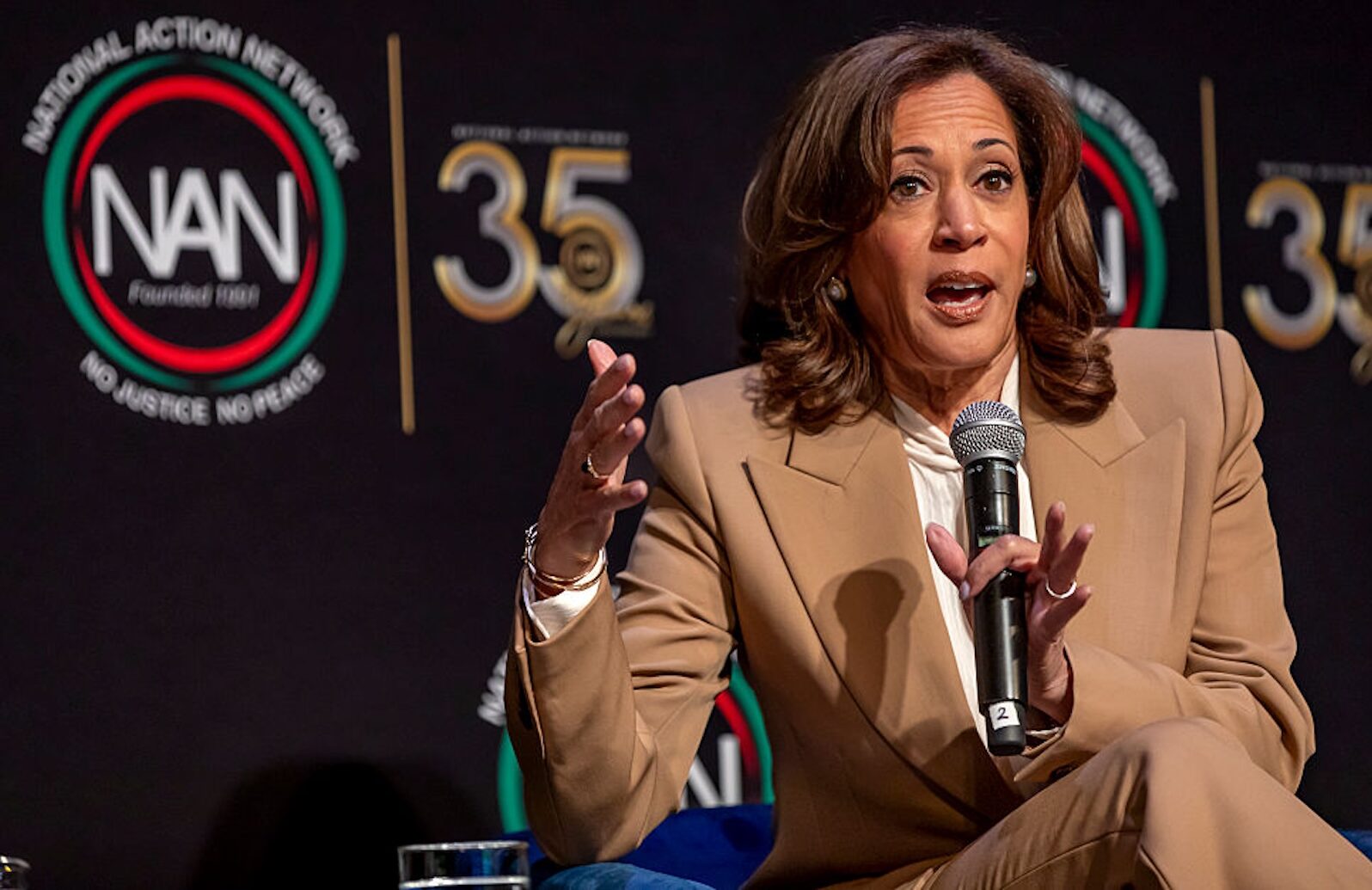
Were she to run for the Democratic presidential nomination in 2028, Kamala Harris would enter the race with formidable advantages. Thanks to four years as vice president and two presidential bids, her name identification is universal, and she has demonstrated the ability to raise mounds of money. But she would not clear the field.
The list of possible contenders for the Democratic nomination is a mile long and includes governors (California’s Gavin Newsom, Kentucky’s Andy Beshear, Maryland’s Wes Moore, Pennsylvania’s Josh Shapiro and Illinois’ J.B. Pritzker), lawmakers (Arizona Sens. Mark Kelly and Ruben Gallego, New York Rep. Alexandria Ocasio-Cortez and California Rep. Ro Khanna), former Transportation Secretary Pete Buttigieg and former Chicago mayor Rahm Emanuel, to name a few. In an Emerson College poll released July 23, Harris came in fifth with 8%, trailing Buttigieg (19%), Newsom (17%), Georgia Sen. Jon Ossoff (13%) and Ocasio-Cortez (13%).
But as she weighs a third presidential bid, Harris stands to face a bigger and more formidable opponent: herself.
Harris was done dirty by the Biden White House. It was nothing short of political malpractice to handicap and undercut a loyal veep who, according to actuarial tables, could have easily been elevated to the Oval Office in the event of the aging president’s death. (Considering Joe Biden’s post-presidency diagnosis of aggressive metastatic cancer, his staff’s treatment of Harris looks even more outrageous in hindsight.) This was particularly true because, after enduring brutal press cycles in her first two years as vice president, Harris ended up becoming a secret weapon of sorts for Biden, passionate and nimble on the stump in defending reproductive rights in the wake of the 2022 Dobbs decision that overturned Roe v. Wade, and making skillful strides on the world stage.
But if she was not set up for success by the administration while in office, Harris now appears to be falling into a trap of her own making, even as she is “holding lengthy, closed-door meetings” with progressive activists and groups.
In a recent New York magazine feature, a supporter of the vice president — identified as someone “who had recently spoken with her and came away convinced [she] is running in 2028” — inadvertently revealed what, if accurate, looks likely to be her Achilles’ heel. “She is looking for where the wave is going and is determined to ride it,” they said.
Left unsaid was that this is what Harris has long been accused of doing — again and again.
But charges of flip-flopping cling to other politicians like barnacles on a sailboat, becoming a drag on their campaigns and threatening long-term structural damage to their brand. This is where Harris is at right now.
There’s a balance every politician must strike: retaining one’s authenticity while remaining open to recalibrating policy positions in response to new evidence or simply evolving, or to match shifts in the public mood. Some, like Biden, are particularly skilled at this. But charges of flip-flopping cling to other politicians like barnacles on a sailboat, becoming a drag on their campaigns and threatening long-term structural damage to their brand.
This is where Harris is at right now. Despite her national profile, there remains a nagging suspicion that she lacks an internal compass and the courage of her convictions. Since she was first elected to public office as San Francisco district attorney in 2003, she has sometimes shifted positions according to which rung of the political ladder she was climbing.
As the junior senator from California, a progressive state, Harris was vocal in her support for Medicare for All. Famously, in a June 2019 Democratic presidential primary debate, she raised her hand when the moderator asked candidates if they would support eliminating private insurance. Her campaign quickly attempted to walk back her response, and she began softening her position by releasing a plan that called for expanding access to Medicare while maintaining private insurance options. As Biden’s running mate, she supported his position of expanding the Affordable Care Act.
Harris’ shifts on healthcare, while anathema to some progressives, are easier to justify: Her core value of wanting universal healthcare didn’t change, she might explain, only her approach did. But her shift on fracking is much harder to square.
Start your day with essential news from Salon.
Sign up for our free morning newsletter, Crash Course.
During her 2020 presidential bid, Harris expressed support for an outright ban on fracking, and she brought along a record as California attorney general of investigating oil companies for environmental abuses. But in the face of heat from Donald Trump and Republicans, and needing to put Pennsylvania in the Democratic column on election night, Harris clumsily reversed her position while claiming her “values have not changed” and that she was “seeking consensus.” The explanation didn’t seem to ring true for many voters, and she lost Pennsylvania to Trump by 1.7%.
There have been other policy reversals as well, ranging from the death penalty and cash bail to marijuana and immigration, which have left her vulnerable to Republican attacks and made some Democrats wary.
The New York magazine story indicated that Harris was blaming political consultants for her loss in 2024. “Her mindset is that I should have won,” a supporter told the outlet, “and I am going to do it my way because my way would have won, and it was all these consultants that were telling me to take this position or that position, and it was their fault.”
The problem is that this mindset further adds to the perception of Harris as a political opportunist, and should she eventually enter the primary, it will raise questions about her judgment and management that she will have to confront.
The Democratic Party has changed in the two years since her presidential campaign. The ideological fissures are more apparent, with democratic socialist candidates winning primaries — and elections, in the case of New York City Mayor Zohran Mamdani, whom Harris notably called in June — and nearly two years into the Trump’s second term, the party has become much more restive and angry.
For 2028, Democrats aren’t wanting someone who is searching for a wave to ride to victory. They want someone to instead be that wave.
Read more
about the Democratic Party