
The latest thing Trump wants to stop at the border: smoke
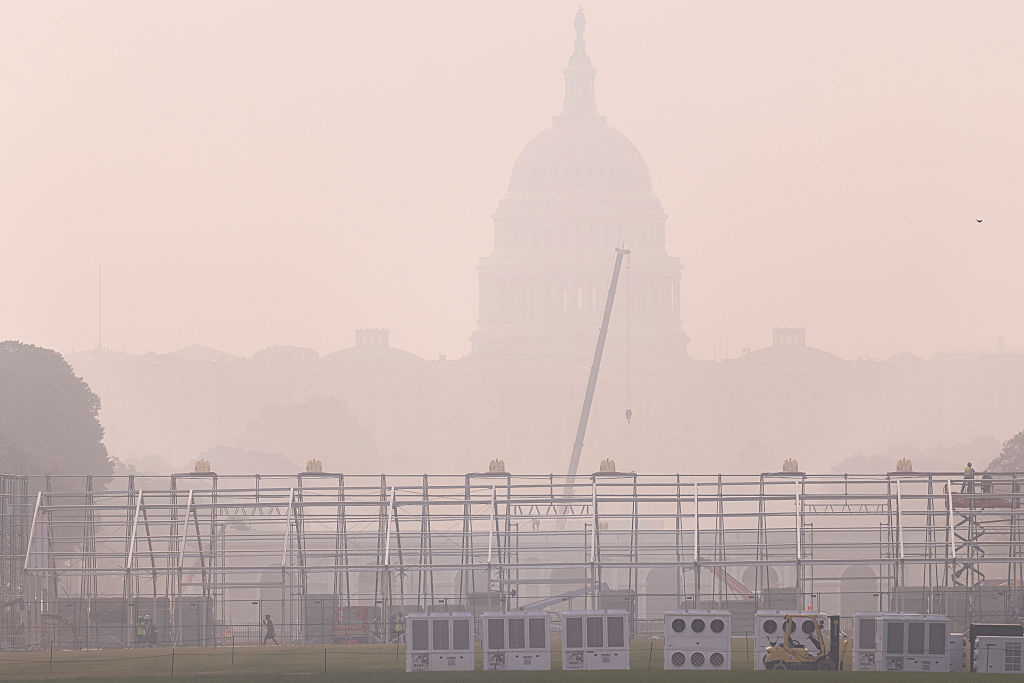
The smoke crossing the U.S.-Canada border has become the latest target of President Donald Trump’s tariff threats.
As wildfire smoke from Canada continues to blanket parts of the United States, pushing air quality levels into unhealthy territory across portions of the Northeast and Midwest, Trump is blaming Canada’s forest management practices and arguing that Americans should not have to bear the costs.
In a post on Truth Social, Trump accused Canada of failing to properly maintain its forests and said the country’s alleged negligence had allowed “filthy, polluted and unhealthy air” to enter the United States.
“I will call the Prime Minister during the day to find out what they are going to do about it,” Trump wrote, adding that the “incalculable” costs of the pollution “must of necessity be added to the TARIFFS Canada is currently paying.”
The comments came as millions of Americans were dealing with the consequences of wildfire smoke drifting south from Canada, where firefighters have been battling a difficult wildfire season marked by hundreds of active fires and strained resources.
The political backlash quickly expanded beyond Trump. Republican lawmakers from states affected by the smoke have called on Canada to take action, arguing that recurring wildfire seasons are harming American communities. Some have pushed for measures that would hold Canada financially responsible for the impact of wildfire smoke crossing the border.
But wildfire smoke presents a challenge that is far more complicated than a trade dispute.
Smoke does not recognize national borders. The same atmospheric conditions that allow pollution to travel from Canada into the United States also make environmental problems a shared challenge between neighboring countries. Experts have pointed to a combination of factors behind increasingly severe wildfire seasons, including drought, extreme heat, changing weather patterns and forest conditions.
Canada has also been fighting the fires producing the smoke affecting Americans. Fire crews have faced widespread blazes across multiple provinces, with officials working to protect communities while managing limited firefighting resources.
Start your day with essential news from Salon.
Sign up for our free morning newsletter, Crash Course.
The debate is unfolding at a particularly visible moment. Smoke and heat have complicated outdoor events across the region, including concerns about conditions surrounding Sunday’s World Cup final at MetLife Stadium in East Rutherford, New Jersey, where Spain and Argentina will compete for the championship. However, some experts contend that area thunderstorms on Saturday might help alleviate and disperse the worst of the concerns.
President Trump is expected to attend the match and present the trophy to the winning team as tens of thousands of fans gather under the same skies affected by the same wildfire smoke that has become the center of a political dispute.
The situation highlights a difficult reality for policymakers: Some problems can cross borders regardless of tariffs, political boundaries or enforcement measures. Wildfire smoke is one of them.
Read more
about U.S.-Canada relations