
Reps seek increased nutrition budget as malnutrition costs Nigeria $2.5bn yearly
*32% of under-5s stunted; 58% of women anaemic
*CS-SUNN pushes stronger legislative action, sustainable nutrition financing
By Chioma Obinna
The Chairman, House of Representatives Committee on Nutrition and Food Security, Hon. Chike Okafor, on Thursday raised fresh alarm over the economic and human cost of malnutrition, revealing that Nigeria loses about $2.5 billion annually to poor nutrition, even as he called for a threefold increase in government funding for nutrition interventions.
Okafor warned that unless governments at all levels begin treating nutrition as a strategic economic investment rather than a welfare issue, Nigeria risks undermining its human capital development, productivity and long-term economic growth.
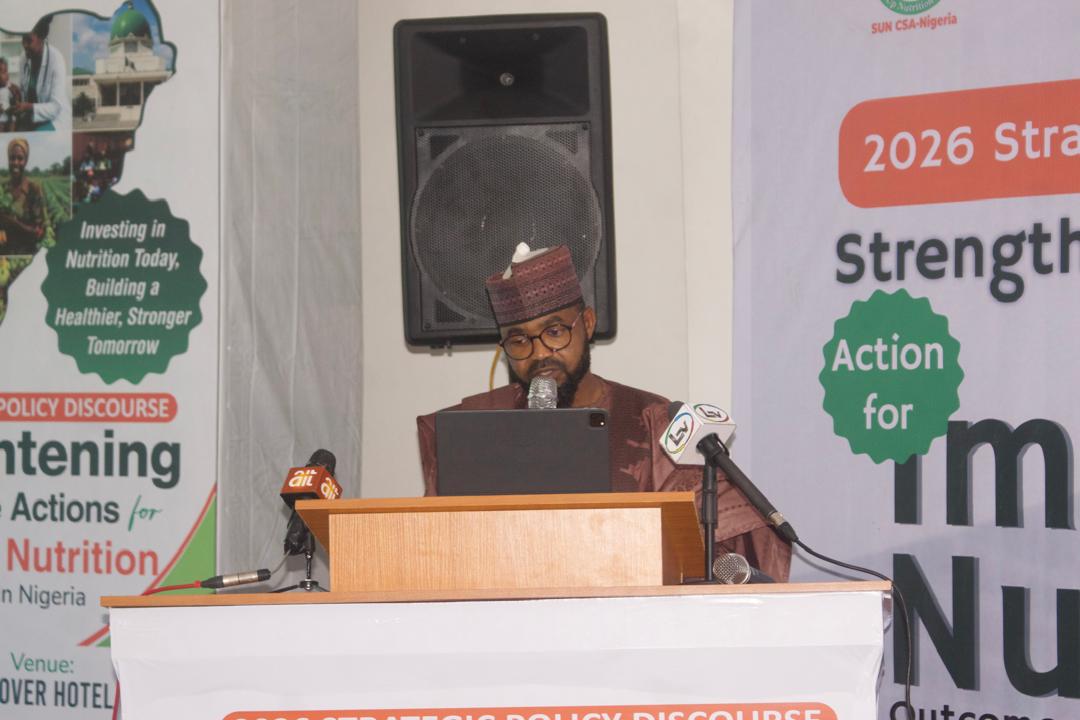
Speaking at the National Strategic Policy Dialogue on Strengthening Legislative Action for Improved Nutrition Outcomes in Nigeria in Lagos, the lawmaker urged federal and state governments to raise nutrition-specific spending from less than 0.5 per cent of the national budget to at least 1.5 per cent, while ensuring timely release of approved funds.
According to him, malnutrition is no longer merely a health challenge but a major economic threat.
“According to the World Bank, Nigeria loses $2.5 billion annually to malnutrition. That is 12 per cent of our GDP lost through reduced productivity, rising healthcare costs and wasted human potential.
“Nutrition is not a social welfare issue. It is an economic issue. The most important infrastructure any nation can build is its people, and the foundation of that human infrastructure is nutrition.”
Okafor lamented that Nigeria’s Human Capital Index remains 0.36, meaning that a child born in the country today is expected to be only 36 per cent as productive as they could have been with adequate health and quality education.
He said poor nutrition accounts for nearly half of that deficit.
“Nutrition alone accounts for 50 per cent of Nigeria’s human capital challenge. When a child is stunted, brain development is impaired, educational attainment suffers, and future earnings decline significantly.”
Quoting findings from the 2023/2024 Nigeria Demographic and Health Survey, Okafor said 32 per cent of Nigerian children under five are stunted, 7.1 per cent are wasted, while 58 per cent of women of reproductive age are anaemic.
“These are not merely health statistics. They represent millions of children whose full potential may never be realised and billions of naira in future economic losses,” he added.
The lawmaker described nutrition as one of the highest-yield public investments, noting that every one dollar invested generates about 16 dollars in economic returns through improved health, education, workforce productivity and national development.
He urged state legislatures to protect nutrition allocations, ensure prompt release of funds and strengthen oversight of Ministries, Departments and Agencies implementing nutrition programmes.
“We must move from appropriation to outcomes. Legislators must approve budgets, conduct oversight and champion nutrition laws, while MDAs must deliver measurable results with transparency and accountability.”
Okafor said the establishment of the House Committee on Nutrition and Food Security and the National Legislative Network on Nutrition and Food Security provides a platform to coordinate legislative action across the 36 states.
Drawing lessons from countries such as Brazil and Ethiopia, he argued that strong political commitment and sustained investments have helped reduce child stunting and boosted economic performance.
“Nigeria can achieve similar results if we make nutrition a national development priority,” he said.
Earlier, Chairperson of the Board of Trustees of the Civil Society-Scaling Up Nutrition in Nigeria (CS-SUNN), Mrs. Beatrice Eluaka, said although political commitment to nutrition has improved, implementation remains weak due to inadequate financing and poor accountability.
She urged lawmakers to strengthen oversight, institutionalise sustainable financing mechanisms such as the Child Nutrition Fund and support policies including six months paid maternity leave.
“The success of this dialogue will not be measured by our discussions but by the policies enacted, resources mobilised and lives improved.”
Also presenting a comparative assessment of nutrition across 10 focal states, the Executive Secretary of the Civil Society Alliance for Scaling Up Nutrition in Nigeria (CS-SUNN), Mr. Sunday Okoronkwo, said child malnutrition remains alarmingly high despite improvements in governance and political commitment.
He said nutrition outcomes now vary widely across states, with stunting ranging from 15.2 per cent in Enugu to 64.2 per cent in Zamfara, while wasting ranges from 3.9 per cent in Enugu to 16 per cent in Kebbi.
Okoronkwo identified delayed budget releases, inadequate financing, shortages of nutrition commodities, human resource gaps, climate change, insecurity and food insecurity as the biggest obstacles to improving nutrition outcomes.
According to him, “Allocating budgets does not improve nutrition outcomes. Releasing and effectively utilising the funds does.”
He urged state governments to increase domestic financing, expand nutrition services through primary healthcare, strengthen accountability and scale up proven interventions to reverse the country’s malnutrition burden.
The dialogue brought together lawmakers, government officials, development partners, civil society organisations and nutrition experts to chart strategies for accelerating nutrition financing and improving accountability across Nigeria.