
“Ocular morbidity remains significant public health challenge” — Claver Kofi Lawson
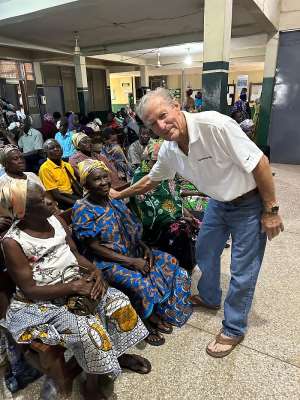
Mr Claver Kofi Lawson, the Project Coordinator for Lifetime Wells Vision, a non-government organisation (NGO), has said that ocular morbidity remained a major public health issue in Ghana.
He said the situation significantly affected individuals across all socio-economic groups, particularly in underserved rural and low-income communities.
Mr Lawson said this in an interview with the Ghana News Agency after a successful execution of the NGO’s Eleventh Free Eye Care Medical Outreach conducted throughout the Volta Region in partnership with Friends Eye Center, and supported by partners and donors.
The medical outreach programme delivered comprehensive eye care services including community screenings, medical treatment, optical support, and surgical interventions.
There was also a capacity building for local health workers aimed at promoting eye health awareness and encouraging early care-seeking behavior.
A four-tier post-surgery review system was also implemented during the programme to ensure proper recovery, follow-up care, and continuity of treatment.
A total of 3,614 medicated eyeglasses and 19,964 eye drops were provided to various patients depending on their conditions.
Over 22,000 individuals were reached across 14 districts, with 1,905 successful surgeries performed in 12 health facilities, restoring sight and preventing avoidable blindness for vulnerable populations.
The beneficiary districts included Kpando, North Dayi, Afadjato South, Jasikan, Guan, Hohoe, Ho Central, Akatsi North, Ketu North. North Tongu, South Tongu, Akatsi South, Keta, and Central Tongu.
The programme was implemented by a multidisciplinary team of optometrists,
ophthalmologists, ophthalmic nurses, opticians including David Powell, President of Lifetime Wells Vision, Mr Kenneth Wood, Founder, Lifetime Wells Vision, Dr Seth Wanye, and Andras Bakonyi. 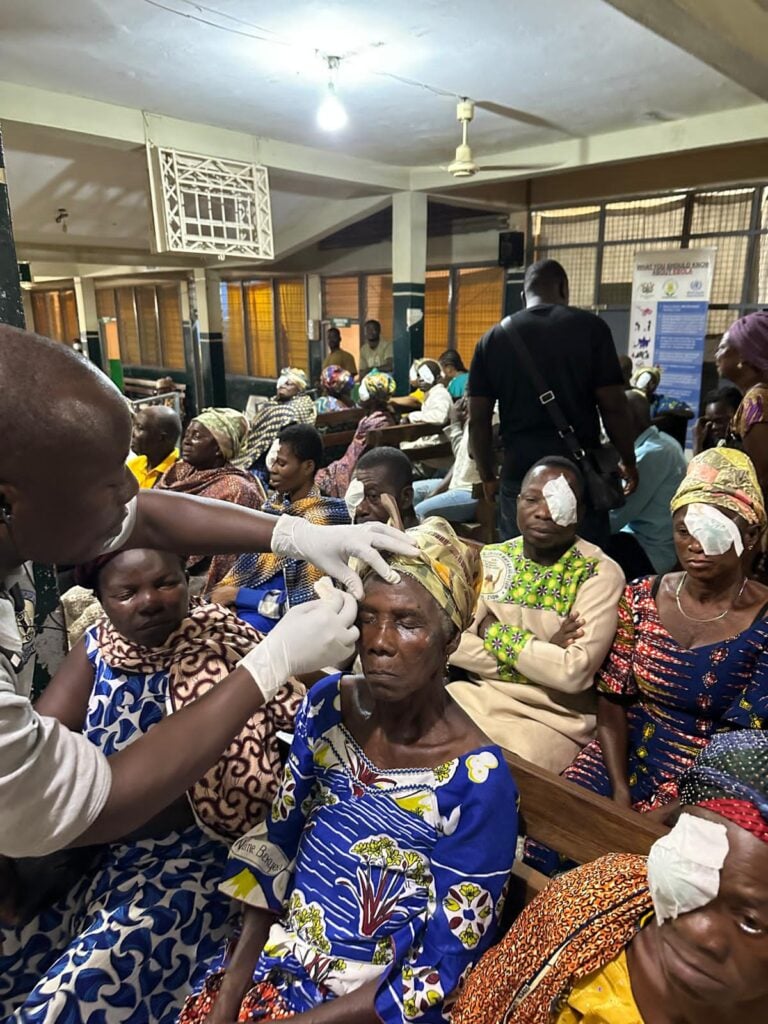
Mr Lawson stated that limited access to ophthalmic care, financial hardship and inadequate awareness contributed to the delayed presentation of eye diseases, frequently culminating in preventable blindness.
He said the objective of the programme was to bring essential eye care services closer to underserved communities, reduce the burden of untreated eye diseases, and prevent avoidable blindness and visual impairment.
Mr Lawson said the programme aimed to identify and manage vision-impairing and non-vision-impairing eye conditions, provide free medical, optical, and surgical eye care services, and ensure continuity of eye care through structured post-surgery reviews.
He stated that the programme also sought to enhance community awareness and acceptance of professional eye care services, improve access to quality eye care, and reduce avoidable blindness among underserved populations in the Volta Region.
He said in the Volta Region, access to eye care services was limited, especially in rural communities, and where services existed, financial constraints and distance remained major barriers, compelling many residents to rely on informal or unorthodox treatments, further worsening the situation.
Mr Lawson stated that the Region’s economy was predominantly agrarian, characterised by small-scale agriculture and fishing, alongside other livelihoods such as agro-processing, local textile manufacturing, cross-border trade, and crop cultivation.
The Project Coordinator asserted that due to the labour-intensive characteristics of these vocations, good vision is essential for productivity, household income, and community welfare.
He stated that loss of vision directly correlates with economic hardship, dependency, and reduced quality of life, and that both vision-impairing and non-vision-impairing ocular disorders persistently impact productivity, education, and overall quality of life.
Mr Lawson stated that although the programme was successful, it had hurdles during implementation, including financial constraints that limited surgical attendance and transportation issues, particularly in remote communities.
He added that one of the difficulties was the lack of ophthalmologists, which has led to a backlog of cases as well as fear and misinformation about eye surgery.
Mr Lawson revealed that cataracts remained the single leading cause of preventable blindness and vision impairment in the region, and this validated the programme’s surgical focus.
He said some notable cases identified during the programme included infants treated for congenital bilateral cataract and elderly patients up to 105 years old, all of whom had successful sight-restoring surgeries.
The Project Coordinator stated that the programme demonstrated the transformative power of coordinated, community-centered healthcare interventions,
He asserted that by restoring vision, improving access to essential services, and strengthening local health systems, the programme significantly improved well-being and productivity throughout the Volta Region.
Mr Lawson said sustained investment, expanded partnerships, and targeted innovations were essential to ensure that no individual was left behind.
The Project Coordinator stated that with continued support from government, donors, and community leaders, the outreach could scale its impact and move closer to eliminating avoidable blindness in the region.
GNA