
Delay in Small Arms Bill passage threatens women and children’s safety – Rural Women’s Centre

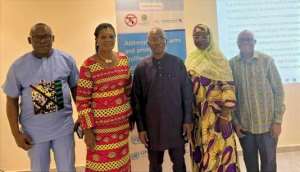
The Executive Director of the Centre for Rural Women in Peace, Security, and Development, Hajia Hamdatu Ibrahim, has expressed concern over the prolonged delay in passing the National Small Arms Bill, warning that the continued spread of small arms and light weapons is increasing risks for women, children and other vulnerable groups.
The Centre, which is an affiliate of the West African Action Network on Small Arms (WAANSA Ghana), has been actively involved in advocacy efforts aimed at securing the passage of the legislation.
WAANSA Ghana has undertaken capacity-building programmes for state and non-state actors on the provisions of the proposed National Small Arms Bill and engaged key stakeholders, including the Parliamentary Select Committee on Defence, the Ministry of Defence, the Judiciary, traditional authorities, media practitioners, security agencies and other relevant groups.
Hajia Hamdatu said the slow progress of the bill undermines national efforts to strengthen peace, security and sustainable development, particularly in rural communities where the effects of armed violence are often most severe.
“Every day that the Bill remains pending, women and children in our communities continue to live with fear,” she stated.
She explained that the impact of small arms and light weapons proliferation is disproportionately felt by women and children, especially during conflicts within homes and communities.
“The proliferation of small arms and light weapons affects us disproportionately. When there is conflict in a home or in a community, it is women who bear the brunt. It is children who are displaced. It is the vulnerable who suffer most,” she said.
Speaking during a media engagement in Accra, Hajia Hamdatu said the Centre would continue to work with WAANSA Ghana to expand advocacy efforts and engage civil society organisations across the country to build public support for the speedy passage of the bill.
She said the campaign would focus on community education, policy dialogue and strengthening the participation of rural women in national peace and security discussions.
“Peace and security are not abstract concepts for rural women. They are about whether our daughters can go to school safely, whether our markets are secure, and whether we can farm without fear. That is why we are calling on government to accelerate efforts to pass the National Small Arms Bill without further delay,” she added.
According to her, a strong legal framework is necessary to regulate, control and reduce the circulation of illicit weapons, which often contribute to domestic violence, armed robbery, chieftaincy disputes and violent extremism, particularly in border communities.
Hajia Hamdatu stressed that although small arms violence affects society as a whole, women often bear the greatest social and economic consequences.
“Women suffer most from the proliferation of small arms and light weapons in the country. When a gun enters a household, it changes the dynamics of power. When a gun enters a community, it destroys livelihoods,” she said.
She added that women are frequently left to care for victims, rebuild affected communities and hold families together after violent incidents.
The Executive Director further noted that incorporating gender considerations into arms control policies is essential for Ghana to meet its obligations under the United Nations Women, Peace and Security Agenda and the ECOWAS Convention on Small Arms.
The President of WAANSA Ghana, Mr. Ken Kinney, commended the Centre for Rural Women in Peace, Security, and Development for its advocacy and efforts to mobilise women in support of peace and development.
He said the organisation’s work complements WAANSA Ghana’s broader campaign to promote arms control and strengthen a culture of peace across the country.
“This is the kind of grassroots leadership we need. When rural women organize and speak, policymakers listen. Their lived experiences give weight to the call for stronger laws and better enforcement,” Mr. Kinney stated.
WAANSA Ghana reaffirmed its commitment to working with Parliament, security institutions and civil society organisations to ensure the passage and effective implementation of the National Small Arms Bill.
Mr. Kinney urged government, Parliament and development partners to treat the legislation as an urgent national priority and a necessary step towards protecting women and children.
“Delay is costly. Inaction costs lives. We cannot talk about development if we cannot guarantee security. We cannot discuss gender equality if women continue to live in fear of violence. The time to act is now,” he said.
WAANSA Ghana is a network of civil society organisations and media groups working in the areas of peace, security and governance. The network serves as the Ghanaian chapter of the West Africa Action Network on Small Arms.
Its membership includes organisations such as The Development Institute (The DI), Global Arms Control Advocates (GACA), the Centre for Rural Women in Peace, Security, and Development, the Greater Accra Youth Network, BADEC, Nutifafa Foundation, the Care-Love Charity Foundation and The Peace Africa.
Other members include the Foundation for Security and Development in Africa (FOSDA), Ghana Anti-Corruption Coalition (GACC), Centre for Democratic Development Ghana (CDD-Ghana), West Africa Network of Journalists for Security and Development, Orphans and Widows Association, Security Warehouse, West Africa Lead, Nurture Nature Foundation, Youth for Peace and Security in Africa and the Jatikay Centre for Human Security and Peace Building.