
Mahama marks historic Africa–U.S. Juneteenth Commemoration in Osu
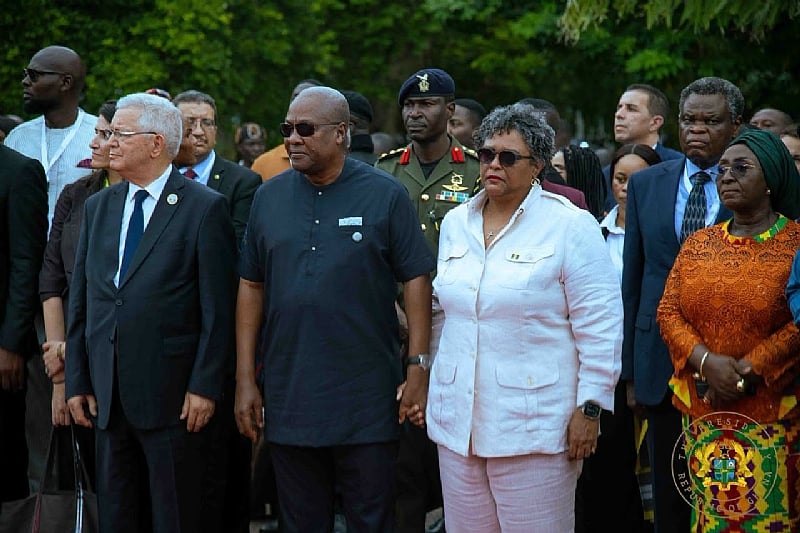
President John Dramani Mahama has joined heads of state and government, traditional leaders, members of the African diaspora, and international delegates at Christiansborg Castle in Osu for a historic joint commemoration of Juneteenth by Africa and the United States.
The event, marked by reflection and renewed calls for justice, underscored the enduring significance of Juneteenth as a symbol of freedom, resilience, and the global African experience.
Reflecting on the legacy of the transatlantic slave trade, President Mahama paid tribute to the millions of Africans who endured enslavement, displacement, and the loss of identity. He also honoured the resilience, courage, and enduring spirit of their descendants across the world.
“This commemoration is not only a remembrance of a painful past but also a celebration of the strength and unity of African people everywhere,” he noted.
The President highlighted that the gathering followed the successful conclusion of the Next Steps High-Level Consultative Conference on Reparatory Justice. At the conference, participants adopted an outcome document to guide future international cooperation on reparatory justice, historical remembrance, and restitution.
President Mahama emphasized that the pursuit of justice must go beyond financial reparations and the return of cultural artefacts. He called for a more equitable and inclusive global order that guarantees opportunity, dignity, and fairness for all people.
Reaffirming Ghana’s commitment to strengthening ties with the African diaspora, he pointed to policies aimed at reconnecting people of African descent with their ancestral homeland. These include expanded pathways for residence and broader visa-free travel across the continent.
“Ghana is your home. You are always welcome in the motherland,” President Mahama stated.
The event brought together an esteemed gathering of leaders, including the Prime Minister of Barbados, Mia Amor Mottley, as well as heads of state and government representatives from across Africa and the Caribbean, traditional authorities, and members of the global African diaspora.
The joint commemoration stands as a powerful symbol of unity between Africa and its diaspora, while reinforcing ongoing efforts toward justice, recognition, and shared progress.