
Foreign Affairs Minister calls for stronger global cooperation on reparatory justice for Africans
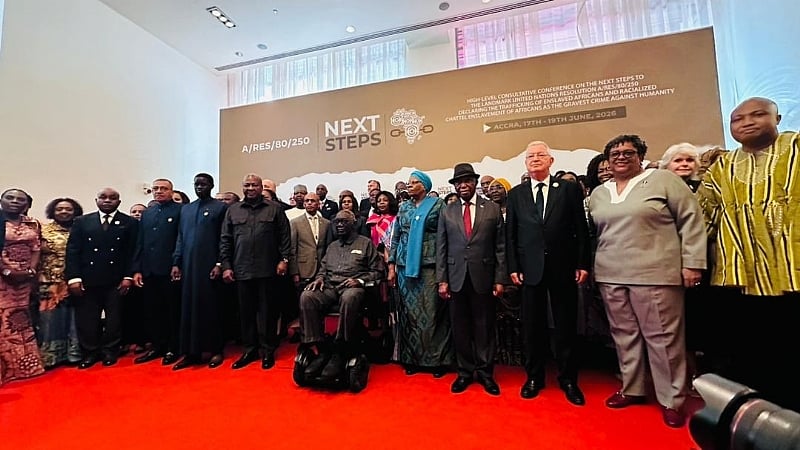
The Minister for Foreign Affairs, Mr. Samuel Okudzeto Ablakwa, has called for stronger global cooperation and practical action on reparatory justice for Africans and people of African descent.
He made the call on Thursday at the High-Level Consultative Conference on the Next Steps to the United Nations resolution on the trafficking of enslaved Africans in Accra.
Addressing delegates at the opening session, the minister said momentum was growing around the global reparations agenda following the adoption of the UN resolution, describing the progress made so far as “unprecedented accomplishments.”
“We are already recording progress, and all of us in this room must be proud of the contributions we have made to this resolution”, he said.
The minister said the conference carried implications beyond the two-day gathering, noting that decisions and partnerships formed during the conference could influence the future direction of global reparations efforts.
“The decisions, recommendations, and partnerships emerging from this meeting have the potential to shape the future trajectory of the global reparations agenda”, he added
Mr.Ablakwa urged countries and institutions to work together to address the enduring effects of slavery and colonialism through long-term and coordinated action.
He called for countries and institutions to work together across regions and adopt long-term measures to address the continuing impact of historical injustices beyond mere historical acknowledgement.
Referencing President John Mahama’s position on reparatory justice, the minister said no country or institution could pursue the agenda alone.
“Success will require partnerships, shared understanding, and sustained commitment”, he added.
The minister also drew attention to Ghana’s historical connection to the transatlantic slave trade, describing the country as one of the central locations from which enslaved Africans were shipped across the Atlantic.
He said Ghana’s role in the transatlantic slave trade era is reflected in the large number of forts and castles across the country, more than in any other nation.
The Minister noted that Ghana was now seeking to reposition itself as a place for reconciliation and healing.
“Today, Ghana is transitioning from being a crime scene to a sanctuary for healing and reparatory justice”, he added.
He urged delegates to approach discussions with “dialogue, partnership and mutual respect” while focusing on concrete outcomes that could advance justice and equity for Africans and people of African descent.
“The world is watching, and the global community looks to this conference for leadership, vision, and practical outcomes”, he said.
The conference is expected to produce recommendations aimed at strengthening international cooperation on reparatory justice and shaping the next phase of advocacy around the UN resolution.
The 3-day conference, which started on 17th will end on 19th June at the Osu Castle, formerly known as Christiansborg Castle, where a commemorative programme will be held to honour Africans who were taken through the transatlantic slave trade.