
Summer has another flavor
Summer is a strange season in adulthood.
When you’re a kid, it arrives all at once: the last school bell, the first trip to the pool, the permission slip feeling of a completely unscheduled Tuesday. But for those of us who don’t work in education and don’t have school-aged children, summer tends to seep in more gradually. It arrives disguised as ordinary life.
Maybe it’s the airport gate before a long-planned vacation. Maybe it’s the local pool opening on Memorial Day weekend. Maybe it’s simply the annual ritual of wrestling your air conditioner out of storage.
For me, this year, summer began with a dress.
At 8 a.m. on Memorial Day, I boarded a plane in Kentucky after a family visit and landed at O’Hare two hours later. The weather was sunny and just sticky enough that, before calling my Uber home, I ducked into an airport bathroom and changed out of my jeans and into a forest-green knit tennis dress I’d packed in my carry-on.
It’s something I used to do on vacation, especially in my early 20s — change clothes before the hotel check-in, before the trip had technically begun. A small sartorial transformation that made everything feel more official.
This time, though, I was heading home.
And somehow, that felt exactly right.
Once back in Chicago, I realized I had two immediate cravings: I wanted to sit outside, and I was hungry in the way people become hungry after spending several days in someone else’s kitchen. Stephen suggested Kie-Gol-Lanee, our neighborhood Oaxacan restaurant, where the mole is rich, the tamarind margaritas are dangerous and the frijoles arrive with a bowl of chips that seem to disappear on their own.
But when I opened the menu, sitting in the sunshine with salt on the rim of my drink and warmth on my shoulders, I spotted the thing that finally made it feel like summer.
And, most importantly, briny.
But summer has another flavor entirely.
Brine isn’t quite salt.
It’s salt, plus memory.
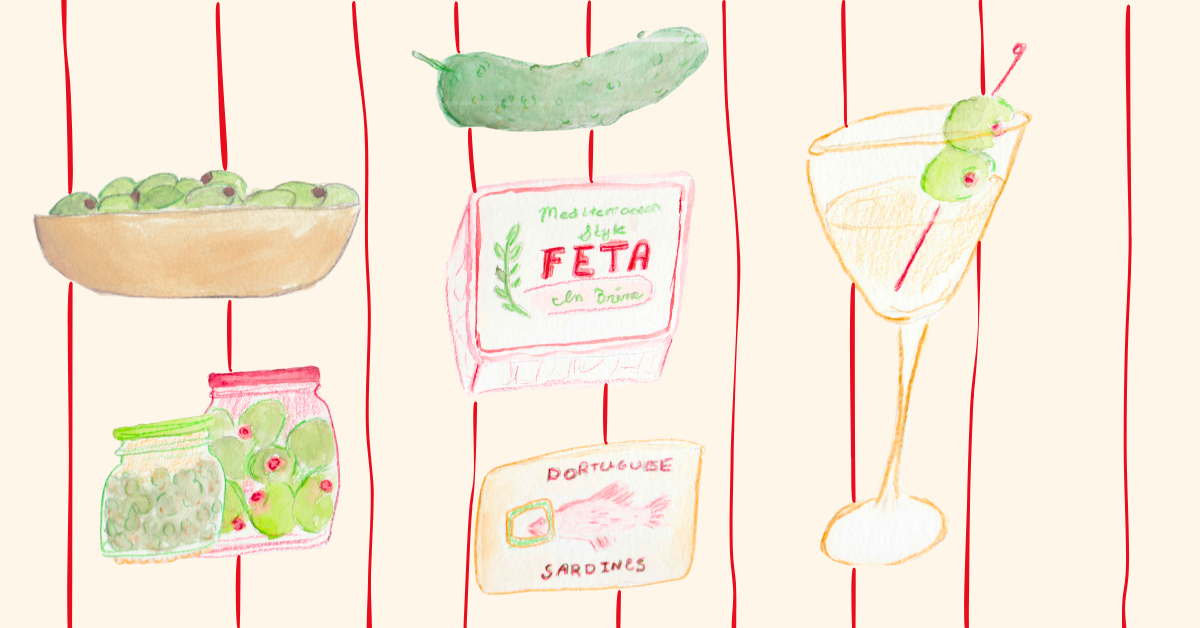
It’s mineral. Preservation. The olive at the bottom of a martini glass. The pickle juice lingering in a jar long after the pickles are gone. The taste of seawater drying on skin after a swim.
And it’s one of the most underappreciated flavors in the home kitchen canon — which is a shame, because once you start looking for brine, you’ll find summer hiding everywhere.
A brief field guide to brine
Brine is one of those flavors that’s easier to recognize than define.
You know it when you encounter it.
It’s the cool slickness of a ceviche tostada. The smoky-salty bite of salmon chased by a caper. A cube of feta tucked into a tomato salad. The olive speared at the bottom of a martini glass. An oyster tipped back with a squeeze of lemon. The funk and sunshine of preserved lemon stirred into a vinaigrette.
At first glance, these foods don’t seem particularly related. They come from different countries, different traditions, different corners of the grocery store.
But they all live in the same neighborhood.
What connects them isn’t just salt; it’s tension. Briny foods rarely taste flat or singular. They pull in multiple directions at once. They’re salty and bright. Sharp and refreshing. Rich and somehow appetite-inducing at the same time. They make other flavors seem louder.
Another reason I love cooking with brine? It’s often surprisingly economical.
Briny cooking encourages a certain kitchen resourcefulness. It asks you to look twice before pouring something down the drain. The pickle juice lingering in the jar. The salty liquid surrounding a block of feta. The olive brine at the bottom of the container after the last olive has been spirited away for cocktails and snack plates.
These aren’t scraps. They’re ingredients.
A spoonful of capers can transform a simple chicken cutlet. A splash of pickle brine can perk up a potato salad. The liquid from a jar of pepperoncini can become the backbone of a vinaigrette. Even tinned fish — one of my favorite budget-friendly pantry luxuries — delivers that distinctive briny quality without requiring a trip to a specialty seafood counter.
There’s something deeply satisfying about it. Briny cooking asks us to make stars out of supporting characters. To notice the little things lingering in the refrigerator door. To build flavor from ingredients we’ve already welcomed into the kitchen.
Which, perhaps, makes it the perfect flavor for summer.
This week’s three recipes celebrate that spirit. They’re bright, punchy and just a little salty around the edges. They’re an invitation to save the pickle juice, embrace the capers and discover just how much life can be hiding in the bottom of a jar.
Recipe: At-Home Ceviche Tostadas
When people hear the word ceviche, they often picture a pristine fillet of fish and a corresponding dent in their grocery budget.
But what I love most about ceviche isn’t the seafood. It’s the flavor architecture.
Lime. Onion. Cilantro. Jalapeño. Salt.
That’s the magic.
Which means you can build a remarkably satisfying ceviche-inspired meal from whatever fits your budget and your mood. Shrimp is a favorite, particularly when it’s on sale or purchased pre-cooked. Tinned fish works beautifully, especially tuna, mackerel or sardines. And for a plant-based version, I love using chickpeas dressed with a splash of olive brine or artichoke heart brine for a little extra salinity.
The beauty of these ingredients is that they don’t require the long citrus soak associated with traditional ceviche. Instead, they simply absorb the bright, punchy dressing while retaining their texture.
For me, this is ideal weeknight cooking: A tostada piled high with ceviche tastes like vacation even when you’re eating it on a Tuesday.
Serves 2–4
Ingredients
-
1 pound cooked shrimp, 2 cans tinned fish, or 1 can chickpeas, drained
-
Juice of 2–3 limes
-
1/4 red onion, finely sliced
-
1 jalapeño, finely chopped
-
1/4 cup chopped cilantro
-
Salt, to taste
-
1–2 tablespoons olive brine or artichoke heart brine
-
Diced cucumber
-
Diced avocado
For serving:
-
Tortilla chips
-
Lettuce cups
Directions
Combine the shrimp, fish or chickpeas with the lime juice, onion, jalapeño and cilantro. Add olive or artichoke brine if using. Season to taste with salt.
Let sit for 10 to 15 minutes while the flavors mingle.
Serve piled onto tostadas, scooped up with tortilla chips or spooned over rice.
The result is bright, bracing and deeply satisfying — the sort of meal that tastes like it should cost considerably more than it did.
Recipe: Caper relish
The snackiest expression of the theme: a loose, lemony caper relish that lives in the refrigerator waiting to improve whatever happens to cross its path.
The foundation is simple. A small jar of drained capers, some lightly crushed with the side of a fork, suspended in a generous slick of olive oil. From there, I add red pepper flakes, dried oregano, garlic powder and whatever leafy herbs need using up. Dill is particularly good here, but parsley, chives and thyme are all welcome guests. A generous amount of lemon zest ties everything together.
The result lands somewhere between a salsa verde, a vinaigrette and a very loose tapenade. It’s salty, bright, herbaceous and just spicy enough to keep things interesting.
I love spooning it over fish and rice bowls, avocado toast, thick slices of summer tomato or grilled vegetables. It also becomes an excellent sandwich spread when stirred into mayonnaise, and a remarkably elegant dip when folded into Greek yogurt.
Like many of my favorite summer condiments, its greatest strength is versatility. Make it once and you’ll spend the next few days looking around the kitchen for things to put it on.
Makes about 1 cup
Ingredients
-
1 small jar capers, drained
-
1/3 cup olive oil
-
1 teaspoon dried oregano
-
1/2 teaspoon garlic powder
-
Pinch red pepper flakes
-
2 tablespoons chopped fresh herbs (dill, parsley, chives or thyme)
-
Zest of 1 lemon
Directions
Roughly chop or lightly crush some of the capers with the side of a fork, leaving plenty whole for texture.
Combine with the olive oil, oregano, garlic powder, red pepper flakes, herbs and lemon zest. Stir well and let sit for 10 minutes before serving.
Store in the refrigerator for up to a week.
Recipe: Salt & Citrus Mocktail
This is the drink I want after a long afternoon spent outside: effervescent and bright, but with an undercurrent of smoke and brine. The culinary equivalent of a beach bonfire right as the sun drops below the horizon.
Lemon sparkling water forms the backbone, amplified with an extra squeeze of whatever citrus is hanging around the kitchen—lemon, lime, orange, even grapefruit. Cold-brewed oolong tea lends a gentle smokiness that keeps the drink from veering into soda territory; simply steep a few bags in cool water overnight to wake up to a smoother, slightly less tannic iced tea. Meanwhile a splash of olive brine contributes a savory, mineral edge that makes the whole thing strangely compelling.
It’s refreshing in the way a dirty martini is refreshing. Not because it’s sweet, but because it makes you want another sip.
Serves 1
Ingredients
-
8 ounces lemon sparkling water
-
3 ounces cold-brewed or iced oolong tea
-
1 ounce olive brine
-
1 squeeze citrus juice (lemon, lime, orange or grapefruit)
-
Lemon twist, for garnish (optional)
Directions
Fill a glass with ice. Add the tea, olive brine and citrus juice. Top with sparkling water and stir gently. Garnish with a lemon twist, if desired.
This story originally appeared in The Bite, my weekly food newsletter for Salon. If you enjoyed it and would like more essays, recipes, technique explainers and interviews sent straight to your inbox, subscribe here.
Read more
of “Bite” readers’ favorite stories