
A pair of unlikely films remind us why painful memories matter
Across the first six months of 2026, an unusually high number of theatrically released films have seemed like paired companion pieces, feature-length notes on a theme that can or should be watched back-to-back. This isn’t all that uncommon: Trends crop up in filmmaking all the time, as potential narratives emerge from real-life events and cultural obsessions. Sometimes this happens because the studios are trying to capitalize on a moment, like when “The Minecraft Movie” coasted in on the fumes of “The Super Mario Bros. Movie.” Other cinematic companions are inadvertent and more thoughtful, woven together like the harmonies of a duet.
This year, “Exit 8” and the upcoming “Backrooms” toyed with a less-is-more approach to claustrophobic, liminal horror. “Ready or Not 2” and “They Will Kill You” took one last swing at the well-worn eat-the-rich occult subgenre. “Mother Mary” and “The Moment” explored the natural endpoint of pop-star fixation in the age of the internet. One could even make an argument for a double feature of “Animal Farm” and “Wuthering Heights” as two wildly different ways to update high school English class favorites.
But only a few of these films are genuinely worth watching on their own merit. More often, they become more interesting because they have a cinematic complement. Examined together, they reveal things about each other. But only rarely do they communicate a grand truth, something that appeals to the core of our humanity, transcends the moment they hit theaters, and stays with us after the novelty of their resemblance has worn off.
The mysteries of this life can be more agonizing than any grief. But there can be tremendous value in piecing together the difficult truth, and I’ve rarely seen two films so equipped to emphasize the importance in doing just that.
On paper, “The Sheep Detectives” and “Blue Heron” don’t seem like they’d share enough to warrant comparison, let alone a double feature. The former is mostly a kids’ movie about a flock of sheep trying to solve the murder of their shepherd; the latter is a complex, quiet indie that follows a family of six who can’t seem to get through to their eldest son, and the effect it has on their young daughter. But taken together, with an open heart and due consideration, “Blue Heron” and “The Sheep Detectives” fit together like a double helix — so naturally symbiotic that their coexistence feels like kismet, a fortuitous bit of fate.
Both films are disarmingly earnest studies of the prevalence and importance of memory in lives steeped in grief. Gnawing, almost unbearable heartbreak acts as the catalyst for a layered analysis of the ways humans — or, in the case of “The Sheep Detectives,” humans and their woolly friends — ache to forget. Enduring pain isn’t in our nature, and embracing it certainly isn’t either. But occasionally, the mysteries of this one, often cruel life can be more agonizing than any grief. Our yearning to forget is superseded by our desire to understand why things are the way they are. Whether or not those answers will arrive with closer examination is another matter entirely. But there can be tremendous value in piecing together the difficult truth, and I’ve rarely seen two films so equipped to emphasize the importance in doing just that.
Directed by animation savant Kyle Balda and written by “Chernobyl” scribe Craig Mazin, “The Sheep Detectives” combines beautifully rendered CG animals — sheep, rams and lambs — with the human occupants of a small English town for maximum emotional punch. Shepherd George (Hugh Jackman) loves his flock and tends to their every need, raising them for nothing more than their wool. As part of his dedicated care, George reads passages of murder mystery novels to the sheep nightly, a whodunit treat to cap off the day’s events. He, of course, doesn’t realize the animals can understand the plot of the novels, or that the most intelligent of the herd, Lily (voiced by Julia Louis-Dreyfus), can predict the killer before George reaches the end of the book. What Lily couldn’t have foreseen, of course, was that her amateur detective skills would become necessary when, one day, George is found dead, and the investigation by a bumbling local policeman isn’t up to snuff.
A bad-good, entirely unexpected “uh oh” feeling washed over me early in the film, when Lily and her sheep friend, Mopple (Chris O’Dowd), talk about the commonly held belief among their kind that sheep don’t die but simply turn into fluffy clouds. Strangely, Lily can’t seem to remember the day her mother became a cloud, a curious narrative element made all the more gutting after George’s death, when the viewer learns that, in this universe, sheep can force themselves to forget painful events. Counting to three and closing your eyes is all it takes to wipe the ovine memory clean and return to a state of blissful ignorance. When George dies, the misery is too much to bear and the flock resolves to forget, but black sheep Sebastian (Bryan Cranston) intervenes at the last moment, telling them that to forget someone as important as George doesn’t just dishonor his memory but also erases his love and their chance to reciprocate it by bringing his killer to justice.
Memory is tricky, and how we recall experience is informed by a plethora of factors, prongs of the mind that can poke holes in the past: how old we were, where it happened, the pile-up of years that cloud the lucidity of a memory and make it feel like a dream.
With the help of the flock, Lily eventually weeds out George’s murderer among the colorful townspeople, but not before “The Sheep Detectives” lands a couple of remarkable gut punches. Like “Babe” and “Homeward Bound” before it, the film treats its younger audience with the respect and maturity they deserve, wading into heavy thematic territory without shying away from the bittersweet realities of death. The narrative possibilities of willful forgetting allow Balda’s wool-clad characters to extend themselves far past the boundaries of George’s field and into the hearts of younger and older viewers alike. It’s also a useful reminder that, like pain, love never fully fades. It’s what fortifies our bodies and keeps us curious. It’s what guides our actions for years to come, influencing not only how we see the world but how we treat everyone in it. Erasing the memory of a loved one might seem like a mercy on our darkest days, but remembrance is what keeps their light with us.
But grieving isn’t always a matter of making space for the pain and the joy in equal measure. Memory is tricky, and how we recall experience is informed by a plethora of factors, prongs of the mind that can poke holes in the past: how old we were, where it happened, the pile-up of years that cloud the lucidity of a memory and make it feel like a dream. With “The Sheep Detectives,” the film’s polish is its purpose. Balda and Mazin deliver a critical message for audiences of all ages in a succinct, no-rough-edges package with a perfectly ironed bow on top. There’s no missing the point, and clarity can be essential when grappling with something as slippery as grief.
Want more from culture than just the latest trend? The Swell highlights art made to last.
Sign up here
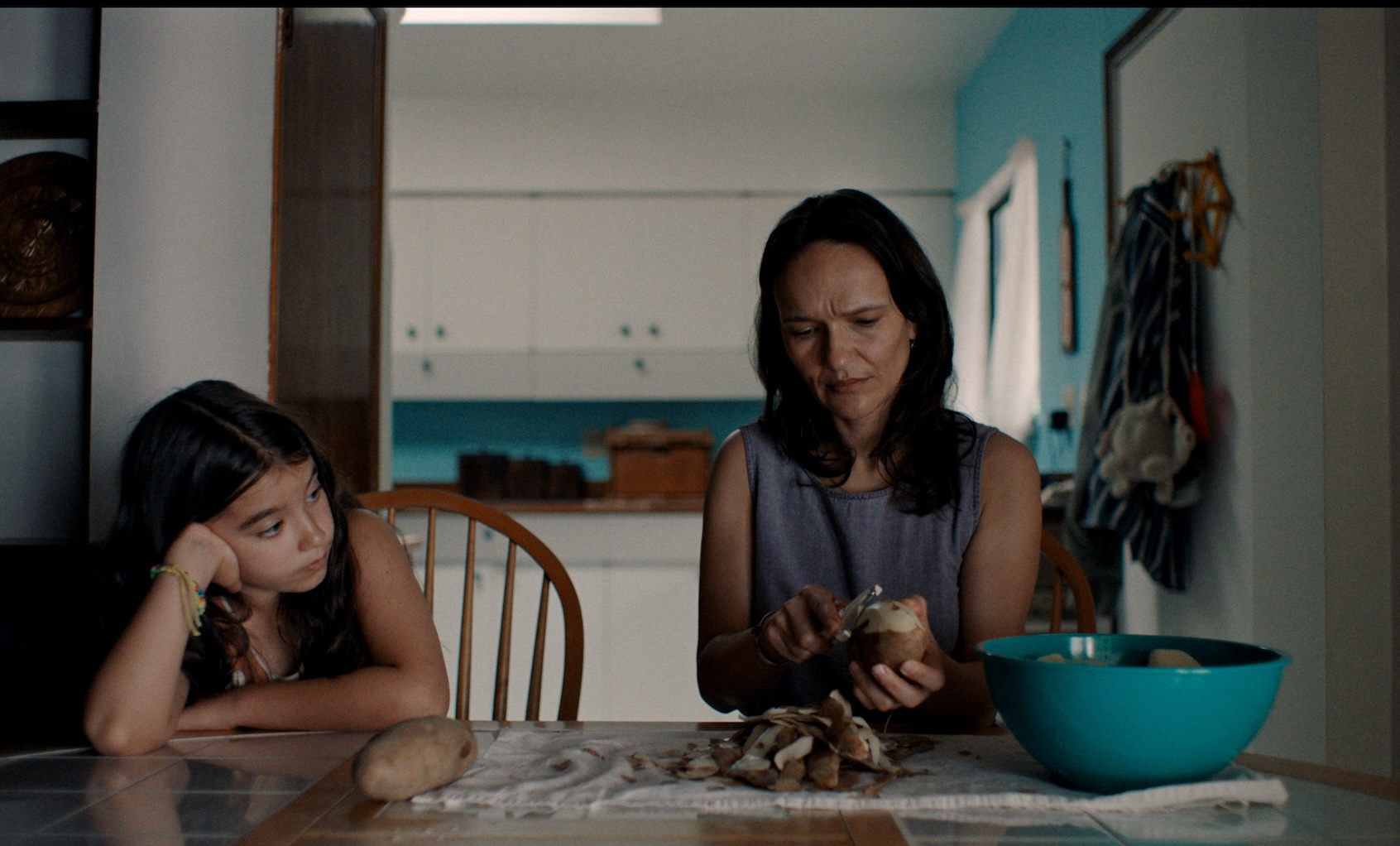
Clarity is exactly what Sophy Romvari seeks in her brilliant debut, “Blue Heron,” though it’s not as easy to see that. In a breezy, sun-soaked 90 minutes, Romvari excavates a lifetime of knotted, intergenerational trauma — a phrase that almost feels too heavy and too burdened by cryptic implications, given how this movie explores it. When young, school-aged Sasha (Eylul Guven) and her family move to a new home on Vancouver Island in the 1990s, the transition slowly reveals the cracks in the brood’s dynamic.
Her oldest sibling, Jeremy (Edik Beddoes), quietly wrestles with feelings that go beyond ordinary teenage discontent. But Sasha is a child, and can only see what she’s privy to. Jeremy will steal a keychain just because he can, or wander off during family beach day, sending his mother (Iringó Réti) into a panic. At other times, Jeremy is sweet and docile, playing the big brother role with no difficulty. But his incendiary side always comes back, and when his behavior becomes increasingly troubling, his parents reach their limit.
With a handful of short films under her belt, Romvari’s direction is both refined and subtle. She’s entirely uninterested in dramatics, focusing instead on the smaller moments — the nearly imperceptible elements of the past, the ones that come to us in dreams or at 4:30 p.m. on a Tuesday — that make up a memory. The first act of “Blue Heron” allows the viewer to settle into a languid Canadian summer, slowly putting all the necessary character elements into place. Then, Romvari shifts course. Past and present don’t collide so much as they fuse together; they aren’t two opposing places in time, but rather, a straight line.
While “Blue Heron” may not come coated in the feel-good gloss of “The Sheep Detectives,” these two films are mirror images — not two in a trend, but in direct conversation with one another. This is a pair of films for anyone who’s lost a loved one, or for anyone who’s just plain lost.
To spoil too much of this extraordinary transition would be a disservice to anyone who hasn’t yet seen “Blue Heron.” But it’s a testament to how even the slightest of pivots can reframe a story, making it all the more personal without drawing explicit attention to itself. To watch this happening is like stumbling upon a photo of someone you haven’t seen in a long time, tucked away in a box of odds and ends, and pressing it to your heart.
“Blue Heron” is a breathtakingly candid glimpse into a fracture that can’t be treated, quietly deepening and becoming more severe over time. It’s bathed in sunlight that only occasionally shines on an ephemeral memory, revealing that the recollection is laced with as much honest love as regret. It takes great courage to look into the past with clear eyes, especially when what you’ll see is bound to remain hazy, forcing you to squint and carve out whatever truth you can from it. But that’s what filmmaking is all about: surprising us, emboldening the viewer to the hard, emotionally exhausting things they never thought possible.
While “Blue Heron” may not come coated in the feel-good gloss of “The Sheep Detectives,” these two films are mirror images — not two in a trend, but in direct conversation with one another. This is a pair of films for anyone who’s lost a loved one, or for anyone who’s just plain lost.
Rarely can one film feel so observant of how our memories of a person and a time can change in the space between loving them and losing them. To encounter two in such close succession is a gift, in a time when many of us really need it. We spend so much time consumed by the now, and when we’re not, we’re fixated on the future and its glaring unpredictability.
I’ll say it again: These are rough times. Suffering is everywhere. To forget the bitterest chapters of our personal histories can be overwhelmingly tempting when there’s so much to deal with, right in front of us. Having just passed the first anniversary of one of my life’s most excruciating moments, I’ve been feeling the impossibility in that balancing act myself lately. But that alone is reason enough not to let our memories fade away, even when that might seem easier. Confronting the grief in unvarnished form might sting, and perhaps acutely. But it’s the only way to embrace the sweetness that follows, in the places where memory meets reality.
Read more
about the power of memory in film