
West Africa’s drug dependence persists as experts push urgent shift to local production
By Henry Obetta
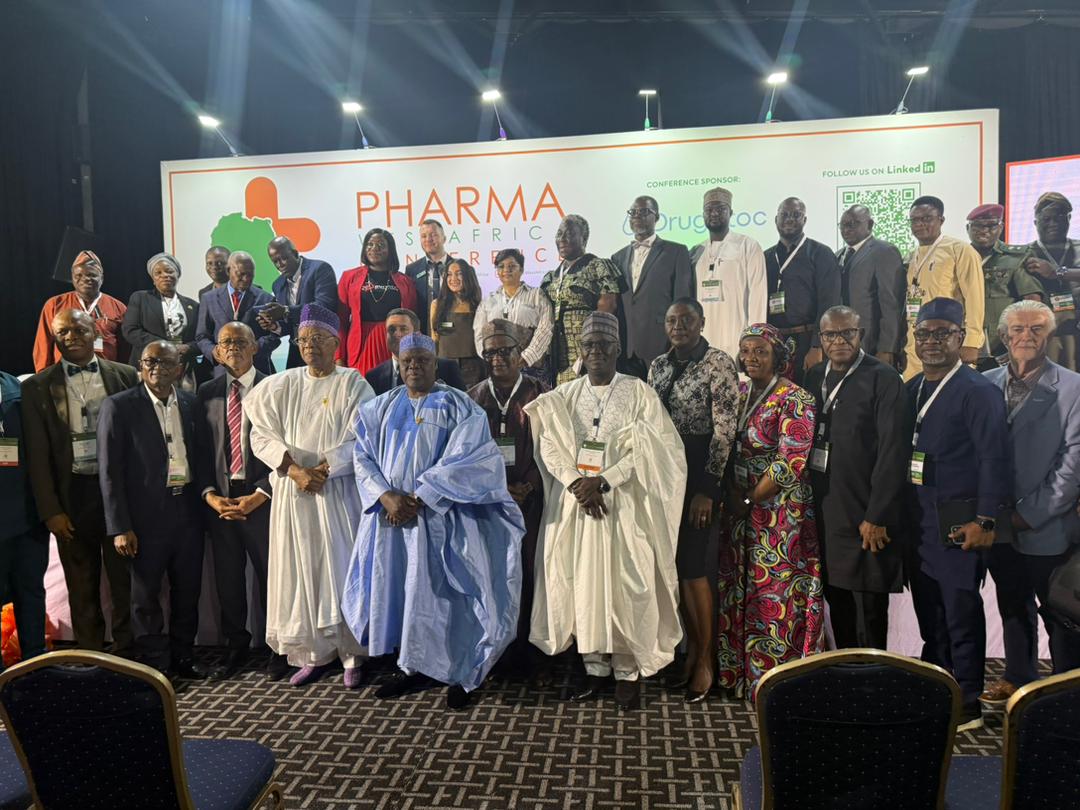
Stakeholders at Pharma West Africa 2026 in Lagos on Tuesday warned that despite decades of policy conversations and the presence of local capacity, West Africa continues to rely heavily on imported medicines, exposing millions to supply shocks, high costs, and substandard drugs.
At the three-day exhibition held at the Landmark Centre, Victoria Island, industry leaders, policymakers and investors said the region’s overdependence on imports estimated at between 70 and 95 per cent, remains a major threat to health security, even as local manufacturers operate far below capacity.
The consensus at the forum was clear: the problem is no longer a lack of resources, but the failure to build a coordinated system that links healthcare delivery, financing and local production.
Delivering the keynote address, Chief Growth Officer of Maisha Meds International, Mr. Olamide Okulaja, identified what he described as a “disconnected ecosystem” as the core barrier to pharmaceutical self-reliance in the region.
According to him, three critical layers, service delivery, capital flow and production—operate in silos, weakening the entire value chain.
“The gap is not in resources. It is in the connection between three layers that have never been brought into a single system,” Okulaja said.
He explained that private pharmacies and Patent and Proprietary Medicine Vendors (PPMVs), which serve as the first point of care for over 60 per cent of patients, generate little or no data for public health planning.
At the same time, he noted that limited access to affordable financing affects the ability of pharmacists to stock quality medicines, while manufacturers are left without reliable demand signals.
“Local manufacturers run at 30 to 60 per cent capacity because no reliable demand signal reaches them from the two layers above,” he added.
The outcome, stakeholders noted, is a cycle where weak demand planning discourages production, and limited production reinforces dependence on imports.
Also speaking, Lagos State Commissioner for Health, Prof. Akin Abayomi, underscored the importance of strengthening systems and enforcing standards, using malaria diagnosis reforms in the state as an example of how policy-backed interventions can improve outcomes.
He said Lagos reduced malaria misdiagnosis by mandating the use of Rapid Diagnostic Tests (RDTs) before treatment, revealing significantly lower infection rates than previously assumed.
“The highest positivity rate was just about five per cent in the peak of our rainy season, and it dropped to one per cent in the dry season,” Abayomi said.
“Once we made this information available, we changed the policy that nobody in our PHCs should be treated for malaria without a prior rapid diagnostic test.”
He urged pharmaceutical stakeholders to adopt similar evidence-based practices, noting that efficiency in service delivery would ultimately strengthen the entire supply chain
Chairman of the planning committee and former President of the Pharmaceutical Society of Nigeria, Ibrahim Yakasia, said the region must move beyond dialogue to concrete action.
“This conference is about people… a mother who deserves access to medicines and a child whose future depends on a reliable healthcare system,” he said, calling for stronger collaboration among governments, investors and industry players.
Echoing concerns about systemic weaknesses, President of the Pharmaceutical Society of Nigeria, Ayuba Tanko Ibrahim, warned that continued dependence on imports leaves the region vulnerable to global disruptions and the proliferation of fake drugs.
“If we do not produce our medicines, we will continue to import vulnerability,” he said.
He called for stricter regulation, faster approval processes and increased investment in local manufacturing, stressing that regional cooperation would be key to building resilience.
“History will not remember the speeches made today, but the systems we build, the policies we implement and the lives we save,” he added.
Stakeholders at the event agreed that without deliberate policy alignment, investment in local production and integration of data across the value chain, West Africa’s ambition for pharmaceutical self-sufficiency may remain elusive.
The exhibition, which attracted about 250 exhibitors and over 4,500 delegates, ends Thursday, with expectations that discussions will translate into actionable reforms across the region’s pharmaceutical sector.