
Killings under-reported, security crisis deepening —Gbenga Hashim
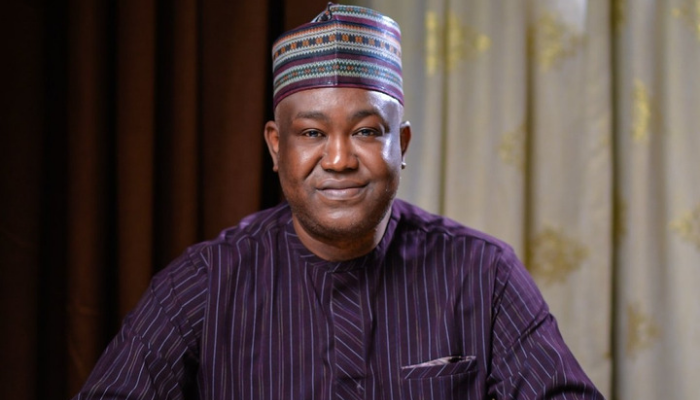
Former National Publicity Secretary of the Peoples Democratic Party (PDP), Gbenga Olawepo-Hashim.
By Luminous Jannamike
ABUJA—Former presidential candidate, Dr Gbenga Hashim, has raised fresh alarm over the wave of killings spreading across parts of Nigeria, warning that many of the deaths were not being fully reported and that the country’s security crisis was worsening.
According to him, attacks are spreading across more states, happening more frequently, and barely making it beyond local headlines, leaving victims unseen and the scale of the violence poorly understood.
In a statement issued yesterday, Hashim said more than 40 people were reportedly killed in the past week in Shanga Local Government Area, with homes destroyed and the death toll still rising as new casualties were recorded.
Recall that the same community had earlier suffered another attack that left seven people dead, amid repeated assaults by terrorists without any meaningful security response.
He also pointed to Kwara State where coordinated attacks in Kaiama, Baruten and Ifelodun had left between 20 and 50 people dead in recent weeks, including five forest guards.
According to him, many of these incidents received little attention beyond local reports.
He said across the north central region, the pattern appeared even more severe, noting that in Benue State, between 50 and over 100 people were reportedly killed within weeks.
Hashim also noted that in Plateau State, coordinated night attacks left 30 to 80 people dead, while Niger State recorded 20 to 50 deaths, with Nasarawa State seeing between 10 and 20 people killed in related violence.
“Taken together, these reports suggest that between 130 and 300 people may have been killed within weeks across a single region, a scale of mass casualty that is being met with selective attention and dangerous silence,” he said.
Beyond the figures, he warned that the real danger was how quickly the killings were becoming routine, absorbed into daily news cycles with little, sustained outrage or action.
He also highlighted the continued presence of armed groups, such as Boko Haram and Islamic State West Africa Province, ISWAP, as well as expanding bandit networks taking advantage of weak security presence, difficult terrain and slow response times.
According to him, the repeated attacks across multiple states point to a deeper problem in how security is being coordinated at the national level.
“The true scale of killings is being dangerously under-reported and increasingly normalised,” Hashim said.
He also criticised what he described as a subdued reaction from global bodies, saying both the United Nations and African Union had not matched their response to the scale of the violence.
He added that, apart from Donald Trump, who he said had shown consistent concern, most countries appeared to have grown indifferent, despite Nigeria’s long-standing role in international peacekeeping.
He expressed particular concern about the silence of African countries that had benefited from Nigeria’s support in the past.
“There is now a growing perception that Nigerian lives have been so devalued in global consciousness that even routine expressions of condolence are no longer made.
“Why has the world become de-sensitised to mass killings in Nigeria? Why do Nigerian deaths no longer trigger sustained global outrage or urgency? And how many more must die before silence itself is treated as complicity?
“These questions are no longer rhetorical, but reflect what appears to be a global system increasingly selective in its moral attention,” Gbenga Hashim said.
He warned that the trend risked normalising mass death, with urgency fading, even as lives continue to be lost.
“For now, the reality remains unchanged: the killings continue, the numbers rise, and too many victims remain unseen and uncounted,” Hashim said.