
Trump’s clash with podcasters puts Fox News on notice
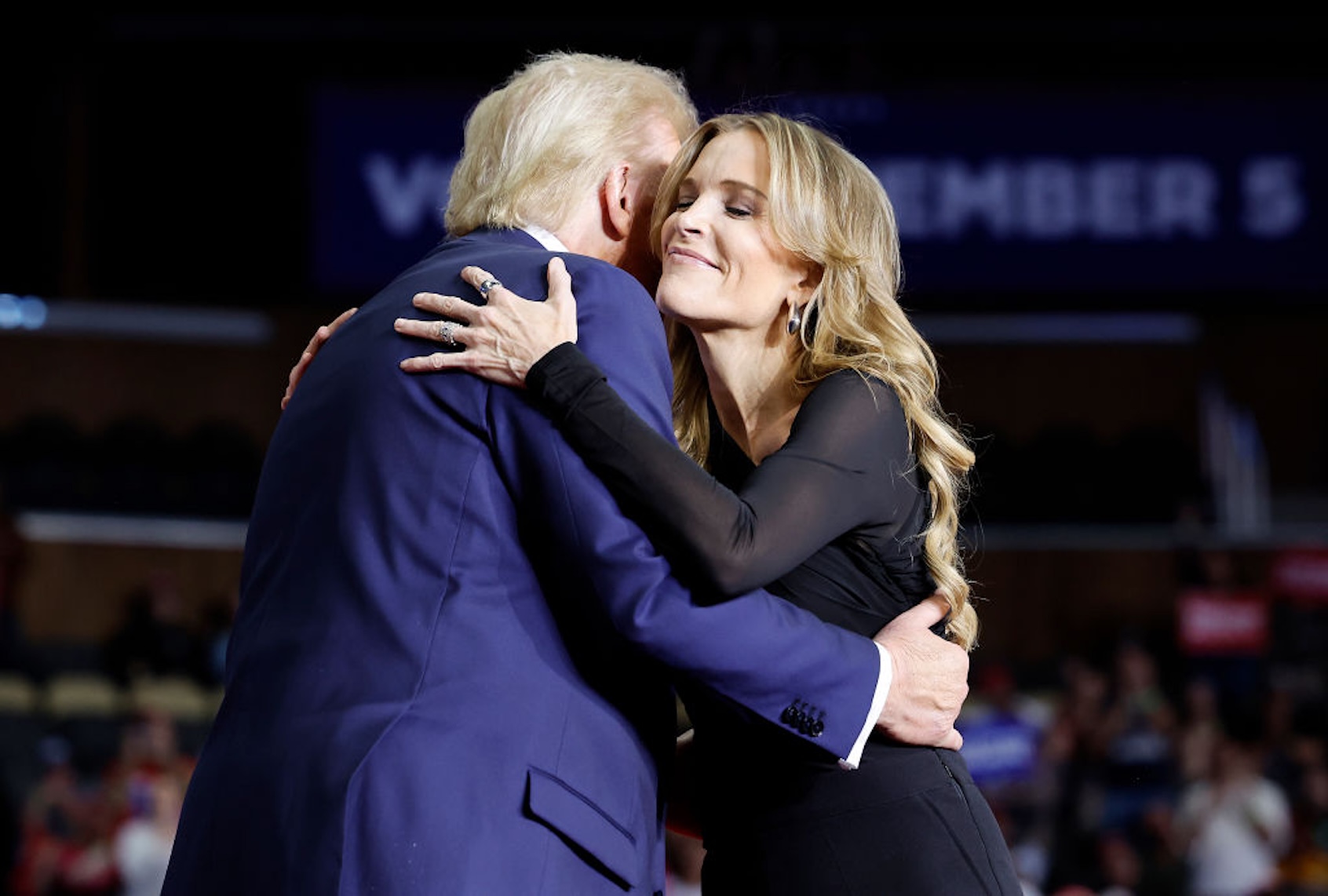
It’s hard to overstate how remarkable the spectacle is: Right-wing broadcasters Mark Levin and Megyn Kelly are trading sexual insults on social media, while Tucker Carlson is suggesting the president might be the Antichrist and Candace Owens is urging Congress to remove him under the 25th Amendment. The house that Donald Trump built is crumbling.
For nearly a decade, the MAGA movement has projected an image of absolute cohesion — an ecosystem where politicians, media figures and voters moved in lockstep. Now the Iran war has done something two impeachments, four indictments and an insurrection could not: It has forced that ecosystem to turn inward and exposed the contradictions that were always there. For years, Trump’s critics have assumed that exposure of his misconduct would eventually erode his support and change his supporters’ minds. But the durability of the MAGA base has shown the short-sightedness of that assumption. Identity, not information, has been the dominant force of Trumpism. But the Iran war is cutting through that dynamic because criticism of it is not easily reframed as a partisan attack.
What we are witnessing is a generational and ideological fracture inside MAGA media — one that pits legacy television power against a decentralized, digital-first influencer class that helped build Trumpism. A fracture that has been building quietly for years has now erupted into open warfare.
What we are witnessing is a generational and ideological fracture inside MAGA media — one that pits legacy television power against a decentralized, digital-first influencer class that helped build Trumpism. A fracture that has been building quietly for years has now erupted into open warfare. Trump launched strikes against Iran without a declaration of war from Congress — but in close coordination with Israel and at the prodding of hawkish voices in the conservative media ecosystem who had spent years demanding exactly this moment, namely figures on Fox News. On the other hand, as CNN’s Aaron Blake has noted, six of Spotify’s top 14 podcasts are hosted by one-time Trump boosters who are now criticizing him over the war.
For years, Fox and its allies cultivated a deep distrust of mainstream media, encouraging viewers to question official narratives and seek alternative sources of information. That skepticism is now being directed at Fox itself. When Marjorie Taylor Greene, once Trump’s biggest cheerleader on Capitol Hill, accuses the network of “brainwashing boomers to support what we voted against,” she is articulating a generational divide that has been hiding in plain sight for some time. As Salon’s Amanda Marcotte recently explained on “The Daily Blast with Greg Sargent,” Fox is still the authoritative voice of the movement for older conservatives. But for younger MAGA voters, the network looks more like an artifact of a different Republican Party — one that is more hawkish and more comfortable with the very foreign interventions Trump once condemned. White supremacist and popular far-right podcaster Nick Fuentes echoed Greene this week. “The only people still left in MAGA are the boomers that still watch Fox News.”
The divide is amplified by a class of media figures who no longer need Fox — and, increasingly, define themselves in opposition to it — after first gaining right-wing fame on the network. Carlson, who left Fox News amid a sexism and harassment settlement and has spent the intervening years building one of the most influential anti-democratic media empires in the country, is now warning Trump’s military aides to disobey orders. Kelly, who spent 14 years at Fox News by her own admission “cheerleading” for the Iraq and Afghanistan wars and amplifying every administration lie fed to her by the George W. Bush administration — is now calling out Fox’s coverage as “insufferable” propaganda. Both are former insiders who helped construct the very narratives they now reject.
The problem is that accountability without consequence is just content. Kelly’s contrition doesn’t restore a single family destroyed by two decades of interventionist catastrophe. It does, however, generate enormous podcast engagement and allow her to position herself as the brave truth-teller in the new MAGA civil war.
This is where the conflict becomes existential for Fox News. For years, the network has thrived by aligning itself with the emotional and ideological currents of its audience while maintaining just enough institutional credibility to shape those currents in return. But that balance depends on a shared understanding of reality. When large segments of the audience begin to believe that Fox is no longer representing them — that it is serving power rather than interrogating it — the feedback loop breaks down. And that loop has always been central to Trump’s power.
The president consumes the media and integrates it into his decision-making. When commentators like Levin or Sean Hannity advocate for a more aggressive stance toward Iran, Trump has made it clear he is listening. That is why critics like Kelly argue that Trump was “talked into” war by the messaging he consumes. It is also why Trump’s public defense of Levin in his vulgar feud with Kelly — a former Fox colleague — and his furious attacks on dissenting podcasters — feel less like political strategy and more like a struggle to reassert control over a narrative that is slipping away.
By lashing out at former allies as “NUT JOBS” and “TROUBLEMAKERS,” Trump is attempting to redraw the boundaries of the movement. But the more attacks figures who still command large audiences, the more he exposes the fragility of his own authority. The fact that figures like Joe Rogan and Theo Von now rank among the most influential voices in right-wing media underscores a fundamental shift in how political narratives are constructed and disseminated. Podcasters are less constrained by party discipline, less dependent on access and more responsive to audience sentiment in real time. Hosts are rewarded for questioning authority and appearing to reject scripted talking points.
Want more sharp takes on politics? Sign up for our free newsletter, Standing Room Only, written by Amanda Marcotte, now also a weekly show on YouTube or wherever you get your podcasts.
The generational divide within MAGA is inseparable from this media transformation. Younger voters are more likely to consume political content through podcasts and social media. They are less tied to a single source of truth, more comfortable navigating competing narratives and more skeptical of institutions — including conservative ones. “You see a big age split on this,” MAGA booster and podcaster Jack Posobiec told the Washington Post during this year’s Conservative Political Action Conference (CPAC), the first gathering of the conservative political group that Trump skipped in a decade. The Guardian’s Chris Stein reported from CPAC that “Older attendees who lacked a personal connection to the country nonetheless backed the military campaign, seeking it as religiously ordained,” while “the discomfort was pronounced among younger attendees.”
Benjamin Williams, a 25-year-old CPAC attendee, told the Associated Press, “We wanted actual America-first policies, and Trump was very explicit about that. It does feel like a betrayal, for sure.” Razi Marshall, a 19-year-old student attending CPAC, told the Post, “What I really wanted was no new wars, Epstein files, things like that. The other party seems to be more in favor of pushing those through.”
Polling reflects this shift. Young men who pushed Trump to victory in 2024 were drawn by explicit promises to prioritize domestic concerns over interventionist foreign policy. A Pew Research Center poll conducted March 23-29 found that while 67% of Republicans over 65 believe the war will make Iran less likely to develop nuclear weapons, just 25% of those between 18 and 29 said the same. The latest Economist/YouGov poll shows that, among people aged from 18 to 29, 63% oppose the war.
The political consequences are already visible in the enthusiasm numbers. A CNN/SSRS poll found that just 33% of Republican and Republican-leaning voters younger than 45 say they’re extremely motivated to vote in the midterms, compared to a majority of older Republicans. A Washington Post/ABC/Ipsos poll found that roughly 70% of Americans aged 18 to 29 disapprove of Trump’s presidency, with many younger voters expressing regret about supporting him in 2024.
Notably, the anti-war sentiment now coursing through right-wing podcasting circles comes bundled with antisemitic tropes about Israel controlling American foreign policy and with a reflexive tendency to blame everyone except Donald Trump for Donald Trump’s decisions. Even after the president said this week that Carlson “should see a good psychiatrist,” the podcaster told former Fox News reporter James Rosen, now of Newsmax, “I’ve always liked Trump and still feel sorry for him, as I do for all slaves.” Carlson claimed the president is “hemmed in by other forces. He can’t make his own decisions. It’s awful to watch.” Joe Kent, the counterterrorism official who resigned over the war and is now under FBI investigation, went on Carlson’s podcast after leaving the administration and essentially absolved the president of responsibility by blaming “high-ranking Israeli officials.”
This is what decades of right-wing media infrastructure has produced: a conservative movement so thoroughly personality-based that its members cannot hold their leader accountable without simultaneously constructing elaborate narratives that protect him from blame.
Read more
about MAGA podcasters