
Why MAGA men actually loathe tradwives
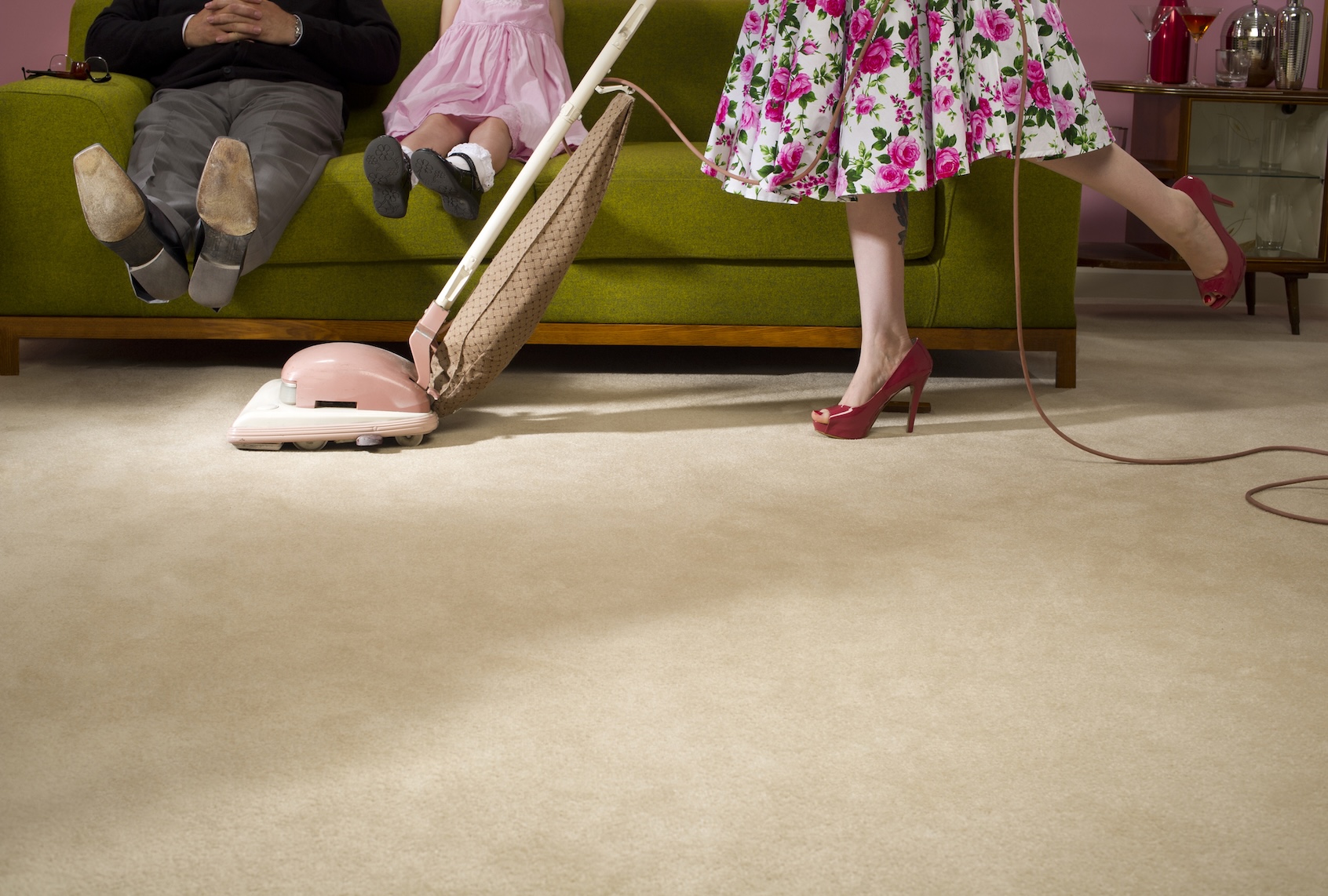
The media fascination with “tradwives” may be fading, but as a social media phenomenon, it’s still going strong. Ballerina Farm, where former ballet dancer Hannah Neeleman makes a spectacle of her wifely submission, has over 10 million Instagram followers, despite a recent scandal over her company’s raw milk sales. She’s not alone. Dozens of other women draw millions of followers by performing traditional wifely duties online.
Idyllic images of blonde children and perfect homes aren’t the only selling points. The tradwife lifestyle is pitched as a way to earn men’s love and devotion. By submitting to men, tradwife proponents argue, a woman will activate his chivalric urge to protect and provide. Submission is portrayed as a fair trade to women. In exchange for giving up their autonomy, they will receive safety and joy beyond what feminists, with their petty demands for equality and anger at the patriarchy, can never imagine.
But once again, the tradwife pitch has been revealed as a lie. A new study published in Psychology of Women Quarterly shows that young men who favor the trad lifestyle don’t honor and cherish tradwives — they hold them in contempt. After surveying nearly 600 men aged 18 to 29, researchers expected to find that those who supported the tradwife movement to have paternalistic attitudes toward women, viewing them as fragile but beloved creatures who needed protecting. Instead, they discovered pro-tradwife men expressed a hostile form of sexism, calling women who submitted to men lazy and parasitic.
This may seem like a paradox at first blush. These men loathe housewives while simultaneously believing that women should be housewives. But sociologist Jessica Calarco, who teaches at the University of Wisconsin-Madison and is the author of “Holding It Together: How Women Became America’s Safety Net,” is not surprised.
“If you hate your wife, it’s a lot easier to justify exploiting her unpaid labor for your own personal gain,” she told me. “With our modern sensibilities, we might think of love as the point of marriage.” But traditional marriage was about male power, she explained, which included “exploiting wives’ domestic labor, forcing them to bear children and using them as emotional or physical punching bags.” Underneath all the happy trappings of tradwife content is a longing to return to a time when women had no rights inside a marriage. Actual love for a “traditional” wife, Calarco concluded, gets in the way of a man “accepting the perks of patriarchy.”
Tradwife content whitewashes history, but an honest look shows that contempt for housewives was a widespread theme in the past. “Take my wife, please” jokes were standard fare in the mid-20th century, and popular sitcoms like “The Honeymooners” and “I Love Lucy” included references to hitting women. These portrayals were part of an even longer history of depicting wives as nags and harridans, a narrative device that can be found in the Old Testament. Nineteenth-century cartoons decrying the women’s suffrage reflected the view that a wife is to remain at home not because she wants it, but because men do — and that’s all that matters.
Nowadays most women aren’t forced to marry for survival, yet elaborate propaganda systems have emerged to bait them into believing that traditional marriage, along with its outdated gender roles, is romantic.
Nowadays most women aren’t forced to marry for survival, yet elaborate propaganda systems have emerged to bait them into believing that traditional marriage, along with its outdated gender roles, is romantic. The Psychology of Women Quarterly study shows just how much the notion of chivalry is actually a myth. As Calarco said, “Misogynistic men will often ‘lovebomb’ their partners, lavishing them with praise and affection in the early days” in an attempt to convince women to give up their autonomy and outside income. Once they are trapped, though, the men will “drop the facade.”
Real-life examples aren’t hard to find. Lauren Southern was a right-wing media figure during Donald Trump’s first presidency who built an audience by showcasing her white nationalist and anti-feminist views. She eventually decided to live her values by getting married, handing over all her money to her husband and vowing to be submissive. But as Southern later wrote in a memoir, her husband isolated her in a rural area and treated her with an ever-growing contempt. She tried to please him by “cooking, cleaning, putting on dresses and high heels to welcome him home,” but he came to hate her even more. He emotionally abused her, she claimed, locking her out of the home as punishment. She eventually fled.
Chivalry is unworkable because it’s simply too dissonant for men. On one hand, as the researchers found, traditional men want the services they believe only women should provide, such as emotional support and housework. But they also believe women are beneath them and, in fact, exist to serve them. So expressing gratitude, much less holding women in respect, is experienced as emasculating. The natural result for a man in this position is what Southern experienced: growing annoyance and resentment at his wife for having the temerity to express any needs at all, instead of functioning simply as a household appliance.
Want more Amanda Marcotte on politics? Sign up for her free newsletter, Standing Room Only, now also on YouTube or wherever you get your podcasts.
British journalist Louis Theroux, in his recent Netflix documentary “Inside the Manosphere,” exposes how Southern’s experience is hardly unique. The far-right podcasters he interviewed espouse a belief in women’s submission in the home, but as he quickly found, the women in these arrangements aren’t getting love or care in return. The men brag about how they party and sleep with whomever they want, while their girlfriends are obliged to stay home and be monogamous. Nor do the women have any financial security. Theroux gets a manosphere influencer to admit he won’t marry his girlfriend to deprive her of any claim to his money — even though she gave up her job to take care of him and have his children. The women, the documentary makes clear, aren’t really getting anything from their relationships. One even realized this after filming was completed, and she dumped her podcasting boyfriend.
For a lot of women, though, leaving is a much bigger lift. As Calarco noted, the point of being a tradwife is that a woman is “isolated and financially dependent” on a man, which makes escape difficult. In other cases, there are psychological hurdles. It can be daunting for women to admit it was a mistake to buy into the tradwife lifestyle, especially after being warned by feminists of the risks. There’s also the personal pain of realizing that your husband’s “love” may not be as advertised, making it easier to live in denial.
That was what a lot of people took from a 2024 profile of Hannah Neeleman and her husband Daniel a profile of the couple that appeared in the Times of London. After it was published, the Neelemans angrily denied their marriage was unhappy or exploitative, but many readers weren’t convinced. There were too many details suggesting that Daniel Neeleman viewed his wife with exactly the contempt that researchers have found in so many male trad enthusiasts. There was the time, for example, when Hannah asked her incredibly wealthy husband for a Greek vacation for her birthday. He filmed a video of himself giving her an apron instead. There was the way Hannah confessed to the Times reporter that she liked giving birth away from her husband, because she got to enjoy pain medications when he was not around. Then there was his promise to build her a dance studio on their massive estate; he turned it into a schoolhouse for their growing brood of children.
Here is where I’m required to offer a throat-clearing assertion that everyone else’s marriage is a mystery, and that we can never know the depths of love or loathing from the outside. But I also sympathize with people who read this profile — or who saw Hannah Neeleman trying to crush her disappointment in the apron video — and thought that perhaps the situation was as it seemed. That it is not true that a woman can win a man’s eternal devotion with submission. That men who want women to submit have no intention of offering respect in return, but just want someone they can walk all over.
Now we have one more study showing that the tradwife hype is just as empty as feminists have always suspected. Traditional patriarchy isn’t some cheat code to make marriage happy. It is and always has been just an excuse for men to treat women poorly.
Read more
about tradwives