
“People are choosing this fate”: Measles will get worse before it gets better
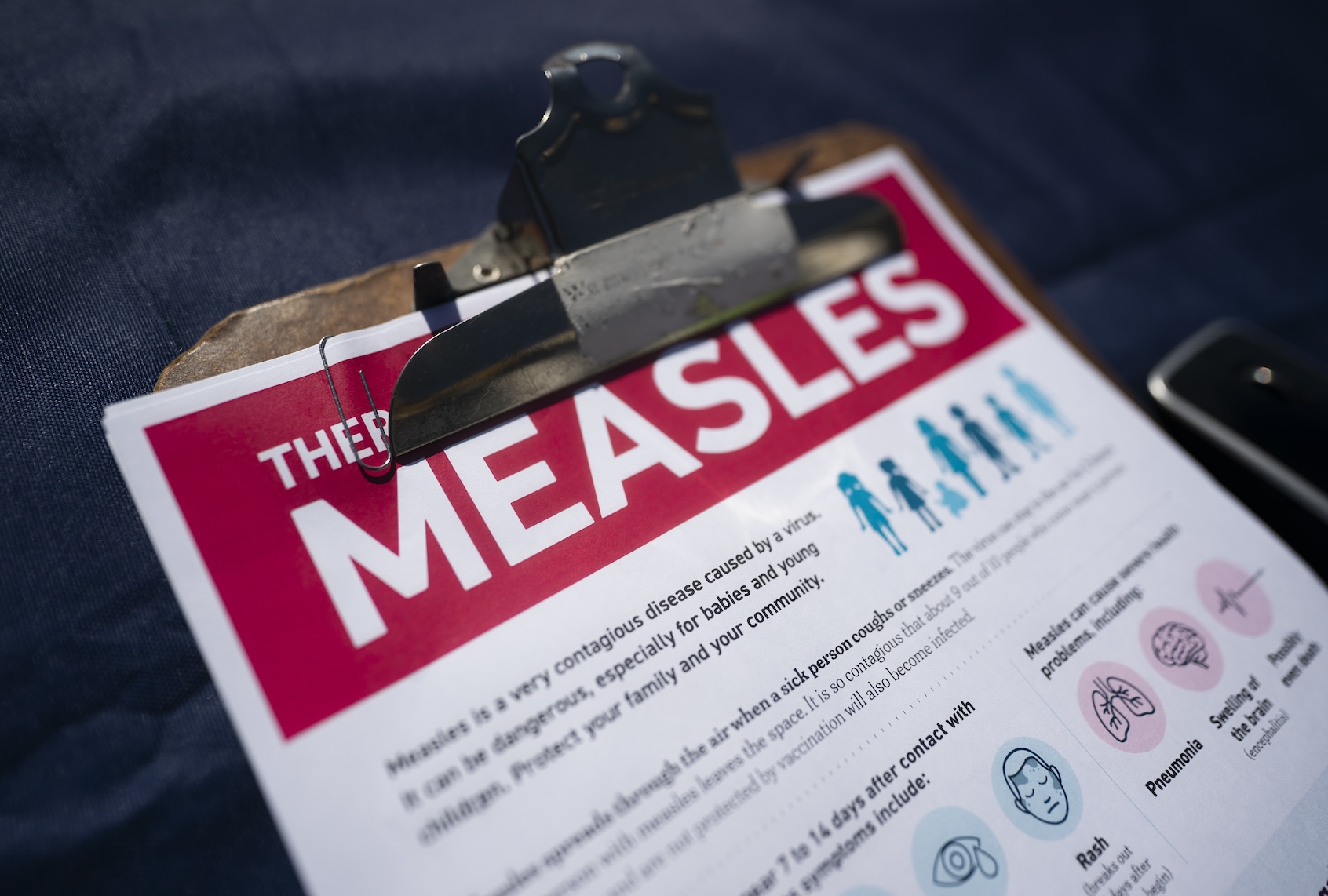
Measles has made a major comeback in the U.S. and the pace of infections does not seem to be slowing any time soon. Already, the country is on track to surpass last year’s number of measles infections. The Centers for Disease Control and Prevention released updated data indicating that the U.S. total has reached more than 1,600 measles infections as of April 3, 2026. Last year, the CDC confirmed 2,286 measles cases for all of 2025, the highest number of cases since 1991, but we’re already on track to beat that record. What’s more, the Trump administration has pushed a key review of the country’s measles-free status until after the midterm elections.
According to the CDC report, 17 new outbreaks were reported in 2026. Notably, 94 percent of confirmed cases are “outbreak-associated,” with a majority of cases stemming from outbreaks that started in 2025. An estimated 5 percent of cases have required hospital care already this year; in 2025, 11 percent required hospital care. No deaths have yet been attributed to measles in 2026, but the disease killed three people in 2025. Ninety-two percent of cases this year are in unvaccinated people.
As Salon has previously reported, experts emphasize measles isn’t just a fever and a rash as anti-vaccine influencers portray online. An estimated one in four infected patients will be hospitalized. In severe cases, there can be complications like pneumonia and encephalitis — a swelling in the brain that can trigger seizures, deafness and mental disability — even death. This can all be prevented by getting vaccinated.
The measles vaccine, which typically comes with mumps and rubella vaccines as well, is extremely effective. After two doses, nearly 99 percent of people will be shielded against infection. While the vaccine was first developed in 1963, it wasn’t until 1980 that all 50 states had laws requiring measles immunization for school enrollment. But thanks to a thoroughly discredited British doctor who claimed to document changes in behavior in children given the MMR vaccine, creating the so-called “Wakefield effect,” some of this progress has been undone.
Before the measles vaccine was widely available in the U.S., around 400 to 500 children would die from measles and its complications each year. Public health experts told Salon they’re concerned that under the Trump administration, measles infections are already becoming endemic and normalized, and that we will see outbreaks as frequently as we did in the 1990s.
“Many schools are now in a situation where a single imported case is enough to trigger ongoing transmission.”
“I think we are just going to move backward before we go forward,” Katelyn Jetelina, an epidemiologist and author of the newsletter Your Local Epidemiologist, told Salon. “Sure, this has to do with the administration and lack of prioritization, but also because Americans find ourselves at the perfect storm of mistrust in institutions, general amnesia of vaccine preventable diseases, and on the heels of the COVID-19 pandemic.”
Today the lack of prioritization from the current administration and a cultural moment post the COVID-19 pandemic, in which online anti-vaccine rhetoric has spread like wildfire, have contributed to a lack of trust in vaccines and public health — ironic given COVID vaccine development was a landmark medical achievement.
“Since the pandemic, we see that the number of children without measles protection has roughly doubled, and at the school level the conditions for sustained spread were crossed around 2022,” Dr. Ana Bento, an assistant professor in the department of public and ecosystem health at Cornell University, told Salon. “That means many schools are now in a situation where a single imported case is enough to trigger ongoing transmission.”
Bento is a co-author of a pre-print paper analyzing the recent drive in cases across the country, analyzing a database of 45 states encompassing over 50,000 schools in 3,000 counties. She explained she has hope the situation can turn around and that the outbreaks are very much “containable” — but only if the country acts quickly to control it.
Start your day with essential news from Salon.
Sign up for our free morning newsletter, Crash Course.
“From a scientific perspective, there is real hope: measles vaccines are highly effective, and the U.S. is starting from relatively high average coverage,” Bento said. “But the trends in our work make it clear that improvement will only happen if surveillance and vaccination efforts are designed to see and address the fine-scale school and district clusters where risk is currently concentrated.”
Public health experts and scientists aren’t confident that the situation will improve under the Trump administration. In February, the American Academy of Pediatrics called on Health and Human Services Secretary Robert F. Kennedy Jr. to promote measles vaccines and deploy more support to outbreak areas as cases surge.
“Vulnerable children across the nation need federal public health officials to be fully committed to stopping the spread of measles — and to use all the tools and platforms at their disposal,” Dr. Andrew Racine, AAP’s president, wrote in a letter to Kennedy.
From running an anti-vaccine nonprofit to profiting from litigation related to vaccine harms, Kennedy lacks a track record that supports vaccination. In a 2025 Fox News interview with Sean Hannity, Kennedy made several misleading statements about the measles vaccine. In 2019, a measles outbreak in Samoa, and Kennedy’s involvement in the crisis, underscores his views on the measles vaccine. During Kennedy’s Senate confirmation hearings in 2025, he said the closely scrutinized trip to Samoa had “nothing to do with vaccines.” Documents obtained by The Associated Press and The Guardian undermined that testimony.
Dr. Amesh Adalja, an infectious disease expert and senior scholar at Johns Hopkins Center for Health Security, told Salon he is not hopeful the outbreaks can be contained at this point.
“I think endemicity is a foregone conclusion and measles will circulate at the level it did in the 1990s,” Adalja said. “People are choosing this fate.”
Endemicity is when an infection is constantly present, like the common cold. Of course, measles and a cold are not remotely comparable, which is precisely the issue with serious diseases that were once eradicated becoming endemic. Jetelina agreed that it will get worse before it gets better.
“Measles will be become normalized once it becomes endemic,” she said. “Eventually, as a society, we won’t be paying close attention to the tally and it won’t make headlines.”
Measles was declared eliminated from the U.S. in 2000, but the country is likely to lose its elimination status. The status is granted by the Pan American Health Organization, and the U.S. can only maintain it if it can prove that the virus has not circulated continuously in the nation for a year straight.
“I think it’s almost guaranteed that we lose the status,” Jetelina said. “It’s heartbreaking because it’s a road sign that we are going backwards.”
She is, however, “confident” that the country will bounce back, eventually. “But it’s going to take time,” she said.
Read more
about public health