
Plateau peace reports ‘buried’ as killings continue
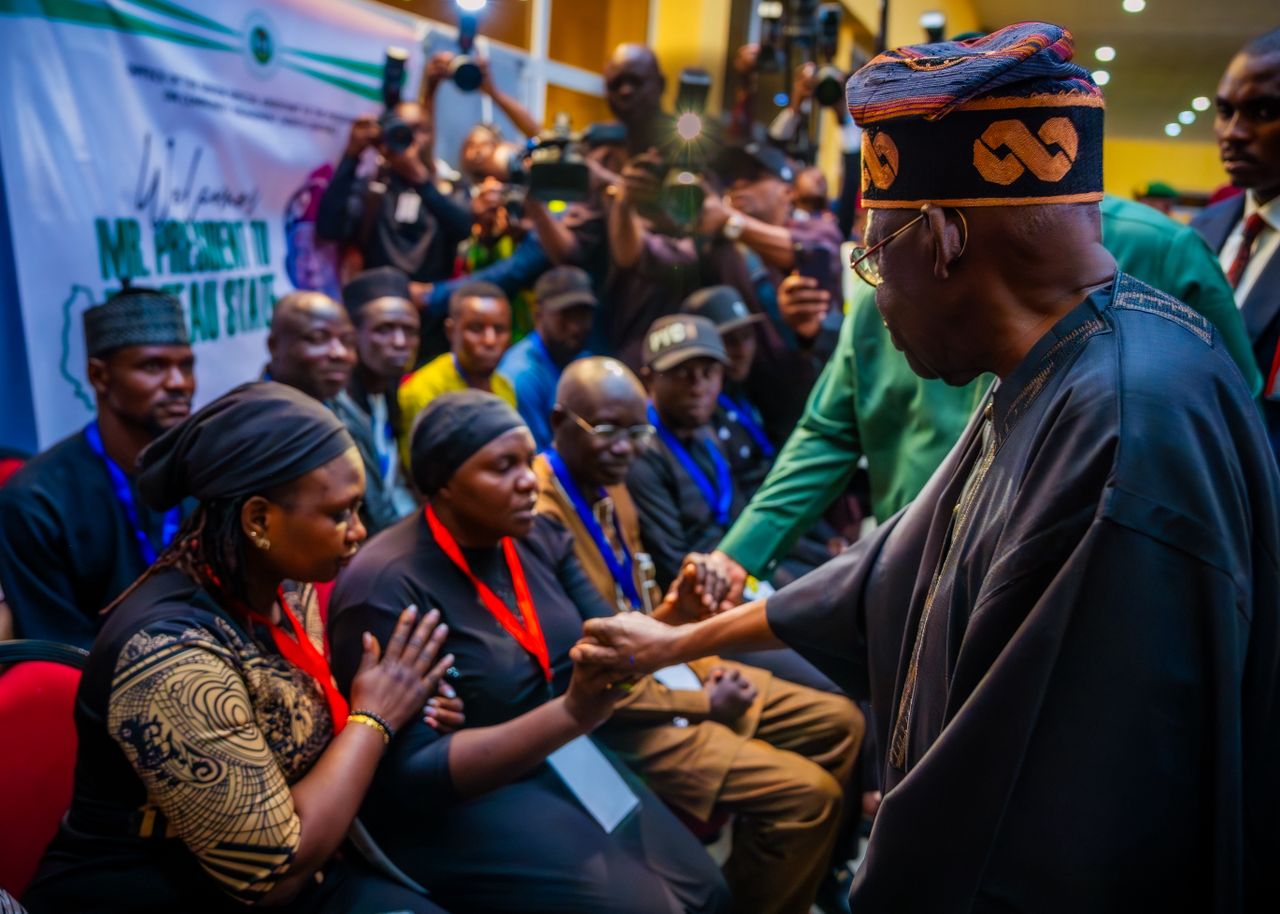
FINDING: 11, 000 killed in two decades, 420 communities abandoned
By Charles Kumolu
In the dusty corridors of government offices in Jos and Abuja lie stacks of reports, thick, meticulously
written, and filled with painstaking testimony from victims, witnesses, and community leaders.
They are the legacies of successive commissions of inquiry established over more than three decades to investigate why Plateau, a once peaceful state in North-Central, keeps erupting into cycles of violence.
Yet, despite pages upon pages of findings and prescriptions, killings continue.
The voices in those reports, pleading for justice, for structural reform, and for healing, remain largely unheeded.
As survivors of the latest round of killings in the state bury their dead and tend to shattered homes, the same diagnoses have failed to stop the next outbreak of violence.
Sunday Vanguard observed that for more than three decades, governments, at both state and federal levels, have convened high powered panels to investigate recurring cycles of violence, each issuing recommendations based on deep probing into the causes of crisis.
Yet, in nearly every instance, the reports were never published, never fully debated, and never translated into action.
As another wave of carnage sweeps through Plateau in 2026, residents and analysts alike argued that the real crisis is not merely violence itself, but the repeated failure of leadership to act on the knowledge it has already collected.
Seven reports
What is particularly striking is the sheer number of investigative bodies that have examined the crisis without producing lasting results.
From the 1994 Fiberesima Commission to the 2001 Tobi and Galadima panels, the 2004 Presidential Panel, the 2008 Ajibola Commission, the Abisoye Federal Panel, and the 2010 Lar–Kwande Committee, no fewer than seven major panels have been constituted to interrogate the causes of violence across the state.
Findings by Sunday Vanguard reveal that despite the depth of their work, the consistency of their conclusions, and the urgency of their recommendations, none has been fully implemented in a way that altered the trajectory of violence.
Instead, each conclusion has joined a growing archive of unexecuted likely solutions, even as the crises they examined continue to happen.
Violence
The violence that has transformed Plateau from a destination for peace and tourism into a symbol of perennial insecurity is not the product of a single cause, nor does it stem from a single moment in time.
Rather, it is woven out of overlapping tensions that coalesce around land, identity, politics, religion, and economics.
Jos, situated at the heart of Nigeria’s Middle Belt, draws groups from across the country. Indigenous Christian communities such as the Berom, Afizere and Anaguta sit alongside Hausa Fulani, and others who have lived in the city for generations.
There is usually competition for political posts, land allocation, and access to state resources, turning disputes that could be administrative into conflicts of identity and belonging.
For example, what begins as disagreement over a public appointment or an election result can rapidly spiral into tit for tat violence.
Markets are attacked, houses burnt, and places of worship become battlegrounds. Unemployment and poverty, especially among youths, are found to provide fertile ground for manipulation by political actors who benefit from the ensuing chaos.
Sunday Vanguard observed that at every major flare up, the state security apparatus was reactive rather than preventive, often arriving too late to stop escalation and viewed by many residents as partial rather than impartial.
First attempt
The first major attempt by government to investigate communal violence in Plateau State followed clashes in April 1994.
That year, riots broke out after tension over political appointments and competition for local influence boiled over into ethnic and religious violence.
In response, then-military administration established the Justice J. Aribiton Fiberesima Commission.
The commission conducted hearings, absorbed testimony from dozens of witnesses, and examined the swirling causes of the crisis.
It documented how disputes over land, political representation, and community identity intersected.
It even went so far as to recommend that individuals and groups found culpable in violence should be sanctioned.
Yet Sunday Vanguard gathered that the report remains unpublished, no official White Paper, and and no reform followed.
It is believed that the paralysis of government action in 1994 arguably set the stage for the more devastating violence that erupted in 2001, because the structural drivers identified then were never addressed.
Specifically, on September 7, 2001, Jos was plunged into one of the deadliest outbreaks of violence in its history.
Tension
Triggered ostensibly by religious tension surrounding the appointment of a Muslim politician to a federal poverty alleviation role, the clashes rapidly escalated into widespread communal violence.
Over nearly two weeks, houses, mosques, and churches were torched, and up to 1,000 people were killed.
The civilian government of Governor Joshua Dariye established the Justice Niki Tobi Commission, while the Federal Government appointed the Justice Suleiman Galadima Commission.
Both panels concluded that the causes of the 2001 crisis were deeply rooted in the same unresolved issues that plagued Plateau in 1994: disputes over political representation, land, indigeneship and marginalization of certain groups.
The Tobi Commission explicitly noted that had the Fiberesima Commission’s recommendations been implemented, the 2001 crisis might have been averted.
Yet once again, the findings were never publicly released in full, no White Paper was produced, and no systematic prosecutions followed, even though several hundred people were arrested after the riots.
The echoes of impunity made it clear to residents that the state was unwilling or unable to hold perpetrators accountable, and that failure would be exploited again.
Pattern
With violence recurring, the Federal Government sought to explore the matter more comprehensively in 2004, establishing the Plateau Crisis Presidential Panel to examine the deeper structural issues beyond the immediate triggers. Rather than focus only on single episodes, this panel analysed social, political and economic fault lines across the state.
The panel’s work was among the most ambitious of all, identifying how land distribution laws, constitutional ambiguity about citizenship, patterns of political exclusion, and a lack of rule of law contributed to recurring violence.
It recommended institutional reform, community reconciliation mechanisms, and sustained engagement to address the deeper fault lines that had repeatedly shown themselves in crises since 1994.
But findings by Sunday Vanguard revealed that, like its predecessors, the presidential panel’s report never translated into implemented policy. Leaders were said to be unwilling to disrupt established political arrangements or disturb local power brokering that contributed to the violence in the first place.
As a result, the findings, despite its breadth, remained academic, while the state continued towards another catastrophe.
Ajibola, Abisoye panels
When local elections in November 2008 erupted into violence, leaving hundreds dead and thousands displaced, the government’s response revealed new fractures in how crises are addressed.
At least 761 people were killed in the clashes, and many more were injured in the chaos that followed an unclear election result and rumours that fueled mistrust.
Instead of unified action, state and federal authorities established parallel panels.
At the time, Governor Jonah Jang instituted the Justice Bola Ajibola Commission, while the Federal Government constituted the General Emmanuel Abisoye Panel.
Both sought to investigate the same crises, but their overlapping mandates created confusion, delayed action, and diluted ownership of recommendations.
LGA
The Ajibola Commission held extensive hearings, hearing from hundreds of witnesses and recording detailed testimony on issues ranging from the role of elections in heightening communal tension, to the ways in which identity politics fuelled mistrust.
It recommended institutional reforms, including overhauls to land administration practices and enhanced safeguards for political representation.
Specifically, the 339-page report faulted the creation of Jos North Local Government Area, LGA, by former Military President, Gen. Ibrahim Babangida, retd.
It also said it was not satisfied with the explanations of Babangida that he did not create the LGA to favour a particular group.
The commission said it found out that the former military president created the local government in 1991 to favour the Hausa/ Fulani of Jos North on the grounds that it was the Hausa Fulani community that demanded for the local government.
In addition, the panel recommended that the present Jos North LGA be re-delineated into three sustainable local governments with an equitable representative number of wards within each local government, while the state government should give due consideration to all ethnic groupings in appointments, nominations and promotions.
Security lapses
The Abisoye Panel, meanwhile, examined the crisis with particular attention to security lapses and alleged external influences in the violence.
Yet further checks by Sunday Vanguard reveal that neither report was followed up with a White Paper and their recommendations sat unimplemented.
Despite their depth and the direct testimony they collected, the panels ended up as documents rather than drivers of change.
Killings
In 2010, after another devastating spate of killings in Plateau that reportedly claimed hundreds of lives over several days of clashes, the Federal Government appointed the Lar-Kwande Committee to synthesise lessons from past panels and propose corrective measures. Once again, the fundamental drivers of conflict, impunity, land disputes, political exclusion, and mistrust between communities were highlighted. But no coordinated action plan emerged from the work.
Further findings by Sunday Vanguard reveal widespread frustration over claims that security forces are often reactive rather than preventative, arriving after violence had peaked rather than addressing early warning signs. Analysts maintained that the cycle of impunity, where perpetrators of violence are not prosecuted, has emboldened successive actors, making each outbreak more brutal than the last.
Failure
For ordinary residents of the state, the failure to act on the knowledge derived from these many panels has proven devastating.
Thousands have died across recurrent outbreaks. Families remain without closure, communities carry deep psychological scars, and fear has become part of everyday life.
Entire communities lie abandoned, displaced persons live years in camps, and property destroyed in one cycle of violence is simply rebuilt only to be destroyed again in the next.
The human cost of these recurring cycles cannot be overstated.
A 2025 fact finding committee appointed by Plateau State government reported that at least 11,000 people have been killed in two decades of violent outbreaks, and more than 420 communities have been destroyed or abandoned. The chairman of that panel, Major General Nicholas Rogers, retd, stressed that violence has been widespread, affecting 13 local government areas across the state.
Political will
The disclosure was made in the committee’s report submitted to Governor Caleb Mutfwang at the Government House, Jos.
In May 2025, the 10-member panel was inaugurated to investigate the root causes of the crisis that has plagued Plateau State since 2001.
According to the findings, 13 local government areas have suffered repeated attacks within the period under review, with entire communities sacked and thousands displaced.
Rogers stressed that reprisal attacks were largely fueling the cycle of violence and urged elites and community leaders to caution their youth against taking the law into their own hands.
He further called on the state government to show the necessary political will to implement the recommendations of the report to restore lasting peace.
Instigators
Sunday Vanguard can authoritatively state that the findings across all panels, when read together, paint a striking picture: Recommendations that could reduce violence significantly have never been acted upon. Commissions repeatedly called for prosecutions of instigators, reform of land allocation and governance practices, clarification of indigeneship in law, and mechanisms for intercommunal dialogue and trust building.
But political leaders are known to have shied away from implementing measures that challenge entrenched power structures.
The absence of official white papers following panel reports has meant that what could have become law or policy has instead remained archived text.
In the vacuum left by inaction, impunity has flourished.
It was learnt that civil society efforts to push for reforms have been fragmented, and where they have succeeded in accessing reports, the lack of official government engagement has limited their impact.
As things stand, the state stands at a crossroads.
Given the reports of past panels, it is believed that the knowledge to break the cycle of violence exists, and is meticulously documented by commission after commission.
However, until governments act decisively on those recommendations by confronting impunity, reforming institutions, and addressing the underlying causes of tension, the killings will continue.