
Trump is considering a ground war in Iran. Experts say he should walk away
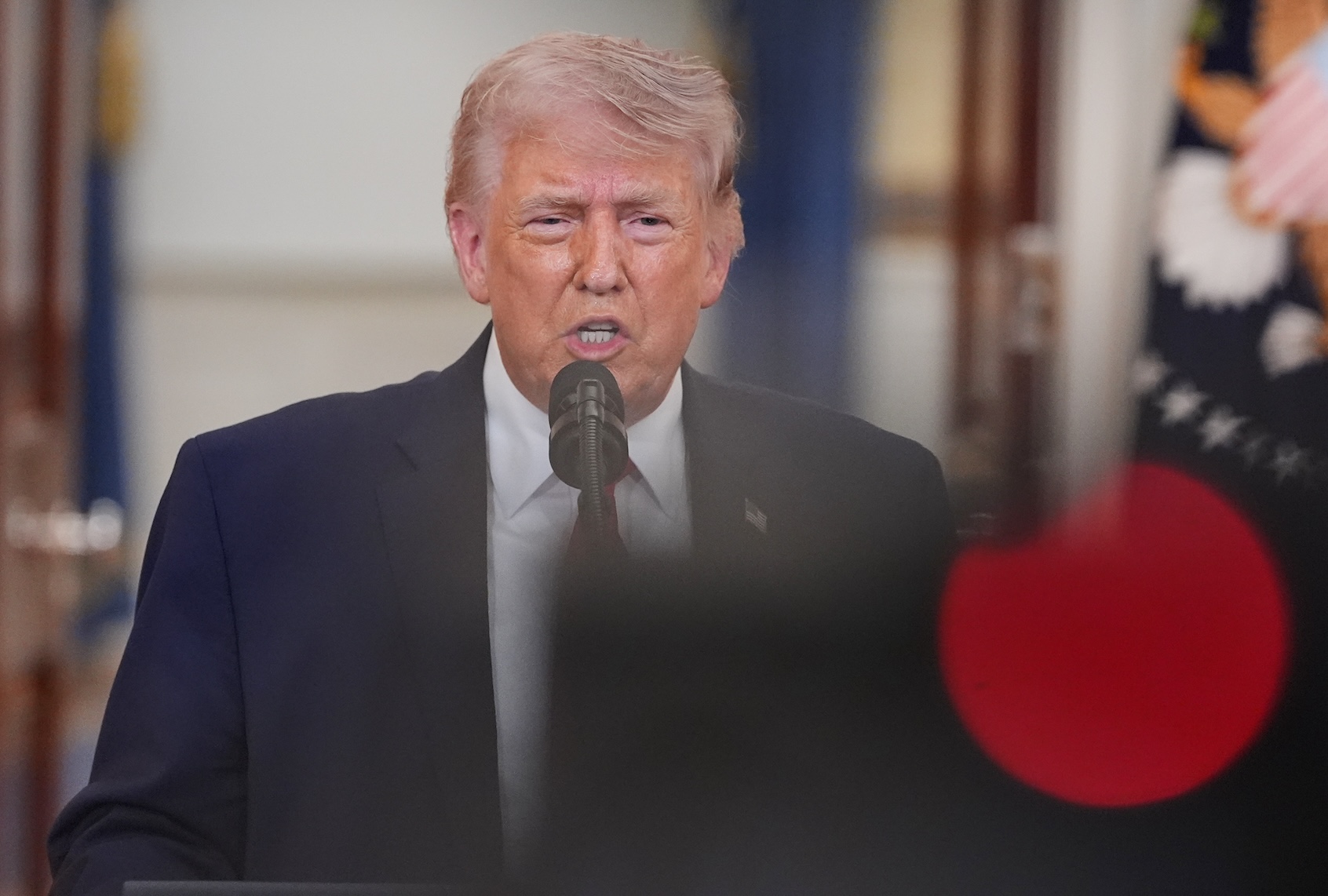
As the Iran War stretches past its first month, time is running out for President Donald Trump to wrap up his four-to-six-week war on schedule, as he considers an unclear ground campaign that experts warn would be “very costly” in lives, money, and materiel.
While the air campaign against the Islamic Republic has been largely successful in damaging Iran’s naval and missile capabilities, the regime remains in power and has withstood the U.S.-Israeli onslaught.
Iran refuses to capitulate or reopen the Strait of Hormuz for most shipping traffic, while gas prices stand at $4 a gallon stateside, adding to the American public’s overwhelming opposition to the war. Defense Secretary Pete Hegseth has asked for an additional $200 billion in funding for the war, which costs roughly $11.3 billion a week, on top of a $1 trillion military budget.
Trump said Wednesday that the strikes so far against Iran have been successful, positing that two to three more weeks of military operations would “bring them back to the Stone Ages, where they belong.”
“We are on track to complete all of America’s military objectives shortly, very shortly,” he said in a primetime address to the nation Wednesday night.
Trump has vacillated on whether to order a ground invasion, previously declaring he is “not afraid” to do so, while also denying the idea of “putting troops anywhere.” However, a Friday report from the Wall Street Journal suggested that 10,000 more troops would be sent to the Middle East, on top of the 7,000 Marines and paratroopers already deployed.
While Trump did not bring up land operations in the country, both he and his administration have refused to entirely rule out a ground war.
“Our adversary right now thinks there are 15 different ways we could come at them with boots on the ground. And guess what? There are,” Hegseth said at a Tuesday press conference.
On the same day, White House Press Secretary Karoline Leavitt said that the U.S. is prepared to “unleash hell” against Iran. “It’s the job of the Pentagon to make preparations in order to give the Commander in Chief maximum optionality,” she said in a statement to The Washington Post.
“Even if you intend to do a limited operation, you don’t know if it’s actually going to be limited. If things go wrong, it could end up being significantly longer.”
Jennifer Kavanagh, director of military analysis at Defense Priorities, thinks the chances of “some kind of ground operation” are high, at 85%, describing the possibility as “horrific.”
“Even if you intend to do a limited operation, you don’t know if it’s actually going to be limited. If things go wrong, it could end up being significantly longer,” Kavanagh told Salon.
Among them are an operation to seize Kharg Island, Iran’s key oil export facility in the Strait of Hormuz, take control of coastal islands near the Iranian mainland, and even a daring raid to acquire Iran’s supply of 60%-enriched uranium.
“I think the ultimate goal here is to reopen the Strait of Hormuz. That’s the problem that this invasion has created, that the president now needs to fix before you can leave and claim any sort of victory,” Kavanagh said.
Secretary of State Marco Rubio has vowed that the Strait will reopen “one way or another.”
“The strait will reopen either with Iran’s consent or through an international coalition including the U.S.,” Rubio said on Monday.
However, Kavanagh offers little hope that the “very costly” operations will actually find success.
Start your day with essential news from Salon.
Sign up for our free morning newsletter, Crash Course.
Kavanagh pointed to flaws in each possible operation. Seizing Kharg Island and the islands near the mainland would require an amphibious landing on a contested shoreline, among “the hardest operations” a military can attempt, and one that Iran is almost certainly prepared for.
“They’ve already seeded the area with mines, anti-tank mines, anti-personnel mines, and at least in these islands, they are very close to the mainland, Kavanagh said. “They can just fire artillery and drones from the mainland. These forces will be basically sitting ducks for artillery and drone fire,” she said, noting the extreme logistical and operational challenges, and warning that the “risks of U.S. casualties are extremely high.”
Trump has signaled his desire to “take the oil in Iran” via an operation on Kharg Island, which he said U.S. forces could take “very easily.”
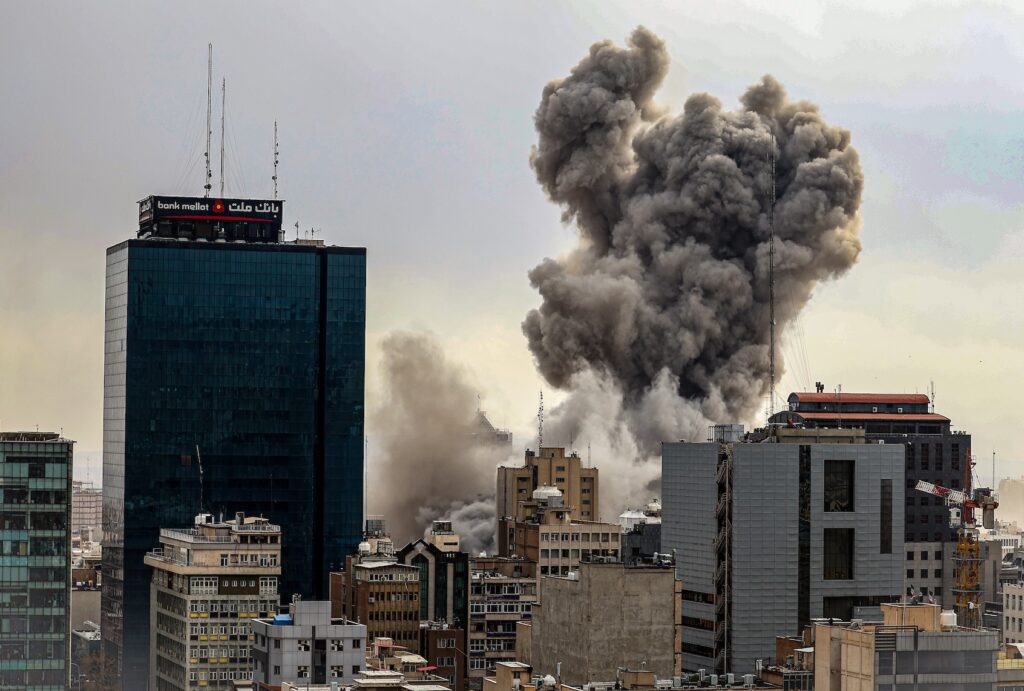
(Photo by Contributor/Getty Images) A general view of Tehran with smoke visible in the distance after explosions were reported in the city, on March 02, 2026.
“My favorite thing is to take the oil in Iran, but some stupid people back in the U.S. say, ‘Why are you doing that?’ But they’re stupid people,” he told the Financial Times on Sunday. “Maybe we take Kharg Island, maybe we don’t. We have a lot of options,” Trump said. “It would also mean we had to be there [in Kharg Island] for a while.”
A raid to seize the enriched uranium, in what Kavanagh speculates is an attempt to “embarrass” Iran into submission, the operation would face a slew of problems.
A small team would be needed to extract the uranium, assuming it could be found in a single location. Then it would need to be mechanically excavated from deep underground in the middle of hostile territory and could weigh 1,000 pounds. Scientists may need to be deployed with the troops to dilute the uranium to render it safe. It would then need to be airlifted or transported away.
Even if all goes well, it wouldn’t signal the end of Iran’s nuclear ambitions.
“They can reconstitute their nuclear program at a later date,” Kavanagh said. “To me, these options are high cost and very low reward.”
Instead, she says the U.S. and Israel should “walk away” from military operations and focus on reopening the strait through negotiations.
Trump has touted the success of his negotiations with Iran as often as he has warned of its looming destruction. He previously reported having “good talks” and “great progress” with Iran, which the country has denied happening. Yesterday, he said that Iran “asked” for a ceasefire, which the country also denied. Iran’s leadership is now apparently reluctant to restart negotiations, since it has been attacked twice by the Trump administration during talks.
Trita Parsi, co-founder and executive vice president of the Quincy Institute for Responsible Statecraft, said that Iran has “leverage” in negotiations, thanks to its control of the strait, and called Trump’s handling of Iranian relations “a massive miscalculation.”
“They were forced into this situation because of the fact that Trump refused to accept diplomacy, refused to accept the offers on the table, and kept on insisting on Iran’s capitulation,” Parsi told Salon. “It’s just not possible for that regime to capitulate and survive.”
He also dismissed any notion that a ground war would be a “cakewalk” and said it would be “extremely costly,” even under the best circumstances.
“This war is as far from necessary as it can come. It was a war of choice,” Parsi said.
Read more
about the Iran war