
In Finland, winter is a way of eating
No one here wastes energy fighting February. They cook with it.
Oulu sits at the edge of the Bothnian Gulf, where ground and sea wear the same coat of snow. In 2026 the city holds the title European Capital of Culture, though culture has been working the night shift here for centuries. In winter the city feels borderless. Frozen waterways blur into land, and only a bridge or half-buried boat hints that water still moves beneath the white. The cold is not decorative. It is structural.
I step into Ravintola Toripolliisi with ears burning and fingers stiff from the air. Inside there is ritual. Coats come off slowly. Hats. Gloves. Scarves unwound with patience. The room reclaims you. I order lohikeitto, salmon soup, and a glass of Portuguese red to remind my toes they are still alive. The bowl arrives pale and steaming. Salmon silky. Potatoes sturdy then soft. Dill lifting through cream. I break grilled sourdough, dip a bit then a lot, doing a side dance with the spoon. The broth does not attack the cold. It absorbs it. Around me candles hold steady light and conversations stay low.
This is how you begin here. You let winter into the bowl and tame it.
Morning comes crunchy, which is what Finns call a very cold day. Each step over refrozen snow snaps like thin sugar crust. Commuters and dog walkers move across frozen water below as if it were a park. Steam rises from chimneys, from warm patches of river, from mouths. I retreat into Jaanan Puoti café and repeat the door ritual. The world softens.
Heli greets me warmly and without flourish. “What should I have?” I ask. “Coffee,” she says. “Hot chocolate, lemonade, but it’s not summer.” She laughs. “Beer is always popular. The cold isn’t the problem.” The dark is. In December daylight shrinks to a handful of hours. Coffee solves that not because it heats you but because it sparks you. Finns drink staggering amounts of it. Hands wrap around ceramic. Steam meets faces just in from the blue. You sit. You talk. You fill the dark. Warmth here is social before it is thermal.
I order a latte and a whole grain pastry twisted with ham and cheese. Nutty, sturdy grain that carries the field into February.
Want more great food writing and recipes? Sign up for Salon’s free food newsletter, The Bite.
After more strolls along the tundra, I dine at Grill It restaurant, where winter appears plated rather than resisted. Jerusalem artichoke soup arrives earthy and thick, built for thawing. Pike perch tartare from Lake Oulujärvi rests on malt bread with capers and dill oil and a whisper of pine tar. Tar-tartare. Just enough to evoke boats and long coasts. A barley risotto studded with dried autumn mushrooms follows, Finland’s breadbasket turned into comfort. Torched dessert cracks like ice, crème brûlée with salted caramel mousse and cloudberry compote, fire and frost in one spoonful. Winter is not hidden. It is arranged.
A morning of museums, Sámi tribal art and intellectual warmth. I can’t shake the image of a woman in traditional dress sharing forest coffee with a bear, an art scene reaching for myth and landing, briefly, in sitcom. I head to the beach. As beach as Oulu winter permits. I walk a frozen Bothnian Gulf at Nallikari, an obscured lighthouse, a delinquent lifeguard stand, and makeshift saunas stand on white expanse like archaeology. With each step a faint echo and a reminder that the sea sleeps but does not disappear.
The sun just barely awake sets in a blaze sandwiched between vast grey sky and vast grey sea.
“It’s more like soul food from your cellar. Preserved berries. Fermented ingredients. You heat up your house with a burning stove, and at the same time you put root vegetables or a meat pot inside. You share the warmth in that way.”
That evening at Oula Restaurant, a gem inside the Lapland Hotel, I sit for an Arctic Food Lab dinner led by program coordinator Matti Moller, who speaks about northern food with the calm confidence of someone describing architecture rather than cuisine. Northern food is not novelty, he explains. It is system. Rye and oats for endurance. Cold water fish from lakes and sea. Fungi from spruce forests. Berries dried, brined, or frozen against winter. Roots that wait patiently in cellars.
The meal begins with scallop brightened with currant and rye-seasoned buttermilk, then slow-cooked reindeer, sirloin and tongue, finished over wood, mushroom purée beneath and fermented cabbage cutting richness. Preservation refined into elegance. Dessert revives malt bread as French toast alongside sea buckthorn and pumpkin held through autumn and sharpened into sorbet. Even sweetness carries the logic of storage.
Over coffee I ask Matti what winter food means here. “It’s more like soul food from your cellar,” he says. “Preserved berries. Fermented ingredients. You heat up your house with a burning stove, and at the same time you put root vegetables or a meat pot inside. You share the warmth in that way.” Food and fire in the same motion. Winter is not a crisis. It is a system.
Before sunrise I drive north to the country and Tornio. Snowshoeing across a frozen river with Sweden mere feet away and drilling a fishing hole through thick crust, I discover I am better at casting through air than dropping a line through ice. The day remains crunchy and humbling.
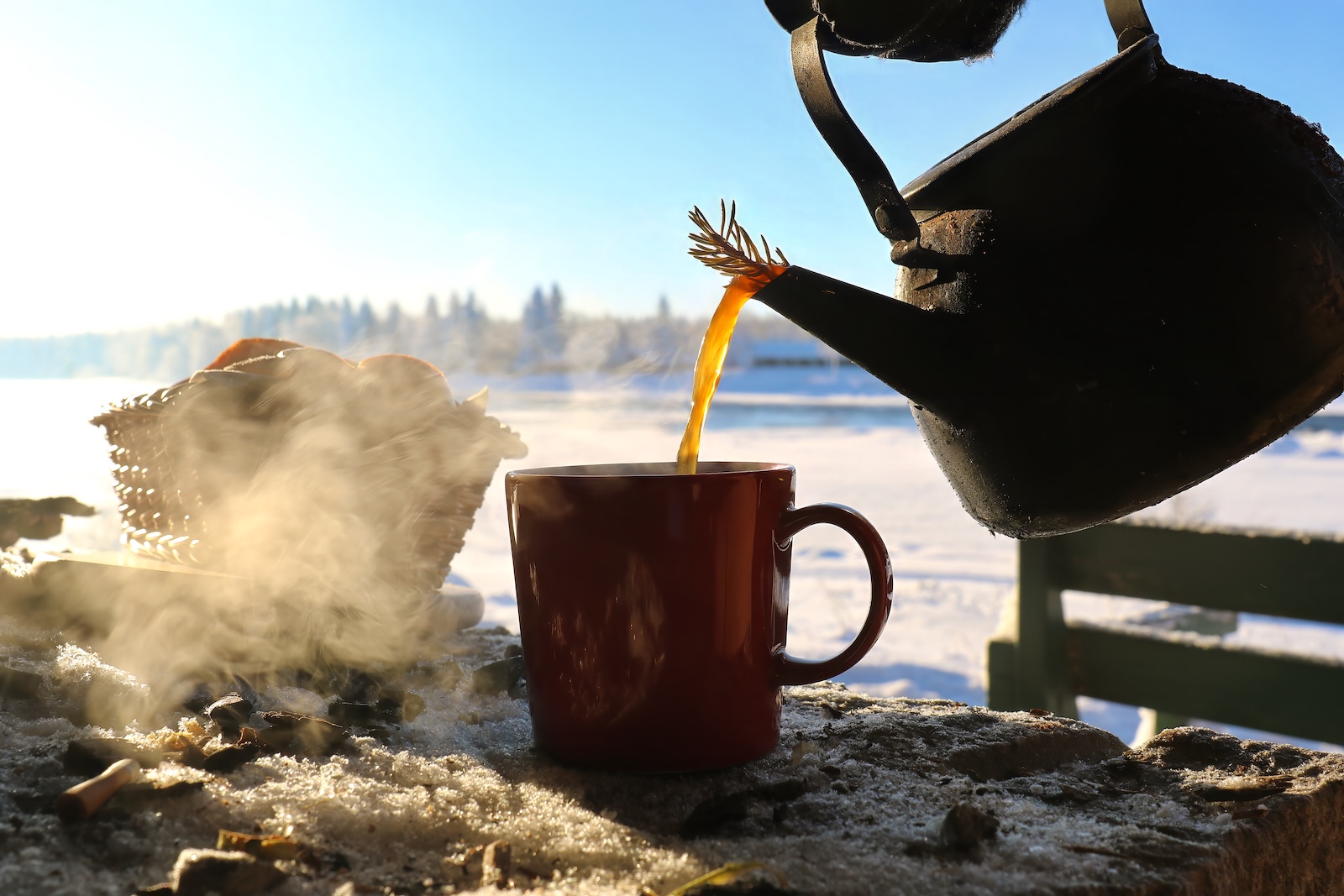
Strangers gather in a riverside fire shelter and brew coffee the old way. Snow packed into a pot and melted. Grounds tossed in. A spruce branch threaded through the spout as a filter. Steam rises into white sky as enamel mugs are passed and sweet bread tears open near flame. This practice predates borders. Sámi reindeer herders carried leather coffee pouches into forests for generations. Start fire. Melt snow. Brew. Share. Snow becomes water. Water becomes coffee. Coffee becomes ceremony.
That night I test myself in a public sauna above the frozen river. Sit in heat. Step into biting air. Climb down and plunge through a carved opening in the ice. The shock empties the lungs. I return pink and laughing. Someone hands me a chilled sauna beer, ironic and perfect. Later karaoke. Finnish licorice liquor loosens the room. Some singers cool it down, others heat. My “Copacabana” is electric.
I return to Oulu by lunch and duck into Särkkä pub as snow drifts sideways against the windows. Candlelight, wood, hot oil, coats hanging heavy near the door. From my seat by the glass, the world outside remains white and distant, framed for observation rather than endured. Oulu does this well. It warms the inside and lets you study the cold without mittens. I order fried vendace rolled in rye flour, mashed potatoes beside it, and a local IPA. The fish is small and northern, crisp at the edges and tender within. Rye grows in stubborn soil and stores well. The beer is not for heat. It is for rhythm. It keeps you seated. It keeps you talking while winter performs behind the pane.
Later back at Lapland Hotel I meet Chef Satu Tilus, steady hands behind my Artic Food Lab feast. “In winter nothing grows here,” she says plainly. So you plan. “We preserve and we eat root vegetables, and of course slow-cooked food.” When I ask what winter cooking means personally, she answers simply. “It’s always cooking that brings the people together.” Not plating. Not serving. Cooking. A pot on the stove unites while the world outside freezes.
From my seat by the glass, the world outside remains white and distant, framed for observation rather than endured. Oulu does this well. It warms the inside and lets you study the cold without mittens.
She returns to the kitchen and I order her Lapland Delicacies platter, a kind of northern greatest hits presented on a slice of tree. Potato flatbread with spruce sprout pesto and pickled white currant. Sugar salted whitefish with horseradish. A profiterole filled with trout roe cream. Reindeer tartare with red cabbage and fermented garlic mayonnaise. Sweet cheese with gooseberry jam.
Cellar vegetables. Preserves. Smoke and salt where nothing grows. Acid to wake the tongue. Fermentation doing quiet work in the background. Berries held for months. Grain that survives poor soil. It is not showy. It is deliberate. The platter does not fight winter. It leans into it.
On my final morning Puistokahvila Makia glows gold against a blue commute. I order a korvapuusti. Sticky buns feel immature once you have said korvapuusti. Laminated with cinnamon-cardamom butter, it promises a fragrant sauna when torn apart. I wrap both hands around my latte and watch the cold press pale against the windows.
Back in my room at Lapland Hotel I turn on the private sauna. Heat gathers slowly. Wood releases its scent. I wait. Outside, winter shows its envy and its poise. Oulu may hold a European Capital of Culture title for the year, but nothing here feels temporary. The culture lives in repetition. In ritual. In the way a bowl of soup absorbs the cold and a room of steam loosens it.
When the sauna is hot, I ladle water and splash the stones. Steam rises fast, strikes the ceiling, then settles over my shoulders. And here I sit with no sauna beer. I just hum “Copacabana” and smile.
Read more
from Howie Southworth