
MAHA feels betrayed by RFK Jr. reversal on glyphosate
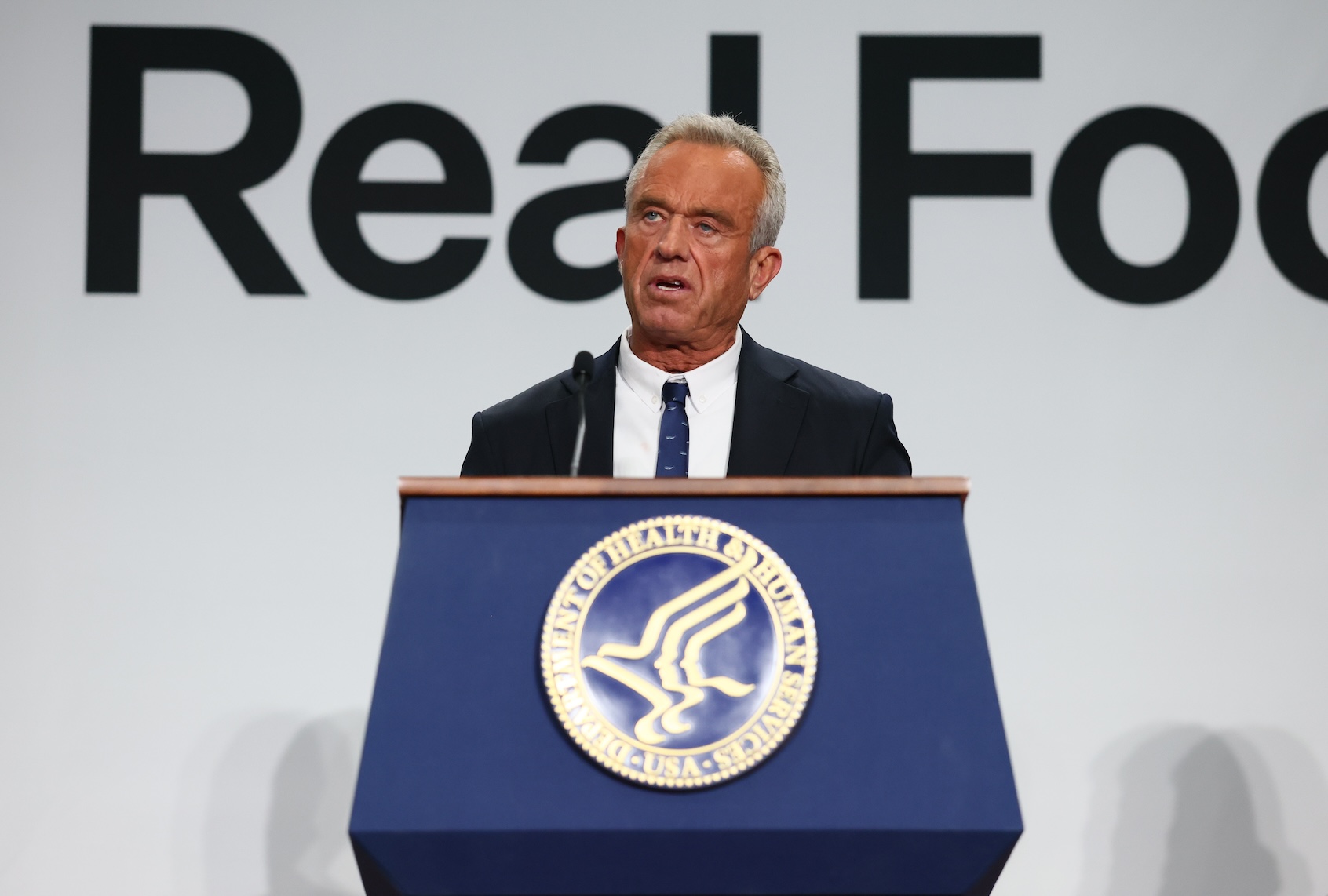
When President Donald Trump issued a recent executive order to increase the national supply of phosphorus, he called it “crucial to military readiness and national defense” and a “critical component” of military supply chains. As such, Trump invoked the Defense Production Act of 1950 to boost domestic production.
Also included in the order was the same protection to producers of glyphosate, an herbicide used in agricultural production, which relies on phosphorus as a “crucial precursor element” in its manufacturing. Trump said the widely used herbicide in the country plays “a critical role in maintaining America’s agricultural advantage by enabling farmers to efficiently and cost-effectively produce food and livestock feed.”
Trump offered “immunity” from litigation against the producers of glyphosate-based pesticides, which have been associated with multiple kinds of cancers and developmental disorders. This class of chemicals have become a major villain in certain wellness circles, including the Make America Healthy Again movement. However, backing for Trump’s order came from an unlikely source: Health and Human Services Secretary Robert F. Kennedy Jr.
“Donald Trump’s executive order puts America first where it matters most — our defense readiness and our food supply,” Kennedy said in a Feb. 18 statement to the New York Times. “We must safeguard America’s national security first, because all of our priorities depend on it.”
Kennedy’s support might come as surprise due to his decades-long history of opposition to herbicides, including a landmark case against agribusiness giant Monsanto, now part of Bayer, for the effects of glyphosate in Roundup, their signature weedkiller.
Last May, Kennedy issued a 69-page report titled “Making Our Children Healthy Again,” in which he specifically called out glyphosate as a chief concern. The report said glyphosate caused “possible health effects,” such as “reproductive and developmental disorders as well as cancers, liver inflammation and metabolic disturbances.”
In a statement to Salon, HHS Press Secretary Emily Hilliard said a “sudden loss” of pesticides like glyphosate in agricultural production “would be severe,” calling instead for “a gradual reduction in reliance on chemical-intensive production.”
“Low doses over time would be a concern that would need to be followed up on, because early life is a critical time period for exposures. As with almost every pesticide, there is a potential for neurodevelopment outcomes,” Dr. Lori Hoepner, an assistant professor of Environmental and Occupational Health Sciences at SUNY, told Salon.
Hoepner, whose research focuses in part on the effects of environmental contaminants, like pesticides, on children, pointed to the International Agency for Research on Cancer classifying glyphosate as “probably carcinogenic to humans,” and noted that it’s unknown how much of it remains on food after processing.
“He sounds like he wrote the press release for Monsanto, and I think this is a big problem for the MAHA movement.”
“It could lead to poisoning. It really does depend on the amount that one is exposed to, and the frequency,” Hoepner said, while also noting that there is money to be made by chemical companies that produce phosphorus and glyphosate. “These chemical companies don’t make just one product- they’re making things like weapon-grade chemicals.”
“They’re making lots of different products from these key ingredients,” she added. “If you’re limiting their ability to produce glyphosates, you’re limiting their ability to produce phosphorus and profit from it.”
Start your day with essential news from Salon.
Sign up for our free morning newsletter, Crash Course.
Meanwhile, the MAHA movement has been up in arms over Kennedy’s decision to back glyphosate. Podcast host and RFK Jr. ally Tom Renz said Kennedy’s move “misses the point entirely and is “a favor to horrible corporations like Bayer.”
Health and wellness expert Jillian Michaels, a proponent of MAHA, called the decision “devastating.”
“It is not a conspiracy theory that glyphosate is linked to cancer,” Michaels said in an interview with NewsNation.
Zoe Honeycutt, a longtime Kennedy supporter and the founder of Moms Across America, warned of the political ramifications for MAGA going against MAHA. “Without restricting and/or banning glyphosate, we will not make America healthy again,” Honeycutt said.
“It’s time for [Kennedy] to resign,” Shaughnessy Naughton, the president of the science-forward political action committee 314 Action, and a former chemist and drug researcher, told Salon. Pointing to 314 Action’s RFK Watch coverage, Naughton called Kennedy’s decision-making “egregious” and a “disappointment” for MAHA, as Kennedy is perceived as having gone from being an environmental advocate to a corporate defender.
“I just feel like it is the ultimate betrayal,” Naughton said. “He sounds like he wrote the press release for Monsanto, and I think this is a big problem for the MAHA movement.”
She also expressed concern that the detrimental effects of glyphosate and other pesticides would go overlooked by both Kennedy and the Trump administration. “There will be a lack of standard science in determining how dangerous this will be, by this administration,” Naughton said.
Following the public outcry, Kennedy defended his position in a lengthy social media post, saying that pesticides and herbicides are necessary for the nation to end “our near total reliance on adversarial nations,” while calling those chemicals “toxic by design.”
“President Trump did not build our current system — he inherited it,” Kennedy wrote. “Reform at this scale will test entrenched interests, and it will not move in a straight line.”
Naughton disregarded Kennedy’s statement, warning that the policy is “clearing the way for companies that produce this chemical not to have any liability.”
“The national security claims they’re making are weak at best,” Naughton said.
Read more
about public health